You stand outside, staring at your device, waiting for a signal that never comes. The loading icon spins endlessly. You feel frustrated because you know there must be a better way to get a stable connection.
A good outdoor antenna is one that delivers stable signal reception in your specific environment, matches your frequency requirements, and withstands weather conditions while maintaining consistent performance. The right antenna depends on your application, installation location, and signal strength needs.
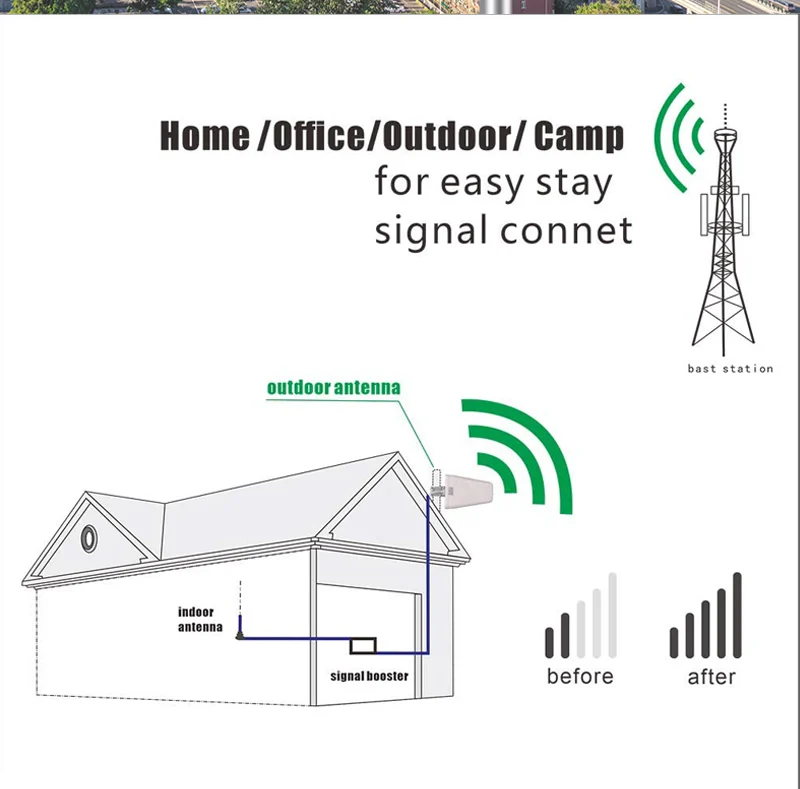
I have worked with hundreds of customers over the past 17 years, and I have seen how the right antenna changes everything. One wrong choice means poor performance, constant dropouts, and wasted money. Let me show you what really matters when choosing an outdoor antenna.
How to Choose the Best Outdoor Antenna for Your Needs?
You need to match the antenna to your exact situation. Many customers tell me they bought an antenna online, but it did not work. This happens because they did not consider their specific needs first.
To choose the best outdoor antenna, identify your frequency band (3G/4G/5G/WiFi/GPS), measure the distance to your signal source, check your mounting location, and verify the connector type matches your device. These four factors determine if an antenna will work for you.
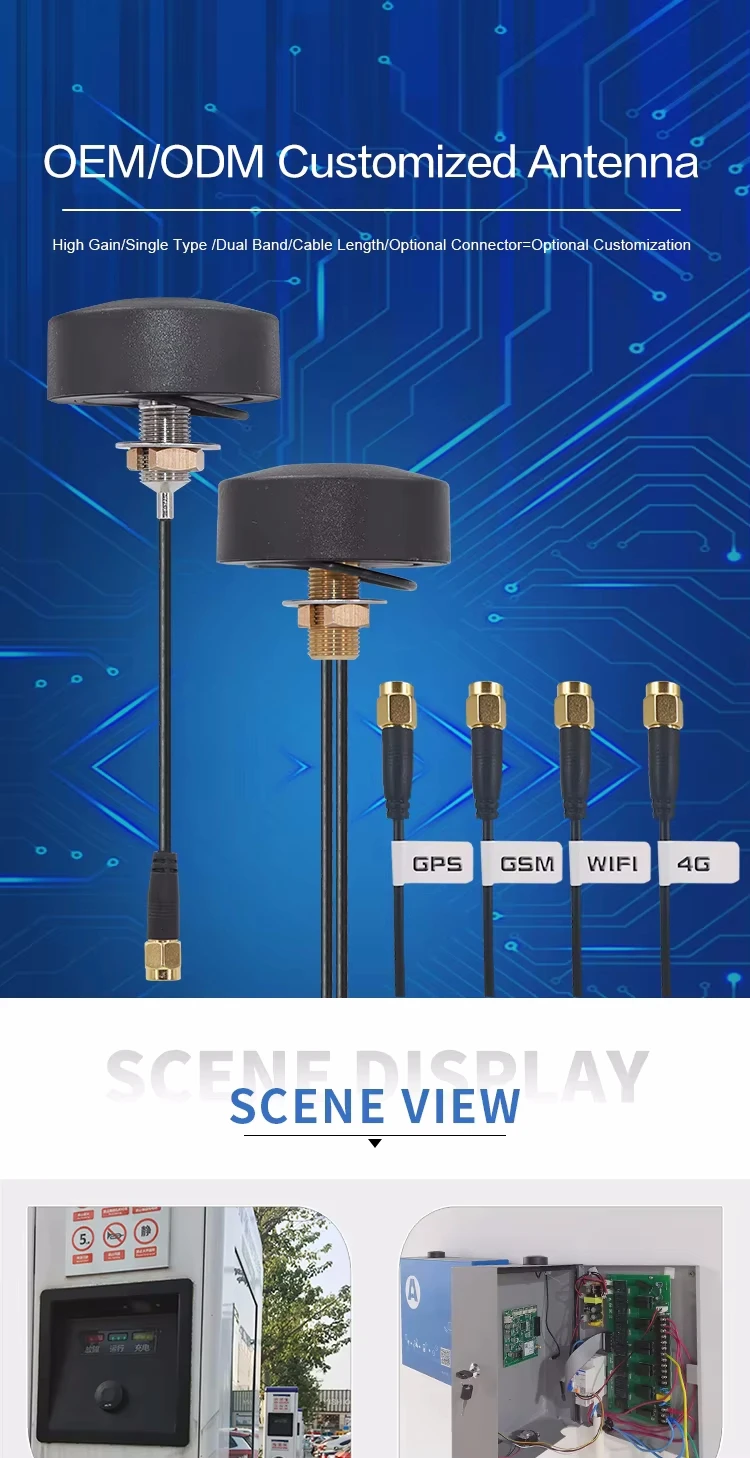
I remember a customer from the United States who built electric vehicle charging stations. His customers complained that their phones took forever to load the payment app when scanning the QR code at the charging point. The signal was weak. The whole charging process became slow and annoying.
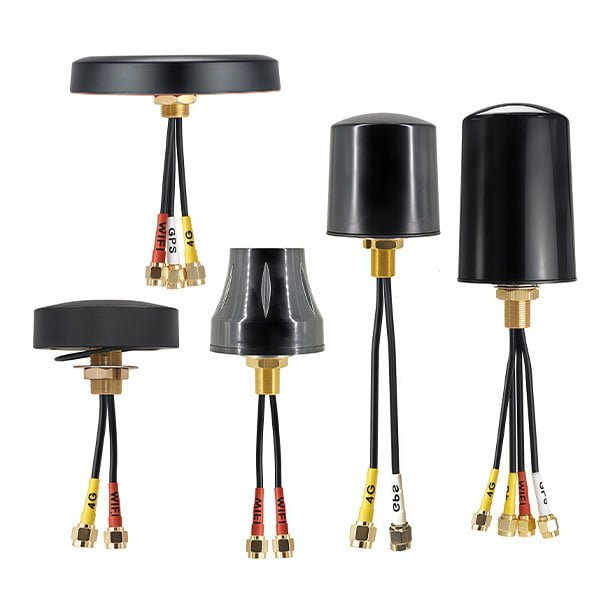
He contacted us through a friend's recommendation. Our engineering team listened to his problem carefully. We asked about his installation environment, the materials of the charging station housing, and the typical distance to the nearest cell tower. Based on this information, we recommended our standard circular outdoor waterproof antenna.
After installation on the outer shell of the charging stations, the problem disappeared. Customers could scan and pay quickly. The loading time dropped from 30 seconds to just 3 seconds. This happened because we matched the antenna gain, frequency band, and form factor to his exact needs.
When you choose an antenna, you must think about these key factors:
| Factor | Why It Matters | What to Check |
|---|---|---|
| Frequency Band | Wrong frequency means no signal | Match your device specs (2.4GHz, 5GHz, LTE bands) |
| Gain | Higher gain for longer distances | 3dBi for close range, 8-12dBi for far distances |
| Connector Type | Must fit your device | SMA, N-type, RP-SMA, etc. |
| Cable Length | Too long causes signal loss | Keep under 5 meters when possible |
| Weather Rating | Outdoor use requires protection | IP65 or IP67 for rain and dust |
| Mounting Method | Must fit your installation spot | Pole mount, wall mount, magnetic base |
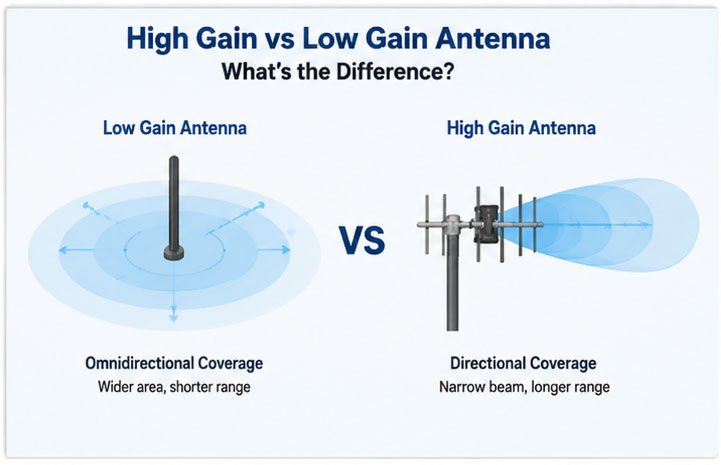
You should also consider the radiation pattern. Omnidirectional antennas receive signals from all directions, which works well when you do not know where the signal comes from. Directional antennas focus on one direction, giving you stronger signal if you know exactly where your tower or access point sits.
I always tell customers to test in their actual environment if possible. What works in one location might fail in another because of buildings, trees, or interference.
Which Outdoor Antenna Is Right for You?
You need to understand your application before you can pick the right antenna. Different uses require different antenna types. A GPS antenna does not work for WiFi, and a 4G antenna will not help your 5G connection.
The right outdoor antenna matches your specific use case: cellular antennas for mobile data, WiFi antennas for wireless networks, GPS antennas for location tracking, and multi-band antennas when you need multiple functions. Your device type and coverage area determine the best choice.
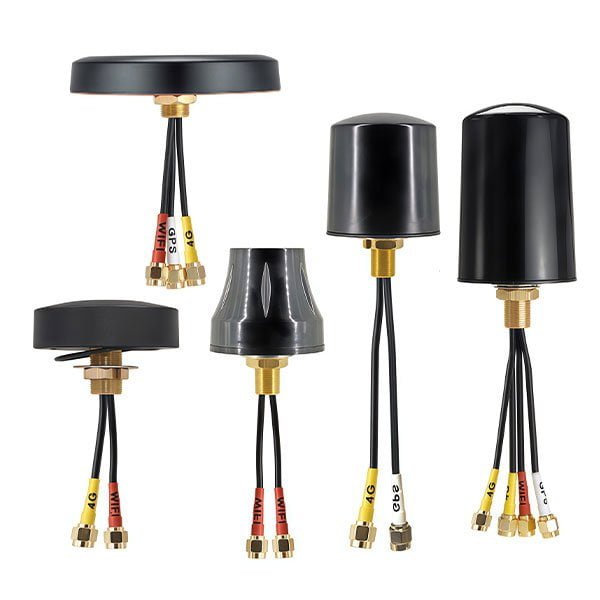
I work with customers in many industries. IoT device makers need low-profile antennas that fit inside small enclosures. Router manufacturers want high-gain antennas for maximum coverage. Vehicle system builders require antennas that handle vibration and speed.
Each industry has different priorities. Let me break down the most common scenarios:
For cellular connectivity (3G/4G/5G), you want an antenna that covers the frequency bands your carrier uses. In the United States, this might be 700MHz, 850MHz, 1900MHz, and 2100MHz for 4G. For 5G, you also need coverage in the 3.5GHz range and possibly millimeter wave bands.
For WiFi applications, you typically need 2.4GHz and 5GHz dual-band coverage. The antenna should have good efficiency in both bands. I recommend omnidirectional antennas for general coverage and directional panel antennas for point-to-point links.
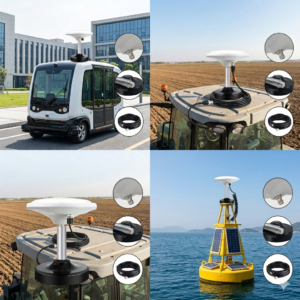
For GPS and GNSS tracking, you need a patch antenna or helical antenna that receives signals from satellites overhead. These antennas work best with a clear view of the sky. Metal surfaces nearby can block signals, so placement matters a lot.
For LoRa and IoT applications, you need antennas in the 433MHz, 868MHz, or 915MHz bands depending on your region. These lower frequencies travel farther and penetrate buildings better than higher frequencies.
Here is a comparison table:
| Application | Frequency Range | Typical Gain | Best Type | Common Use |
|---|---|---|---|---|
| 4G/LTE | 698-2690 MHz | 3-5 dBi | Omnidirectional | Mobile routers, hotspots |
| 5G | 3.3-5 GHz | 5-8 dBi | MIMO panel | Fixed wireless access |
| WiFi | 2.4/5 GHz | 5-9 dBi | Dual-band omni | Outdoor access points |
| GPS/GNSS | 1575 MHz | 28 dBc | Patch/Helical | Vehicle tracking, navigation |
| LoRa | 868/915 MHz | 2-5 dBi | Fiberglass omni | Sensor networks, smart city |
You also need to think about how many antennas you need. MIMO technology uses multiple antennas to improve speed and reliability. A 4G router might need two antennas. A 5G system might need four or more.
I once worked with a customer who wanted to cover a large outdoor area with WiFi. He bought one high-gain antenna and expected it to work everywhere. It did not. We explained that high gain in one direction means less coverage in other directions. He needed multiple antennas placed strategically, or he needed to switch to omnidirectional antennas with moderate gain.
What to Look for in a High-Quality Outdoor Antenna?
You can find cheap antennas everywhere online. But cheap does not mean good. I have seen customers buy low-quality antennas, then come back to us after those antennas failed within months.
A high-quality outdoor antenna has consistent performance across its frequency range, durable weatherproof construction, accurate specifications, stable VSWR below 2.0, and uses quality materials that resist UV damage and corrosion. These features ensure long-term reliability.
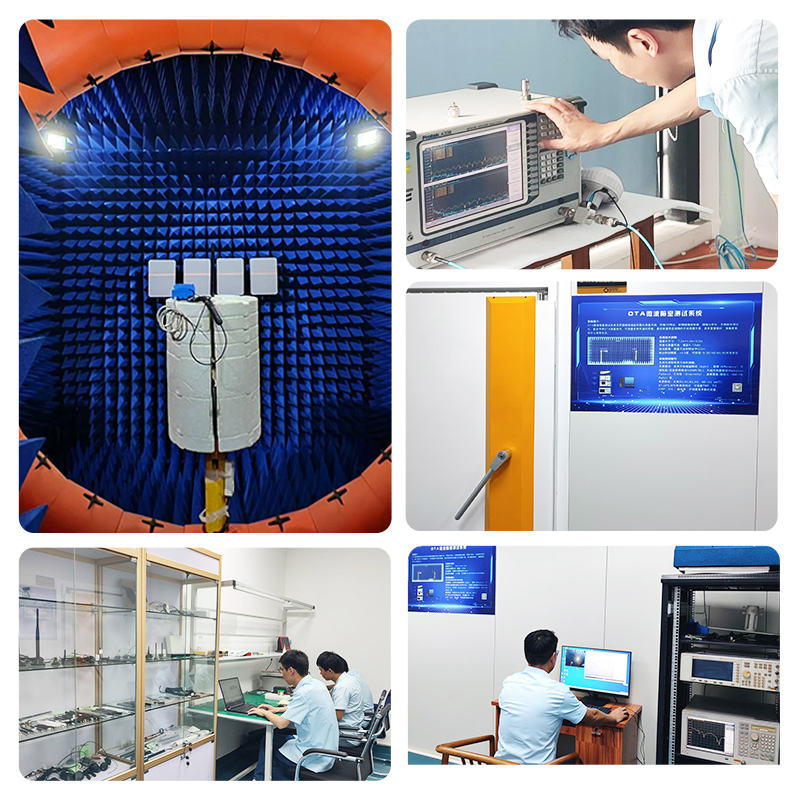
Quality starts with accurate specifications. Some manufacturers exaggerate their antenna gain or frequency range. We test every antenna design in our lab before production. We measure the actual gain, VSWR, and radiation pattern. These measurements must match our published specs.
The VSWR (Voltage Standing Wave Ratio) tells you how well the antenna matches your transmission line. A VSWR of 1.0 is perfect but impossible in real products. We aim for VSWR below 1.5 across the main frequency band, and below 2.0 at the band edges. Higher VSWR means reflected power, which reduces your signal strength and can damage your transmitter.
Construction quality matters for outdoor use. We use UV-resistant materials for the radome (the plastic cover). Cheap plastic becomes brittle after a few months in the sun and cracks. We use fiberglass or ABS plastic with UV stabilizers that last for years.
The connector must be solid and properly sealed. We use brass connectors with gold plating to prevent corrosion. The cable entry point gets sealed with heat-shrink tubing and waterproof adhesive. This prevents water from entering the antenna, which would destroy the performance.
Here is what separates good antennas from bad ones:
| Quality Indicator | Good Antenna | Poor Antenna |
|---|---|---|
| VSWR | <1.5 in band | >2.0, spikes |
| Gain accuracy | ±0.5 dBi | Exaggerated by 2-3 dBi |
| Weather rating | IP67, tested | IP65 claimed, not tested |
| Cable quality | Low-loss coax | High-loss, thin cable |
| Connector | Brass, gold plated | Zinc alloy, no plating |
| Radome material | UV-stabilized ABS | Standard plastic |
| Warranty | 2+ years | 3-6 months or none |
We also test for temperature cycling. An outdoor antenna might face temperatures from -40°C to +85°C depending on the climate. The materials must expand and contract without cracking or losing their electrical properties.
I remember testing a competitor's antenna that looked identical to ours. The specs on paper seemed similar. But when we measured it in our lab, the actual gain was 2 dBi lower than claimed. The VSWR showed huge spikes at certain frequencies. That antenna would cause dropped connections and poor performance.
Quality costs more upfront but saves money over time. A good antenna lasts 5-10 years. A cheap antenna might fail after one year, and you pay for replacement and installation again.
Best Outdoor Antennas: What You Should Know Before Buying?
You want to buy the best antenna, but "best" means different things to different people. The best antenna for a fixed installation is not the best for a mobile vehicle. The best antenna for maximum range is not the best for compact size.
Before buying an outdoor antenna, know your exact frequency requirements, understand your mounting constraints, calculate your link budget to determine needed gain, verify compatibility with your equipment, and check the vendor's technical support capability. These steps prevent costly mistakes.
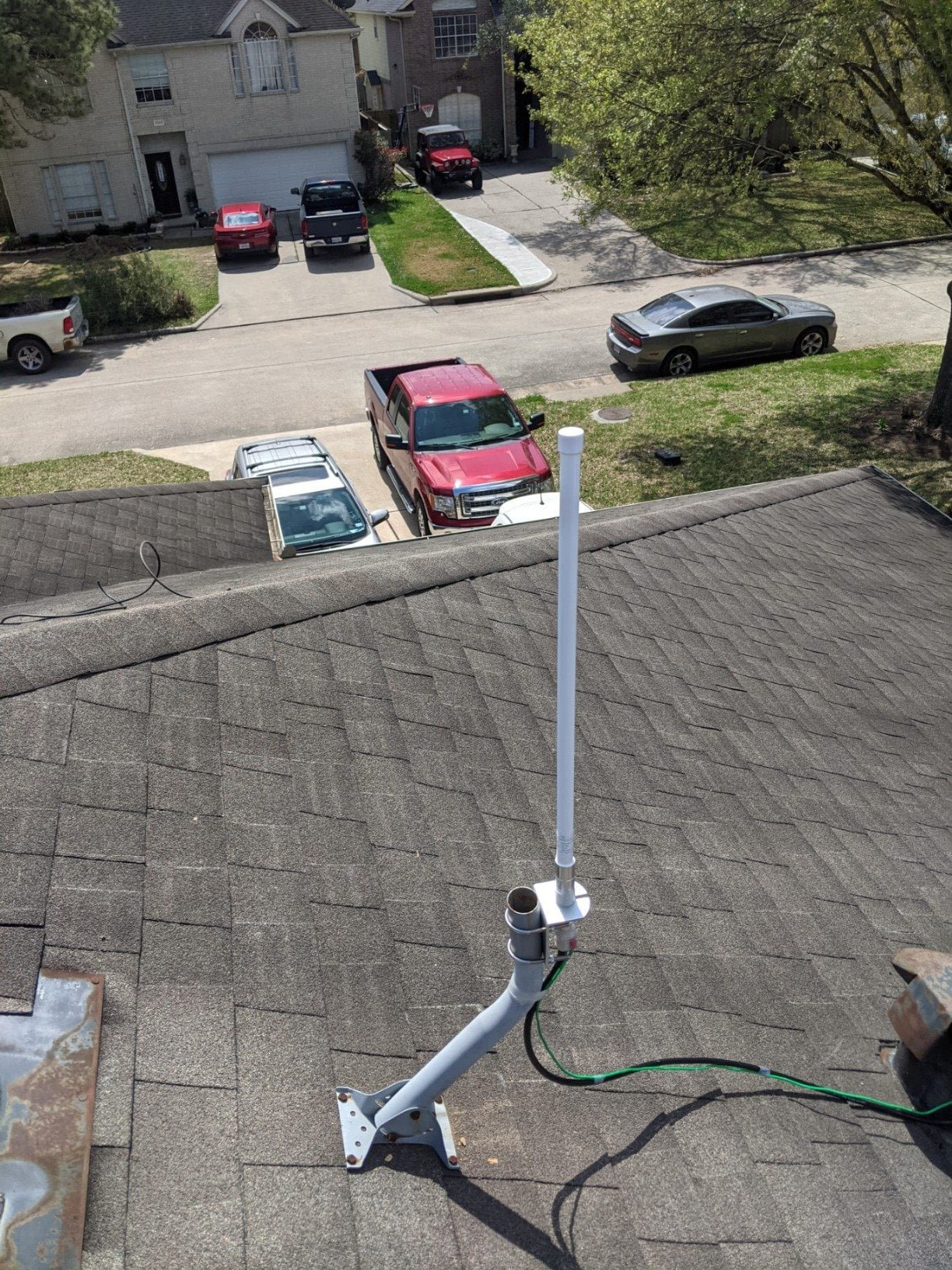
I talk to customers every week who bought antennas without checking compatibility. They assumed any LTE antenna works with any LTE device. This is not true. Your device might use specific LTE bands that the antenna does not cover well.
Start by checking your device specifications. Look for the frequency bands it supports. For example, a 4G router might support bands 2, 4, 5, 12, and 66. You need an antenna that covers all these bands with good efficiency.
Next, consider your mounting location. You might want to mount on a pole, on a wall, on a vehicle roof, or inside an enclosure. Each location has different requirements. A pole mount antenna needs mounting brackets and a way to route the cable down. A vehicle antenna needs a low profile to avoid wind resistance and a strong magnetic or bolt-down mount.
Calculate your link budget if possible. This sounds technical but the concept is simple. You need enough signal strength to maintain a stable connection. The formula is:
Received Power = Transmitter Power + Transmitter Antenna Gain - Path Loss + Receiver Antenna Gain
Path loss depends on distance and frequency. Higher frequencies have more path loss. Longer distances have more path loss. If your calculation shows you need more signal, you need higher gain antennas or you need to reduce the distance.
Here are the questions I ask every customer before recommending an antenna:
| Question | Why It Matters | Example Answer |
|---|---|---|
| What device will use this antenna? | Determines frequency and connector | 4G router, model XYZ |
| What frequency bands do you need? | Ensures coverage | LTE bands 2,4,5,12,66 |
| Where will you install it? | Affects antenna type | Outdoor pole, 3 meters high |
| How far is the signal source? | Determines needed gain | Cell tower 2 km away |
| What is your budget? | Balances cost and performance | $30-50 per antenna |
| Do you need weatherproofing? | Affects housing choice | Yes, outdoor installation |
| How many antennas do you need? | MIMO or diversity | 2 for MIMO router |
I also ask about their experience level. A professional installer can handle complex directional antennas and alignment. A home user needs simple omnidirectional antennas with easy mounting.
Think about future needs too. If you might upgrade to 5G later, buy an antenna that covers both 4G and 5G frequencies. This costs a bit more now but saves you from buying again later.
One customer told me he bought the cheapest antenna he could find on a marketplace. It arrived with no documentation, no specifications, and no support. When it did not work well, he had nobody to ask for help. He ended up buying from us and paying shipping twice. He learned that the cheapest price is not always the best value.
How to Find a Reliable Outdoor Antenna for Strong Signal?
You need strong signal for reliable connections. Weak signal means slow speeds, dropped calls, and frustrating performance. The antenna plays a huge role in signal strength, but it is not the only factor.
To find a reliable outdoor antenna for strong signal, choose an antenna with appropriate gain for your distance, ensure proper installation height and orientation, minimize cable losses with quality coax, and verify the antenna covers your frequency band with good efficiency. Installation quality matters as much as antenna quality.
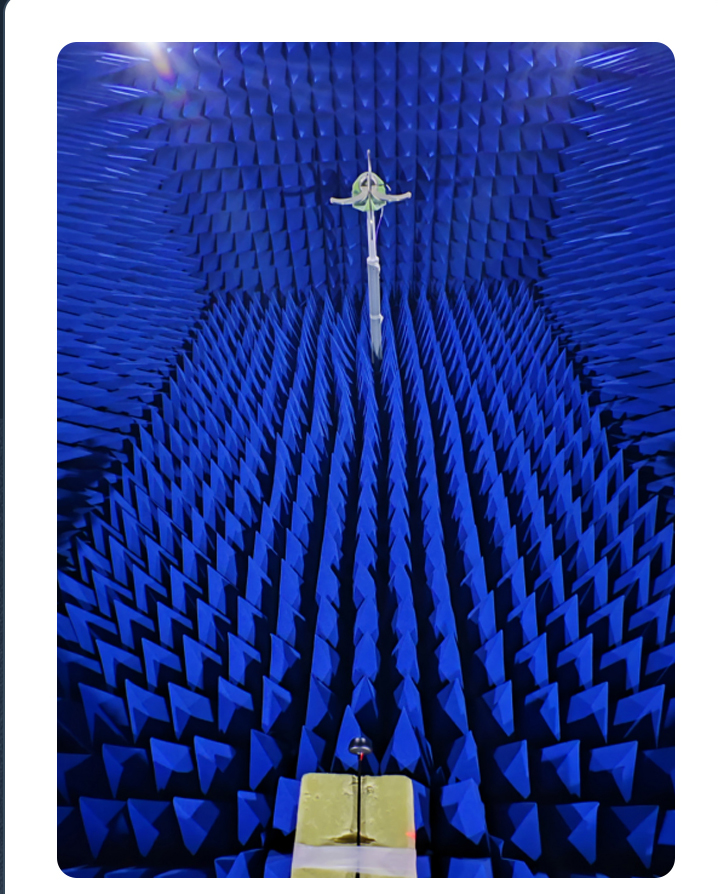
Signal strength depends on several factors working together. The antenna itself is important, but how you install it matters just as much. I have seen great antennas perform poorly because of bad installation.
Height matters a lot. Every meter higher gives you better line of sight to the signal source. Obstacles like buildings and trees block signals. If you can get your antenna above these obstacles, your signal improves dramatically. For cellular signals, I recommend mounting at least 3-5 meters high when possible.
Cable length affects signal strength more than most people realize. Every meter of cable introduces loss. RG174 cable loses about 1 dB per meter at 2 GHz. That means a 5-meter cable loses 5 dB of your signal. This is huge. A 5 dBi antenna with 5 meters of RG174 cable effectively becomes a 0 dBi antenna.
We use low-loss cables like RG58 or LMR200 for longer runs. These lose only 0.3-0.5 dB per meter. For critical applications, we recommend LMR400, which loses only 0.2 dB per meter. Yes, these cables cost more, but they preserve your signal.
Here is a cable comparison:
| Cable Type | Loss at 2 GHz | Good For | Max Length |
|---|---|---|---|
| RG174 | 1.0 dB/m | Very short runs | 1-2 meters |
| RG58 | 0.5 dB/m | Short to medium | 3-5 meters |
| LMR200 | 0.3 dB/m | Medium runs | 5-10 meters |
| LMR400 | 0.2 dB/m | Long runs | 10-20 meters |
Antenna orientation also matters for directional antennas. A panel antenna must point toward the signal source. Even 30 degrees off can reduce your signal by 3-6 dB. We provide mounting brackets that allow adjustment in both horizontal and vertical planes.
For omnidirectional antennas, vertical mounting usually works best for ground-based signals. The antenna radiates in a donut pattern around the vertical axis. If you mount it horizontally, the pattern changes and you might lose signal in certain directions.
I worked with a customer who complained about weak signal even with our high-gain antenna. We asked for photos of his installation. He mounted the antenna inside a metal enclosure. Metal blocks radio signals. We recommended mounting outside the enclosure with a weatherproof cable gland. His signal immediately improved by 15 dB.
Environmental factors matter too. Rain absorbs signals at higher frequencies. Snow on the antenna can detune it. Ice buildup changes the resonant frequency. A good outdoor antenna design minimizes these effects through proper radome shape and materials.
We also recommend using a signal meter or your device's built-in signal strength indicator to verify performance after installation. Many phones show signal strength in their settings. For professional installations, we use spectrum analyzers to measure the actual received signal.
What Is the Best Outdoor Antenna for Long-Range Reception?
You want to receive signals from far away. Maybe you live in a rural area far from cell towers. Maybe you need to connect to a WiFi network across a large property. Long-range reception requires the right antenna type and proper installation.
**The best outdoor antenna for long-range reception is a high-gain directional antenna (8-12 dBi or more) pointed accurately at the signal source, mounted as high as possible, with low-loss cable. Yagi antennas, log-periodic antennas