I remember sitting in a strategy meeting last year when our biggest client dropped a question that sparked a heated two-hour debate: "Should we upgrade our entire fleet to 5G antennas, or can we stick with 4G?" The room split instantly. Half the team saw 5G as the inevitable future. The other half pointed to perfectly functional 4G deployments that still delivered solid ROI. That conversation made me realize—this isn't just a technical question. It's a business decision that requires understanding real performance gaps, cost implications, and timeline considerations that most vendors won't openly discuss.
For most businesses, 5G delivers measurable advantages over 4G only when your application requires ultra-low latency (under 10ms), massive device density (10,000+ connections per square kilometer), or multi-gigabit speeds. If your current operations center on remote monitoring, fleet tracking, point-of-sale systems, or standard data transmission, 4G LTE remains a cost-effective solution through 2028 and beyond. The decision hinges less on future-proofing buzzwords and more on matching antenna technology to your actual operational requirements—frequency compatibility, coverage patterns, MIMO capability, and total deployment cost.
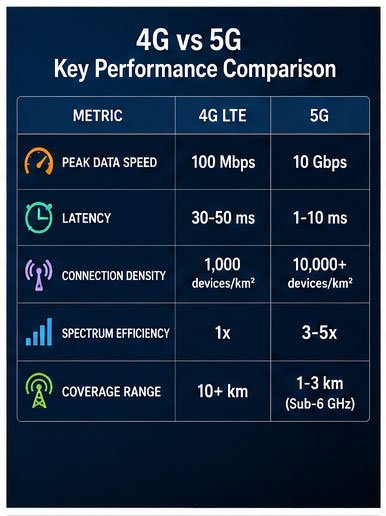
The telecommunications industry loves painting 5G as a revolutionary leap that renders everything before it obsolete. That narrative sells equipment, but it doesn't always align with business reality. Over my 17 years designing and manufacturing communication antennas, I've watched technology cycles repeat—and the pattern is clear: the "best" network technology isn't the newest one, it's the one that matches your specific operational demands without overinvesting in capabilities you'll never utilize. Let's break down exactly when that answer points to 5G, when 4G still makes perfect sense, and how antenna selection determines whether you actually capture the benefits you're paying for.
Choosing the Best Antenna for 4G and 5G Networks
Are you selecting antennas based on network generation labels or actual performance specifications?
Most businesses approach antenna selection backward—they start with "we need a 5G antenna" rather than defining performance requirements first. I've consulted with dozens of companies who purchased expensive 5G-ready antennas only to discover their carrier hasn't deployed 5G infrastructure in their operational zones, or worse, their application never needed 5G capabilities in the first place.
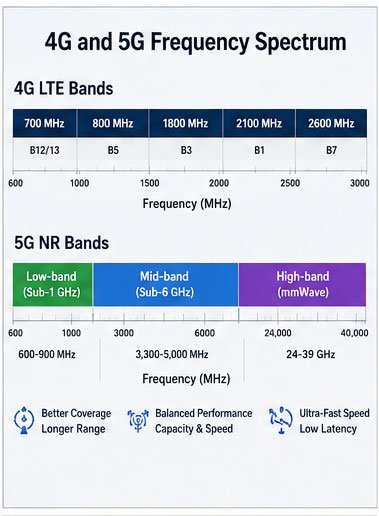
The antenna selection process should begin with three non-negotiable questions: What frequency bands does your carrier actually deploy in your service area? What throughput and latency does your application genuinely require? And what is your realistic timeline for return on investment? Antennas optimized for 4G (698MHz–2700MHz) use fundamentally different element designs than 5G antennas covering mid-band (3300–5000MHz) or mmWave (24–39GHz) frequencies—choosing the wrong one creates an impedance mismatch that tanks your signal quality regardless of network capability.
Here's what actually matters when choosing between 4G and 5G antennas:
Frequency Band Compatibility Is Non-Negotiable
Your antenna must physically resonate at the frequencies your carrier uses. 4G LTE operates primarily in these bands:
| Band | Frequency Range | Coverage Type | Typical Use Case |
|---|---|---|---|
| B2 | 1850–1910 MHz / 1930–1990 MHz | Medium range | Urban and suburban |
| B4 | 1710–1755 MHz / 2110–2155 MHz | High capacity | Dense urban areas |
| B5 | 824–849 MHz / 869–894 MHz | Extended range | Rural coverage |
| B12/13 | 698–716 MHz / 728–746 MHz | Long range | Wide-area coverage |
5G introduces entirely new frequency allocations:
| Band Type | Frequency Range | Maximum Range | Data Rate Capability |
|---|---|---|---|
| Low-band (Sub-6 GHz) | 600–900 MHz | 10+ km | 50–250 Mbps |
| Mid-band (C-band) | 3300–5000 MHz | 1–3 km | 500–1500 Mbps |
| High-band (mmWave) | 24–39 GHz | 200–500 m | 1–10+ Gbps |
An antenna designed for 4G's 1800MHz band will exhibit terrible VSWR (Voltage Standing Wave Ratio) when forced to operate at 5G's 3500MHz—resulting in signal reflection, reduced range, and wasted transmit power. I've tested this repeatedly in our lab. A "wideband" antenna claiming to cover both 4G and 5G often compromises efficiency across both ranges compared to purpose-built designs.
Antenna Gain and Radiation Pattern Define Real-World Performance
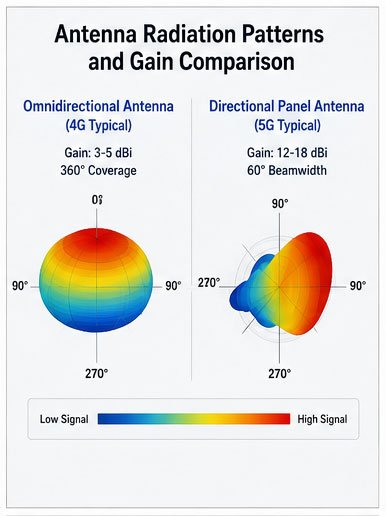
Higher gain doesn't automatically mean better performance—it means more directional focus. A 9dBi omnidirectional antenna provides 360-degree coverage suitable for mobile assets. A 15dBi panel antenna concentrates signal in a 60-degree beamwidth, perfect for fixed point-to-point links but useless if your device moves.
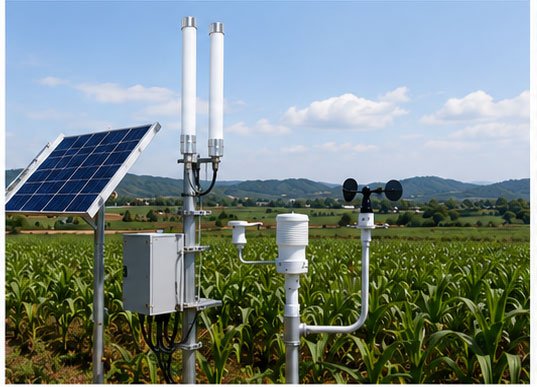
For 4G applications like fleet tracking, industrial IoT sensors, or mobile routers, I typically recommend omnidirectional antennas with 3–5dBi gain. These maintain consistent connectivity as vehicles or equipment change orientation.
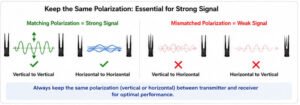
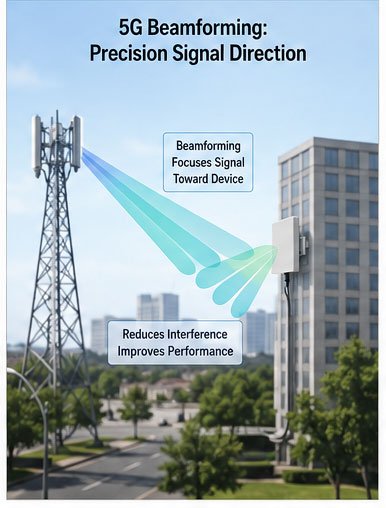
For stationary 5G installations—fixed wireless access points, building-to-tower links, outdoor cameras—high-gain directional antennas (12–18dBi) maximize throughput by focusing energy toward the cell tower. But here's the critical part: 5G's beamforming capabilities only deliver advertised speeds when your antenna polarization matches the base station. Most 5G deployments use dual-polarization (±45°). If your antenna is vertically polarized, you'll experience 6–10dB signal loss even with perfect frequency match.
MIMO Configuration Directly Impacts 5G Performance
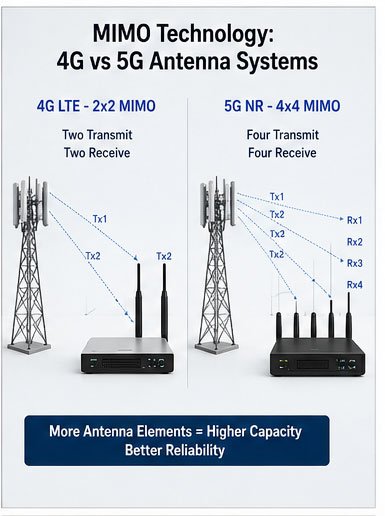
4G LTE introduced 2×2 and 4×4 MIMO (Multiple Input Multiple Output), but 5G takes this to another level with Massive MIMO configurations supporting 8×8, 16×16, or even 64×64 arrays. The practical implication: your antenna system needs multiple elements with precise spatial separation to capture independent signal streams.
A single-element 5G antenna can connect to a 5G network but won't achieve the multi-gigabit speeds in the marketing materials—those require multi-element arrays with proper isolation (typically 20dB+ at operating frequencies). I've measured real-world 5G deployments where improper antenna spacing reduced throughput by 60% compared to correctly configured arrays.
For business applications, here's what you actually need:
- IoT sensors and basic data: Single-element 4G antenna, 3–5dBi gain
- Mobile routers and fleet systems: 2×2 MIMO 4G antenna
- Fixed wireless internet replacement: 4×4 MIMO 5G antenna, mid-band frequencies
- High-capacity video streaming or real-time control: 5G Massive MIMO array with 8+ elements
Environmental Durability Determines Long-Term Cost
Every antenna specification sheet lists IP ratings, but few businesses calculate the replacement cost of failure. An outdoor 4G antenna exposed to UV, rain, and temperature cycling without proper sealing will degrade within 18–24 months. I've seen customers save $30 per unit on cheaper antennas only to spend thousands in truck rolls replacing failed units.
For permanent installations, insist on IP67 or higher (complete dust protection, submersion resistant). For vehicular applications, add vibration resistance specs—look for antennas tested to MIL-STD-810G if available. For 5G mmWave frequencies, radome material becomes critical. Standard plastics absorb high-frequency signals; you need low-loss dielectrics like polycarbonate or specialized Radome materials.
4G vs 5G Antennas: Which One Is Right for Your Application?
Can your application tolerate 4G's performance envelope, or does it genuinely require 5G's capabilities?
This question determines whether you're making a smart infrastructure investment or wasting capital on unnecessary technology. I worked with a logistics company that deployed 5G antennas across their entire warehouse automation system—only to realize their sensor network transmitted 50KB packets every 30 seconds. They were using a Ferrari to deliver mail. On the other hand, a manufacturing client running vision-guided robotics hit bandwidth ceilings with 4G that killed their production efficiency. Understanding which scenario matches your reality saves enormous time and money.
4G LTE antennas remain the optimal choice for applications requiring reliable, wide-area coverage with moderate data demands (1–50 Mbps per connection), especially when devices are mobile, power-constrained, or deployed across rural zones. 5G antennas become necessary when your operation demands sub-10ms latency for real-time control systems, handles burst traffic exceeding 100 Mbps, requires dense device connectivity (hundreds of sensors per cell), or needs to future-proof infrastructure in confirmed 5G deployment zones. The antenna choice must align with both current requirements and your carrier's verified 5G rollout timeline in your operational geography.
Let me walk through the decision framework I use when consulting with business clients:
Application-Specific Performance Requirements
Different use cases have wildly different network demands. Here's a breakdown of common business applications and which network technology actually fits:
Fleet Management and Asset Tracking
- Data requirement: 10–50 KB per location update, every 30–300 seconds
- Latency tolerance: 1–5 seconds acceptable
- Coverage priority: Wide-area, including rural highways
- Recommendation: 4G LTE antenna (700–900 MHz low-band for best coverage)
- Why: GPS coordinates plus basic telemetry require minimal bandwidth. 4G's superior rural coverage and lower power consumption make it ideal. 5G adds cost without benefit.
Point-of-Sale and Payment Terminals
- Data requirement: 50–200 KB per transaction
- Latency tolerance: Under 2 seconds for customer experience
- Coverage priority: Urban/suburban commercial zones
- Recommendation: 4G LTE antenna (1800–2100 MHz bands)
- Why: Transaction data is small. 4G provides more than adequate speed while maintaining compatibility with existing infrastructure. 5G adds unnecessary complexity.
Video Surveillance and Remote Monitoring
- Data requirement: 2–10 Mbps per camera (H.265 compression)
- Latency tolerance: 100–500ms acceptable for recorded footage
- Coverage priority: Fixed locations, often remote sites
- Recommendation: 4G LTE antenna (directional, high-gain) for 1–4 cameras; 5G antenna for 8+ cameras
- Why: 4G handles multiple standard-definition streams. 5G becomes necessary when bandwidth demands exceed 30–40 Mbps or you need live 4K feeds.
Industrial Automation and Robotics
- Data requirement: Variable—sensor data minimal, but control commands critical
- Latency tolerance: Under 10ms for real-time control loops
- Coverage priority: Factory floor, usually fixed locations
- Recommendation: 5G antenna (mid-band or mmWave with redundancy)
- Why: This is where 5G's ultra-reliable low-latency communication (URLLC) matters. 4G's 20–30ms latency is too slow for closed-loop control systems. The antenna configuration needs Massive MIMO to maintain reliability.
Fixed Wireless Access (Internet Replacement)
- Data requirement: 25–100+ Mbps for business operations
- Latency tolerance: Under 20ms for VoIP and video conferencing
- Coverage priority: Line-of-sight to nearby cell tower
- Recommendation: 5G antenna (mid-band, directional, 4×4 MIMO minimum)
- Why: This is 5G's strongest business case. Where fiber isn't available, 5G fixed wireless with proper external antennas delivers fiber-like speeds at fraction of installation cost.
Coverage Zone Analysis
Your carrier's actual network deployment matters more than their marketing claims. Before specifying antennas, verify:
-
4G Band Deployment: Check CellMapper.net or your carrier's coverage maps for specific band availability (B2, B4, B12, etc.) in your operational areas. Low-band 4G (600–900 MHz) penetrates buildings and covers rural areas but offers lower speeds (5–30 Mbps). Mid-band 4G (1800–2100 MHz) delivers higher speeds (20–100 Mbps) but requires more cell sites.
-
5G Availability Type: Distinguish between:
- 5G Low-band: Basically enhanced 4G, similar coverage, 20–30% speed improvement
- 5G Mid-band: True 5G experience, 500+ Mbps, but requires clear signal path
- 5G mmWave: Ultra-fast but limited to dense urban areas, line-of-sight only
If your carrier only offers 5G low-band in your area, you're paying for 5G antennas to access marginally improved 4G. That's a poor ROI.
Total Cost of Ownership
Antenna hardware is only part of the equation. Calculate:
| Cost Component | 4G Deployment | 5G Deployment |
|---|---|---|
| Antenna hardware (per unit) | $30–$150 | $80–$400 |
| Cellular module/modem | $40–$80 | $120–$250 |
| Data plan (monthly, per device) | $15–$40 | $25–$80 |
| Power consumption (watts) | 2–5W | 5–12W |
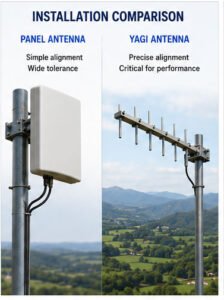
| Installation complexity | Low (simple mounting) | Medium-High (alignment critical for mmWave) |
| Replacement cycle (years) | 5–7 | 3–5 (newer technology) |
For a 100-device deployment over 5 years:
- 4G total cost: ~$140,000–$200,000
- 5G total cost: ~$260,000–$450,000
That price difference only makes sense if 5G capabilities directly generate revenue or prevent operational losses exceeding the cost delta.
Migration Timeline Considerations
If you determine 5G is necessary but isn't fully deployed yet, consider:
-
Dual-mode antennas: Some wideband designs cover both 4G LTE and 5G mid-band frequencies (600–6000 MHz). These cost 30–50% more than single-band antennas but eliminate future replacement costs. However, they compromise efficiency compared to purpose-built designs—expect 1–2dB gain loss across the spectrum.
-
Staged deployment: Start with 4G in areas with weak 5G coverage, deploy 5G where it's mature. This requires logistics overhead but optimizes cost versus performance.
-
Future-proof infrastructure: Even if you deploy 4G antennas today, install cabling and mounting systems that accommodate future 5G upgrades. Running new cables to 50 remote sites costs far more than antenna hardware.
I recently advised a cold-storage facility network upgrade. They needed asset tracking (4G sufficient) but planned to add autonomous forklifts (5G required) in 2–3 years. We deployed 4G antennas for immediate needs while designing mounting systems for future 5G Massive MIMO arrays. This saved $80,000 upfront while preventing rework costs later.
How to Select the Best Antenna for 4G and 5G Connectivity
What technical parameters separate a functional antenna from an optimal one?
Most businesses focus on "4G vs 5G" as if that's the only decision point. In reality, even after choosing the network generation, antenna selection involves a dozen parameters that determine whether your deployment meets, exceeds, or falls short of performance requirements. I've audited installations where companies bought technically correct antennas but saw 40–50% throughput loss because they ignored cable length, connector quality, or polarization mismatch.
Selecting the best antenna requires matching six critical specifications to your deployment environment: frequency band coverage that precisely aligns with your carrier's spectrum, gain and radiation pattern appropriate to your coverage area, MIMO configuration that supports your required data rates, connector type and cable assembly that minimizes insertion loss, environmental rating (IP and temperature range) that ensures reliability in your operating conditions, and physical form factor that integrates with your equipment and mounting locations. Pre-deployment testing with carrier-specific SIM cards in actual installation locations reveals signal quality that specification sheets cannot predict.
Here's the systematic selection process I've refined over hundreds of deployments:
Step 1: Verify Exact Frequency Requirements
Don't rely on generic "4G" or "5G" specifications. Get specific: