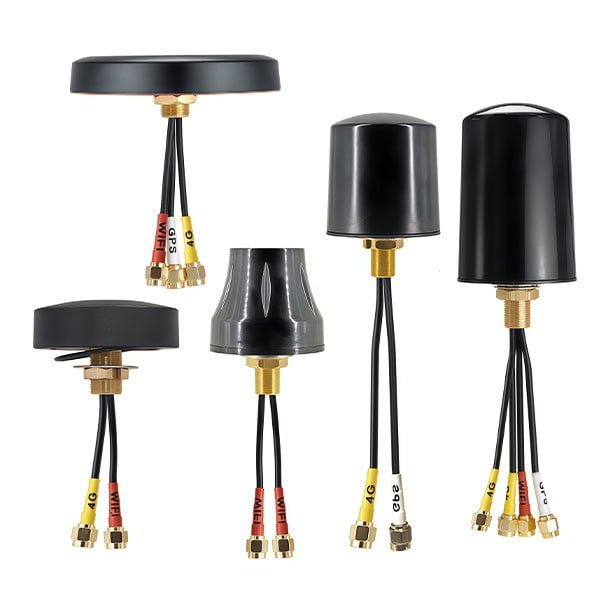
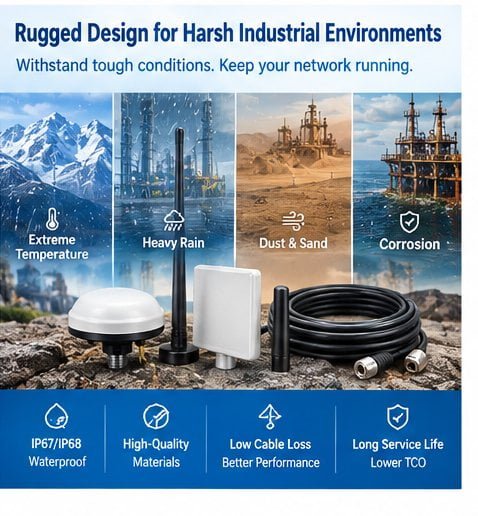
Businesses often struggle to find off-the-shelf antennas that perfectly meet their unique product specifications, leading to compromised performance in critical applications. This mismatch can result in subpar wireless communication, lost data, and ultimately, dissatisfied end-users. Custom antenna design, leveraging advanced RF simulation, offers a tailored solution, ensuring optimal performance from concept through mass production.
Custom antenna design is a specialized engineering process that transforms specific performance requirements into a physical antenna, starting with detailed RF simulation and modeling to predict and optimize electromagnetic behavior. This systematic approach progresses through prototyping, rigorous testing, and iterative refinement, culminating in a robust design ready for efficient, high-quality mass production, ensuring the antenna seamlessly integrates and performs optimally within its intended application.
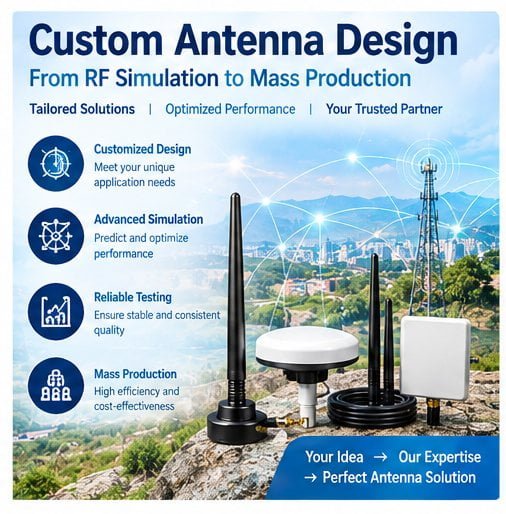
Understanding the journey from a nascent idea to a fully functional, mass-produced antenna can seem complex. Let's delve into the crucial steps involved in this intricate process, exploring how expertise and technology converge to create high-performing custom antenna designs.
Custom Antenna Development: From Concept and Simulation to Mass Production?
Developing a custom antenna design from scratch can feel daunting, with numerous performance variables to consider. Without a structured development process, projects can face delays, cost overruns, and ultimately fail to meet performance targets. A systematic approach, starting with precise concept definition and moving through RF simulation, is essential for successful antenna development to mass production.
Custom antenna development begins with a deep understanding of application requirements, followed by conceptual design and advanced RF simulation. These simulations predict performance and enable rapid iteration before physical prototyping. The process then moves to prototype fabrication, rigorous testing, and optimization, ensuring the design is refined for eventual high-volume, cost-effective mass production.

Defining the Requirements for Custom Antenna Development
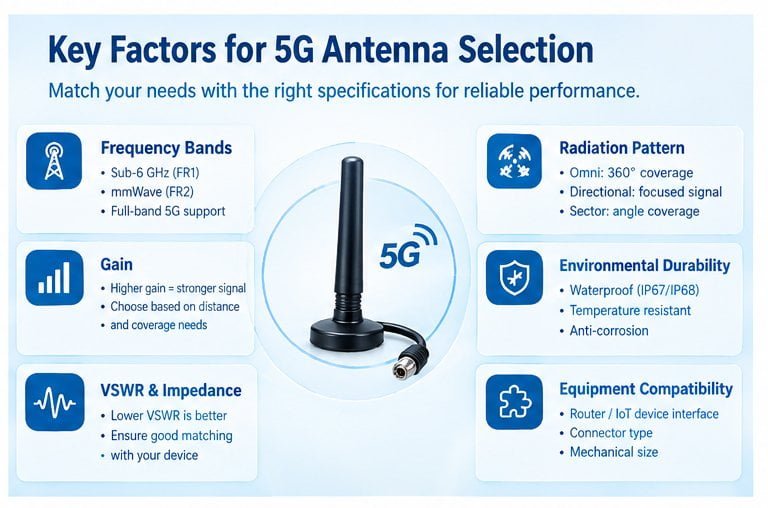
Every successful custom antenna project starts with a clear and comprehensive set of requirements. This initial phase is crucial, as it dictates the entire design direction. As a manufacturer with over 17 years of experience, we've learned that overlooking even a small detail here can cascade into significant issues later. Our clients, typically overseas communication equipment manufacturers or system integrators, provide us with critical parameters. These include the precise operating frequency range, desired gain, acceptable Voltage Standing Wave Ratio (VSWR), impedance matching requirements, and radiation pattern characteristics. Beyond electrical performance, we also consider physical constraints such as size, weight, connector type, cable length, and environmental conditions (temperature, humidity, vibration, ingress protection). For instance, an antenna destined for an outdoor IoT sensor will have very different environmental demands than one for an indoor router. Our engineering team works closely with clients to define these specifications, often providing guidance based on our extensive project history. This collaborative approach ensures that the conceptual design is firmly grounded in real-world application needs.
The Power of RF Simulation in Custom Antenna Design
Once the requirements are defined, the conceptual design truly begins, heavily relying on advanced RF simulation. This is where the magic of modern engineering truly shines. Instead of building and testing numerous physical prototypes, we leverage sophisticated electromagnetic simulation software like HFSS or CST Studio Suite. These tools allow our engineers to model the antenna's geometry, materials, and surrounding environment with high fidelity.
For example, when a client approached us for a compact 5G antenna for a new smart device, the initial simulations helped us quickly iterate through various material compositions and form factors. We could predict its efficiency, bandwidth, gain, and radiation patterns digitally, making rapid adjustments to optimize performance. This significantly reduces development time and cost, as we can identify potential issues and refine the design virtually before any material is cut. These simulations also help predict how the antenna will interact with its immediate surroundings, such as the device's casing or other internal components, which is critical for ensuring optimal in-situ performance. The ability to visualize electromagnetic fields and current distribution provides invaluable insights, guiding our designers toward the most effective custom antenna design.
Prototyping and Iterative Refinement
While RF simulation provides powerful predictions, physical prototyping and testing are indispensable for validating and refining the custom antenna design. After simulation results confirm a promising design, our team proceeds to fabricate initial prototypes. This is where our one-stop service capabilities, from design to rapid prototyping, truly benefit our customers. We might use 3D printing for initial structural prototypes or precise CNC machining for critical components, followed by integration with actual antenna elements like PCB, FPC, or ceramic substrates.
These prototypes are then rigorously tested in our anechoic chamber, where we measure real-world performance parameters such as VSWR, gain, efficiency, and radiation patterns across the specified frequency range. I recall a project where a simulated antenna showed excellent performance, but initial prototype testing revealed a slight deviation in the upper frequency band. This is not uncommon, as manufacturing tolerances and material properties can introduce subtle differences. Our engineers then analyzed the test data, compared it against simulation models, and made iterative adjustments to the physical design—perhaps tweaking a trace length on a PCB antenna or adjusting the dielectric constant of a substrate. This cycle of prototype, test, analyze, and refine continues until the antenna's performance consistently meets or exceeds the defined specifications. This meticulous process ensures that the final custom antenna design is robust, reliable, and ready for the next stage: manufacturing.
How Custom Antennas Are Designed: From RF Simulation to Manufacturing?
Translating theoretical custom antenna design concepts into a manufacturable product requires bridging the gap between digital models and physical reality. Inaccurate design translation or overlooked manufacturing constraints can lead to performance degradation or unfeasible production. A meticulous design process, heavily informed by RF simulation and manufacturing considerations, ensures a smooth transition from concept to a high-quality antenna.
Custom antennas are designed by first establishing comprehensive performance specifications and environmental constraints, which then inform detailed RF simulation models. These models are used to optimize electromagnetic characteristics and predict real-world behavior. The finalized design is then prepared for manufacturing, incorporating material selection, fabrication techniques, and quality control parameters to ensure scalability and consistent performance.
Material Selection and Fabrication Techniques for Custom Antennas
The choice of materials and fabrication techniques is paramount in realizing a successful custom antenna design. The physical properties of materials directly impact an antenna's electrical performance, durability, and cost. For example, a WiFi antenna might use FR4 PCB for cost-effectiveness, while a high-frequency 5G antenna might require specialized low-loss substrates like Rogers materials to maintain signal integrity. We consider a range of materials including flexible printed circuit (FPC), ceramic, fiberglass, and various metals for different antenna types and applications.
Our expertise extends to various fabrication techniques. For PCB antennas, we utilize precise etching and plating processes. For ceramic antennas, sintering and metallization are key. Fiberglass antennas, often used for outdoor applications, involve careful resin infusion and molding. Each technique requires specific tooling and process control. When a client requested a durable outdoor LORA antenna, we recommended a fiberglass radome for its weather resistance and a specific internal element design, leveraging our experience in selecting materials that balance performance with environmental resilience. This deep understanding of material science and manufacturing processes allows us to translate an optimal RF simulation into a physically robust and high-performing antenna.
Design for Manufacturability (DFM) in Antenna Production
Integrating Design for Manufacturability (DFM) principles early in the custom antenna design phase is critical for efficient and cost-effective mass production. DFM focuses on optimizing the design to simplify manufacturing processes, reduce material waste, and minimize assembly time, without compromising performance. For us, this means that even during RF simulation, our engineers consider not just the electrical performance but also how easily a design can be replicated consistently on our production lines.
This includes specifying standard component sizes, minimizing complex geometries that require specialized tooling, and ensuring sufficient tolerances to account for manufacturing variations. For instance, if a design calls for extremely tight trace widths on a PCB antenna, our DFM review might suggest slight adjustments that still meet RF performance but are more robust to mass production variances, thereby improving yield. We also design for automated assembly where possible, leveraging our stable production system and mature engineering team. Our OEM/ODM capabilities are built upon this foundation, allowing us to adapt designs for seamless integration into our manufacturing workflows. This proactive approach during the design phase significantly reduces potential production bottlenecks and quality issues down the line, ensuring that the transition from a verified design to large-scale manufacturing is smooth and predictable.
Quality Control Integration from Design to Manufacturing
Quality control (QC) is not an afterthought; it's interwoven into every stage of how custom antennas are designed, from the initial RF simulation to the final product leaving our facility. Our ISO9001 quality management system certification reflects this commitment. During the design phase, QC involves rigorous review of simulation data, material specifications, and DFM considerations. Each design element is checked against performance and manufacturing feasibility criteria.
As the design moves into prototyping and early production runs, we establish specific inspection points. This includes incoming material inspection, in-process checks during assembly (e.g., solder joint quality, component placement for FPC antennas), and critical electrical performance tests at various stages. For example, after soldering a coaxial cable to an antenna element, we perform impedance matching checks to ensure the connection maintains RF integrity. We maintain strict control over manufacturing tolerances, using automated optical inspection (AOI) for PCB antennas and precise measurement equipment for physical dimensions. If a client needs their products to comply with international standards like CE or RoHS, these requirements are embedded into our design and manufacturing processes from day one. This comprehensive, integrated quality control system ensures that every custom antenna design we produce not only performs as expected but also meets the highest standards of reliability and consistency when delivered to our global customers.
From RF Simulation to Mass Production: The Complete Custom Antenna Design Process?
Navigating the entire lifecycle of a custom antenna design, from initial RF simulation to large-scale mass production, can be a complex endeavor. Without a clear roadmap and experienced partners, businesses risk delays, escalating costs, and a final product that falls short of expectations. A comprehensive, phased process, guided by expertise, ensures a seamless journey from theoretical simulation to reliable, high-volume manufacturing.
The complete custom antenna design process integrates initial requirements gathering with advanced RF simulation for theoretical validation, followed by prototype development and rigorous performance testing. Once validated, the design transitions to engineering for manufacturing, encompassing tooling, process optimization, and stringent quality control protocols, culminating in efficient and consistent mass production to meet market demand.

Phased Approach to Custom Antenna Design and Production
Our approach to custom antenna design and production follows a well-defined, phased methodology, ensuring clarity and control at every step. This systematic process is vital for managing complexity and delivering consistent results, especially for our diverse range of international clients.
- Requirement Definition & Feasibility Study: This initial phase involves in-depth discussions with the client to capture all technical specifications, application scenarios, environmental constraints, and target cost. We then conduct a feasibility study, leveraging our vast experience and initial RF simulations to assess the viability of the proposed design within given parameters. This often includes recommending specific antenna types (e.g., patch, dipole, monopole) and materials based on the frequency and form factor.
- RF Design & Simulation: Based on the agreed-upon requirements, our expert engineering team develops the detailed RF design. This is where advanced simulation software comes into play, creating virtual prototypes and optimizing performance metrics like gain, VSWR, and radiation patterns. This phase includes iterative adjustments based on simulation results to achieve the best possible theoretical performance.
- Prototype Fabrication & Testing: Once the simulation-verified design is ready, we move to physical prototyping. This involves fabricating a small batch of antennas using precise manufacturing techniques. These prototypes undergo rigorous testing in our anechoic chamber and other specialized equipment to validate their performance against the specified parameters. Any discrepancies between simulation and physical test results lead to further refinement.
- Design Validation & Finalization: After prototype testing and any necessary adjustments, the design is validated. This stage often involves customer review and approval, and sometimes field testing in the actual application environment. Once validated, the design is considered final and ready for manufacturing engineering.
- Manufacturing Engineering & Tooling: This phase focuses on preparing the design for mass production. It includes designing and fabricating specialized tooling, jigs, and fixtures, establishing detailed manufacturing instructions (Standard Operating Procedures - SOPs), and optimizing the assembly line processes. Design for Manufacturability (DFM) and Design for Assembly (DFA) principles are heavily applied here.
- Mass Production & Quality Assurance: With manufacturing processes in place, we begin mass production. This phase is characterized by continuous in-process quality control, automated testing, and strict adherence to our ISO9001 certified quality management system. Our stable production system ensures consistent output, while our flexible MOQ and fast delivery capabilities allow us to meet varied client demands, from small-batch testing orders to large-volume commercial deployments.
This phased approach provides transparency and confidence for our clients, knowing that every aspect of their custom antenna design is meticulously handled.
Testing and Validation in the Custom Antenna Lifecycle
Rigorous testing and validation are non-negotiable at multiple junctures in the custom antenna design lifecycle. It's how we verify that a theoretical design performs as expected in the real world and how we guarantee consistency in mass production. Our testing facilities are equipped with state-of-the-art equipment to perform a comprehensive suite of tests.
- Anechoic Chamber Measurements: This is our primary tool for characterizing antenna performance. Inside our anechoic chamber, we measure crucial parameters such as:
- VSWR (Voltage Standing Wave Ratio): Indicates how well the antenna is matched to the transmission line. A low VSWR (typically 1.5:1 or better) means minimal signal reflection.
- Gain: A measure of the antenna's ability to direct power in a specific direction.
- Efficiency: The ratio of radiated power to input power, accounting for losses.
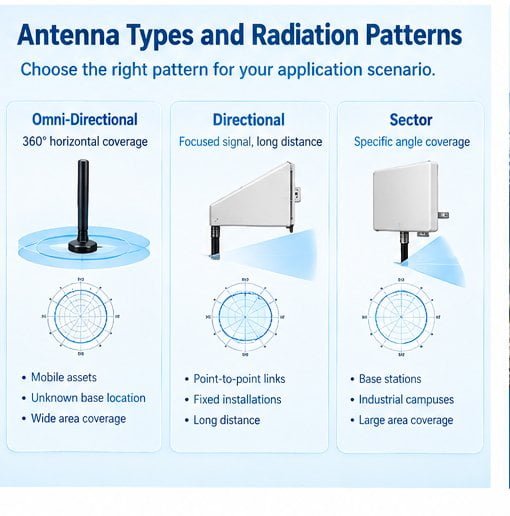
- Radiation Patterns: Visual representations of how the antenna radiates energy in different directions, essential for coverage analysis.
- Polarization: The orientation of the electromagnetic waves, critical for specific applications.
- Environmental Testing: For antennas used in harsh conditions, we conduct tests for temperature cycling, humidity exposure, vibration, and salt spray, ensuring durability and reliability over time. For example, an antenna designed for automotive systems must withstand extreme temperature fluctuations and constant vibration.
- Material Analysis: We verify material properties to ensure they match design specifications, preventing performance deviations due to material inconsistencies.
- Mechanical & Structural Integrity: Tests to confirm the physical robustness, connector pull strength, and overall build quality.
Each test provides critical data points that inform design modifications and confirm performance. My team takes pride in the meticulousness of these tests, knowing that they are the bedrock of our product quality. This comprehensive validation ensures that the custom antenna design delivers on its promises, ready for deployment in real-world applications.
Scaling Up: Mass Production and Quality Assurance
The culmination of the entire custom antenna design process is successful mass production. This is where the validated design is brought to life on a large scale, consistently, and cost-effectively. Our manufacturing facility in Shenzhen is optimized for this transition. We have invested in a stable production system that includes automated and semi-automated assembly lines, which are crucial for maintaining uniformity across thousands or even millions of units.
Key aspects of our mass production strategy include:
- Standardized Workflows: Every step, from component placement to final assembly, follows strict Standard Operating Procedures (SOPs), minimizing human error and ensuring repeatability.
- In-line Quality Checks: Quality control is not just at the end; it's integrated into every production stage. This includes visual inspections, automated impedance matching checks, and functional tests at various assembly points.
- Automated Testing: We utilize automated test equipment (ATE) to perform final electrical performance verification on every antenna, ensuring that each unit meets the specified gain, VSWR, and frequency response.
- Traceability: Each batch of antennas can be traced back to its raw materials, production date, and specific test results, providing full accountability.
- Certifications & Compliance: Our products often undergo final compliance testing to meet international standards such as CE, RoHS, and others required for export to over 100 countries including Europe, the US, Southeast Asia, and the Middle East. This is a critical factor for our overseas customers.
Our ability to offer flexible MOQ and fast delivery stems directly from this efficient and stable production system. We understand that our clients, whether they are large integrators or e-commerce sellers, need reliable supply and the capacity to scale. By meticulously managing the transition from RF simulation to mass production, we position ourselves as a dependable, long-term antenna supplier, ensuring that every custom antenna design we deliver performs flawlessly in the field.
Custom Antenna Manufacturing: From RF Design and Testing to Mass Production?
After a custom antenna design is finalized and tested, scaling it up for mass production presents a new set of challenges. Inefficient manufacturing processes or inadequate quality checks can compromise product consistency, lead to high defect rates, and damage brand reputation. A robust manufacturing framework, rooted in precise RF design and continuous testing, is crucial for delivering high-quality antennas in volume.
Custom antenna manufacturing seamlessly extends from verified RF design and prototype testing into large-scale production. This involves establishing standardized assembly lines, implementing stringent in-process quality control, and performing final product validation tests. The goal is to consistently reproduce the antenna's optimal performance characteristics and physical specifications across every unit, ensuring reliability for mass deployment.
Ensuring Repeatability in Custom Antenna Manufacturing
Repeatability is the cornerstone of successful custom antenna manufacturing. It ensures that every antenna coming off the production line exhibits the same high performance and quality as the verified prototype. Achieving this consistency requires a combination of precise tooling, standardized processes, and skilled personnel.
Our mature engineering team plays a pivotal role here, designing production jigs and fixtures that minimize variability during assembly. For example, when manufacturing a precise FPC antenna, specific fixtures ensure exact component placement and soldering, which are critical for maintaining RF performance. We also implement statistical process control (SPC) techniques to monitor key manufacturing parameters and detect any deviations early. This continuous monitoring helps us maintain tight tolerances on physical dimensions, material properties, and electrical connections. Furthermore, robust training programs for our production staff ensure that they consistently follow established procedures. This meticulous attention to process detail is what allows us to reliably reproduce complex custom antenna designs at scale, ensuring every unit matches the performance our clients expect.
Quality Control Checkpoints in Antenna Production
Throughout the custom antenna manufacturing process, we embed multiple quality control checkpoints to guarantee product integrity and performance. These checkpoints are not merely final inspections but integrated steps designed to catch potential issues as early as possible, preventing defects from propagating down the line.
Our quality assurance process includes:
- Incoming Material Inspection (IQC): All raw materials, from copper foil for PCBs to plastic for radomes and connectors, are inspected upon arrival to ensure they meet specifications. This pre-emptive check prevents faulty materials from entering the production cycle.
- In-Process Quality Control (IPQC): During various stages of assembly, technicians perform checks. This can include visual inspection of solder joints, verification of component placement, and initial electrical tests like continuity and short-circuit checks. For antenna elements, impedance matching checks are often performed immediately after fabrication.
- Automated Optical Inspection (AOI): For complex PCB and FPC antennas, AOI systems automatically scan the boards for defects such as opens, shorts, incorrect component placement, or missing parts, ensuring precision and reliability.
- Electrical Performance Testing (EPT): Every finished antenna undergoes a final electrical performance test in an anechoic chamber or on a test bench, verifying parameters like VSWR, gain, and frequency response. This is a critical pass/fail gate before packaging.
- Environmental & Reliability Testing: Batch samples are periodically subjected to accelerated life tests, including temperature cycling, humidity, and vibration tests, to ensure long-term durability and performance stability under various operating conditions.
- Outgoing Quality Control (OQC): Before shipment, a final audit ensures that products meet all customer specifications, including packaging and labeling requirements.
This layered approach to quality control, governed by our ISO9001 certification, underscores our commitment to delivering only the highest quality custom antenna designs to our global clientele.
Supplier Selection for Reliable Custom Antenna Manufacturing
For our target customers—overseas communication equipment manufacturers, system integrators, wholesalers, and e-commerce sellers—selecting a reliable supplier for custom antenna manufacturing is a critical decision. They need a partner who can deliver not just a product, but a complete solution with consistent quality and support. This is where our unique advantages come into play.
When evaluating a supplier, customers typically focus on several key aspects:
- Product Performance & Stability: Our 17+ years of experience and mature engineering team ensure accurate RF design and stable performance. We back our claims with data from our anechoic chamber testing.
- Customization Capabilities (OEM/ODM): We offer extensive OEM/ODM services, allowing flexibility in frequency, connector type, cable length, and even aesthetic design. This means we can match specific device requirements perfectly.
- Flexible MOQ: We understand that customers need flexibility, especially for testing and new product introductions. Our flexible Minimum Order Quantity (MOQ) supports small-batch testing orders, enabling clients to validate designs before committing to large volumes.
- Fast & Stable Delivery: Our optimized supply chain and efficient production system allow for quick turnaround times and stable delivery schedules, which is crucial for customers managing their own production timelines.
- Export Experience & Compliance: Having exported to over 100 countries, we possess extensive experience in international logistics, customs procedures, and compliance with certifications like CE and RoHS. This simplifies the procurement process for our global customers.
- Quality Certifications & Patents: Our ISO9001 certification and 40+ patents (including invention and appearance patents) provide tangible proof of our commitment to quality, innovation, and intellectual property.
We don't just sell antennas; we aim to be a long-term, reliable partner, providing cost-effective, customizable, and stably delivered communication antenna solutions that help our customers bring their innovative products to market faster and more confidently. This holistic approach to supplier selection is what sets us apart in the competitive landscape of custom antenna manufacturing.
Frequently Asked Questions
What is the typical lead time for a custom antenna design project?
The lead time for a custom antenna design project varies depending on complexity, from 4-6 weeks for initial design and prototyping to 8-12 weeks for a fully validated design ready for mass production. Factors like design iterations and material availability can influence the timeline.
What information do I need to provide for a custom antenna quote?
To request a quote for custom antenna design, provide details such as the operating frequency range, desired gain, VSWR, physical dimensions, connector type, cable length, expected operating environment, and target production volume. Any existing device schematics or mechanical drawings are also highly beneficial.
Can you help with certification requirements for custom antennas?
Yes, we can. We have extensive experience with international certifications. Our products can be designed and manufactured to comply with various standards, including CE, RoHS, and others relevant to specific regions, assisting clients with their product certification needs.
What is the minimum order quantity (MOQ) for custom antennas?
We offer flexible MOQs for custom antenna design and manufacturing to support various client needs, from small-batch prototypes for testing to large-volume production. Please discuss your specific project requirements with our sales team for tailored MOQ options.
How do you ensure the quality of custom antennas during mass production?
We ensure quality through our ISO9001 certified management system, integrating stringent quality control checkpoints throughout the entire custom antenna manufacturing process. This includes incoming material inspection, in-process quality control, automated testing, and comprehensive final product validation, guaranteeing consistency and reliability.
Conclusion
The journey of custom antenna design is a meticulous process, evolving from initial concept and RF simulation through rigorous prototyping, testing, and finally, to stable mass production. It demands deep engineering expertise, advanced technological tools, and an unwavering commitment to quality at every stage. We've explored how a systematic approach, from defining precise requirements and leveraging powerful RF simulation to implementing robust DFM principles and comprehensive quality control, ensures the successful realization of high-performance antennas tailored to unique applications. Our one-stop service capability, backed by 17 years of industry experience and an ISO9001 certified production system, underscores our commitment to delivering reliable, customizable, and high-quality RF solutions.
If your wireless communication product demands more than an off-the-shelf solution, and you require a custom antenna design that perfectly integrates and performs flawlessly, I invite you to partner with us. Contact our expert team today to discuss your specific needs and discover how our capabilities can bring your innovative ideas to life, from RF simulation to mass production.