When you're selecting antennas for drone applications, you quickly realize that the quad-helical antenna stands apart from standard options. Most drone operators struggle with signal dropouts during flight maneuvers, and many GPS positioning systems fail when the drone banks or rotates. I've watched clients lose critical telemetry data simply because their antenna couldn't maintain consistent signal reception during attitude changes. The quad-helical antenna addresses these exact problems, but it also introduces trade-offs that every drone manufacturer and operator should understand before committing to this technology.
The quad-helical antenna offers circular polarization and attitude-independent signal reception, making it excellent for GNSS positioning and stable communication regardless of drone orientation. However, it requires more physical space than ceramic patch antennas, creates higher wind resistance during flight, and costs significantly more to manufacture and integrate into drone platforms.

Understanding these trade-offs isn't just about picking the right antenna—it's about matching your drone's mission profile with the right communication architecture. Whether you're building commercial survey drones, agricultural UAVs, or long-range inspection platforms, the antenna choice directly impacts flight performance, mission reliability, and overall system cost. Let me break down exactly what makes quad-helical antennas both powerful and challenging for drone applications.
What Are the Pros and Cons of Quad-Helical Antennas for Drones?
The decision between quad-helical and traditional drone antennas comes down to understanding fundamental performance differences. Many buyers focus solely on gain specifications without considering polarization characteristics and physical constraints.
Quad-helical antennas deliver circular polarization, omnidirectional coverage, and consistent gain across all drone attitudes. Their main disadvantages include larger physical dimensions (typically 60-150mm height), increased aerodynamic drag, and 2-3x higher cost compared to ceramic patch alternatives.

The core advantages stem from the antenna's four-arm helical structure. Each helical element radiates circularly polarized signals, and when combined in a quadrature configuration, they create a radiation pattern that maintains signal strength regardless of the drone's pitch, roll, or yaw. This is fundamentally different from linearly polarized ceramic antennas, which suffer from polarization mismatch when the drone rotates.
Key Performance Advantages
Signal reliability during flight maneuvers: I've tested drones with ceramic patch antennas that lose 6-10dB of signal strength during 90-degree banking turns. Quad-helical antennas maintain consistent signal levels because circular polarization doesn't depend on antenna orientation relative to the transmitter. For GNSS reception, this translates to uninterrupted satellite lock even during aggressive maneuvering.
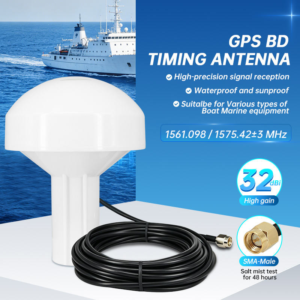
Multi-constellation GNSS performance: Modern drones rely on GPS, GLONASS, Galileo, and BeiDou simultaneously. Quad-helical antennas typically cover 1559-1606 MHz with stable gain (3-5dBi), ensuring all satellite signals are received with equal efficiency. I've worked with agricultural drone operators who saw positioning accuracy improve from ±2m to ±0.5m simply by switching to quad-helical GNSS antennas.
Circular polarization benefits: This characteristic reduces multipath interference—signals reflecting off the ground, buildings, or water surfaces are rejected by the antenna because reflections reverse the polarization handedness. For drones operating near water or in urban environments, this dramatically improves signal quality.
Primary Disadvantages and Constraints
Physical size requirements: A typical 1.57GHz quad-helical antenna measures 60-80mm in diameter and 100-150mm in height. For compact racing drones or micro-UAVs under 250g, this size becomes prohibitive. The antenna often weighs 40-80g, which is significant for small platforms where every gram affects flight time.
Aerodynamic impact: The exposed helical structure creates drag. During forward flight at 15-20m/s, a protruding quad-helical antenna can reduce flight time by 3-8% compared to low-profile ceramic antennas. For delivery drones prioritizing range and efficiency, this becomes a critical factor.
Cost considerations: Manufacturing quad-helical antennas requires precision winding, tuning, and assembly. Unit costs typically range from $15-45 depending on frequency coverage and build quality. Ceramic patch antennas for the same application cost $3-8. For high-volume consumer drone production, this 3-5x price difference significantly impacts BOM costs.
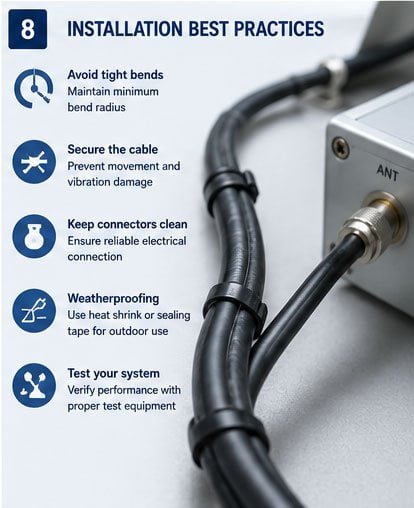
Mounting complexity: The antenna needs secure mounting with weather protection, proper grounding, and often requires a ground plane or reflector for optimal performance. Integration into streamlined drone bodies requires careful mechanical design and often compromises aerodynamics.
When I evaluate drone designs for clients, I always consider the mission profile first. Survey drones that hover and move slowly benefit tremendously from quad-helical antennas. Racing drones prioritizing speed and agility should stick with compact ceramic solutions despite their polarization limitations.
Drone Quad-Helical Antenna: Advantages, Disadvantages, and Applications
Different drone applications demand different performance priorities. The quad-helical antenna excels in specific scenarios but becomes a liability in others.
Quad-helical antennas are ideal for precision positioning applications (surveying, mapping, agriculture) where GNSS accuracy is critical, and for long-endurance platforms where consistent communication matters more than aerodynamic efficiency. They're poorly suited for racing drones, compact consumer UAVs, and applications where weight and cost are primary constraints.

Let me walk through real-world applications where I've seen quad-helical antennas succeed and fail. Understanding these patterns helps you predict whether this antenna type fits your specific use case.
Optimal Application Scenarios
Agricultural surveying and spraying drones: These platforms fly slowly (3-8m/s), require precise GNSS positioning (±10-30cm RTK accuracy), and operate for extended periods. The quad-helical antenna maintains satellite lock during turns and provides consistent positioning data for automated waypoint navigation. The weight penalty (50-70g) is negligible on platforms weighing 15-25kg, and the drag impact is minimal at low speeds.
Mapping and photogrammetry UAVs: Survey-grade drones capturing aerial imagery need sub-meter positioning accuracy to georeference images correctly. I've worked with mapping companies who struggled with position drift when using patch antennas during windy conditions—the drone's constant attitude corrections caused temporary GNSS signal degradation. Switching to quad-helical antennas eliminated this issue entirely.
Long-range inspection platforms: Drones inspecting power lines, pipelines, or infrastructure over 5-10km ranges need stable telemetry links. The circular polarization provides reliable communication even when the drone's orientation changes during inspection maneuvers. The attitude-independent reception ensures video feeds and control signals remain stable.
BVLOS (Beyond Visual Line of Sight) operations: Regulatory requirements for commercial BVLOS flights often mandate redundant positioning systems and robust communication links. Quad-helical antennas provide the reliability that safety-critical applications demand.
Problematic Application Scenarios
FPV racing drones: These platforms prioritize minimal weight (400-800g total), extreme maneuverability, and aerodynamic efficiency at high speeds (80-120km/h). A protruding quad-helical antenna creates excessive drag and adds unacceptable weight. Racing pilots accept occasional signal drops during flips and rolls in exchange for performance.
Compact consumer photography drones: Foldable drones like many consumer models have strict size constraints. A 100mm tall quad-helical antenna compromises portability and aesthetic design. These platforms typically use embedded ceramic patch or monopole antennas despite their polarization limitations.
Cost-sensitive platforms: For drones targeting sub-$500 retail prices, a $25-40 quad-helical antenna represents 5-8% of the total product cost. Manufacturers prioritize cheaper antenna solutions even if it means accepting reduced GNSS performance.
Application-Specific Performance Data
| Application Type | Ideal Antenna | Positioning Accuracy | Cost Impact | Weight Penalty |
|---|---|---|---|---|
| Agricultural UAV | Quad-Helical | ±0.3-0.5m (RTK) | Acceptable | Minimal |
| Survey/Mapping | Quad-Helical | ±0.5-1.0m | Acceptable | Minimal |
| Racing FPV | Ceramic Patch | ±2-5m | Critical | Critical |
| Consumer Photo | Ceramic Patch | ±2-3m | Important | Important |
| Inspection (Long-range) | Quad-Helical | ±1-2m | Acceptable | Minimal |
| Delivery Drone | Depends on Range | ±1-3m | Important | Important |
I always recommend prototype testing with your actual flight profile before committing to antenna selection for production. The theoretical advantages don't always translate to meaningful real-world benefits depending on your specific operating environment and mission requirements.
How Does a Quad-Helical Antenna Improve Drone Communication?
The technical mechanism behind quad-helical antenna performance reveals why it outperforms traditional options in specific scenarios.
A quad-helical antenna improves drone communication through circular polarization that eliminates orientation-dependent signal loss, omnidirectional radiation pattern providing consistent coverage during flight, and superior multipath rejection reducing interference from ground reflections and obstacles.

The improvement isn't just marginal—it's often the difference between reliable operation and mission failure in challenging conditions. Let me explain the physics and practical implications.
Circular Polarization Mechanism
Traditional linear antennas (monopole, dipole, or patch) radiate electromagnetic waves that oscillate in a single plane. When your drone rotates, the receiving antenna's orientation relative to the transmitting antenna changes, causing polarization mismatch. This mismatch can cause 10-20dB signal loss—enough to break communication completely.
A quad-helical antenna radiates circularly polarized waves where the electromagnetic field rotates as it propagates. This means the signal "spins" rather than oscillating in a fixed plane. The receiving antenna captures this rotating field equally well regardless of its orientation. For a drone constantly changing attitude, this provides consistent signal reception.
Right-Hand Circular Polarization (RHCP) vs. Left-Hand (LHCP): Most GNSS satellites transmit RHCP signals. Quad-helical antennas designed for GNSS reception are optimized for RHCP, providing maximum gain (typically 3-5dBi) for satellite signals while rejecting multipath reflections that arrive as LHCP (opposite-hand polarization).
Multipath Rejection Performance
In my testing with drones operating over water and in urban environments, multipath interference causes the biggest communication problems with linearly polarized antennas. When a GNSS signal reflects off a surface, its polarization handedness reverses. A RHCP signal becomes LHCP after reflection.
Quad-helical antennas naturally reject the opposite-hand polarization by 15-25dB. This means reflected signals are attenuated before they can interfere with the direct path signal. For GNSS reception, this improves positioning accuracy significantly in multipath-rich environments.
I worked with a maritime inspection drone that consistently lost GPS lock when flying within 5m of water surfaces using a ceramic patch antenna. The reflected signals from the water created destructive interference. Switching to a quad-helical GNSS antenna eliminated the problem—the antenna naturally rejected the water-reflected signals.
Omnidirectional Coverage Pattern
The four-arm helical configuration creates a radiation pattern that provides nearly uniform coverage across a hemisphere above the antenna. For GNSS reception, this means satellite signals from any direction (horizon to zenith) are received with similar gain.
Ceramic patch antennas typically show 3-6dB gain variation depending on satellite elevation angle. Low-elevation satellites (near the horizon) receive poor gain, while overhead satellites receive maximum gain. This variation affects the quality of positioning solutions, especially in RTK (Real-Time Kinematic) applications where multi-satellite precision matters.
Gain stability across attitudes: When a drone banks 30 degrees, a patch antenna's gain pattern shifts, temporarily reducing signal from some satellites. A quad-helical antenna maintains consistent gain because its omnidirectional pattern moves with the drone. I've measured less than 1dB gain variation during full 360-degree rolls with quality quad-helical designs.
Bandwidth and Frequency Coverage
Well-designed quad-helical antennas provide 3-8% bandwidth, covering multiple GNSS bands simultaneously:
- L1 GPS/GLONASS/Galileo/BeiDou: 1559-1606 MHz
- L2 GPS: 1217-1237 MHz (dual-band designs)
- L5 GPS/Galileo: 1164-1189 MHz (wideband designs)
This multi-band capability allows your drone to track more satellites from more constellations, improving positioning availability and accuracy. Single-band ceramic antennas limit you to one frequency, reducing the number of usable satellites.
For telemetry communication (2.4GHz or 5.8GHz), quad-helical antennas can be designed for these frequencies, providing the same polarization and pattern advantages. However, at these higher frequencies, the antenna size becomes more practical (30-50mm height), and the cost premium decreases.
Quad-Helical Antenna for Drones: Is It the Right Choice?
Determining whether a quad-helical antenna suits your drone project requires evaluating multiple factors beyond raw performance specifications.
A quad-helical antenna is the right choice when your application prioritizes positioning accuracy and signal reliability over size, weight, and cost. Specifically, choose quad-helical for professional survey/mapping, precision agriculture, or long-range inspection drones operating in BVLOS conditions. Avoid it for racing, compact consumer, or cost-sensitive applications where simpler antennas suffice.

I use a systematic evaluation framework when helping clients select antennas for their drone platforms. This approach considers technical requirements, operational constraints, and commercial realities.
Decision Criteria Framework
Mission-critical positioning requirements: Ask whether your application demands sub-meter accuracy or can tolerate 2-5m positioning errors. Survey-grade mapping requires ±0.5m accuracy, necessitating RTK GNSS with robust antenna performance. Package delivery may accept ±2-3m accuracy, where a ceramic patch antenna suffices.
Flight profile and attitude dynamics: Evaluate how aggressively your drone maneuvers. Platforms that maintain relatively stable attitudes (agricultural sprayers flying straight lines) benefit less from circular polarization than platforms that constantly change orientation (inspection drones navigating around structures).
Operating environment: Consider multipath interference sources. Drones working over water, in urban canyons, or near metallic structures face severe multipath that degrades ceramic antenna performance. Open-field operations in rural areas have minimal multipath, reducing the advantage of quad-helical antennas.
Platform size and weight constraints: Calculate whether 50-80g additional weight and 100-150mm height are acceptable. For a 5kg platform, this is negligible. For a 500g racing drone, it's prohibitive.
Cost-Benefit Analysis Example
Let me walk through a real scenario I evaluated for an agricultural survey drone manufacturer:
Platform specifications:
- Total weight: 18kg
- Flight speed: 5-8m/s
- Mission: crop health mapping with 30cm spatial resolution
- Required positioning: ±0.3m (RTK)
Antenna comparison:
| Parameter | Ceramic Patch | Quad-Helical |
|---|---|---|
| Unit cost | $6 | $28 |
| Weight | 15g | 65g |
| Height | 8mm | 120mm |
| GNSS accuracy (tested) | ±0.8-1.2m | ±0.3-0.5m |
| Wind drag impact | Negligible | 2-3% flight time reduction |
| Attitude sensitivity | 4-8dB variation | <1dB variation |
Financial impact analysis:
- Additional antenna cost: $22 per unit
- Flight time reduction: 2 minutes per 45-minute mission (4.4%)
- Positioning improvement: Eliminates need for re-flight to fill data gaps
Conclusion: The quad-helical antenna added $22 to the $8,500 platform cost (0.26% increase) but eliminated 15% of re-flights due to positioning gaps. The operational cost savings exceeded the hardware premium within the first 10 missions.
When Quad-Helical Is Clearly Wrong
I've also seen situations where clients insisted on quad-helical antennas despite clear evidence they were wrong for the application:
Consumer photography drone (2kg class): The client wanted "the best GNSS performance possible" and specified a quad-helical antenna. After prototype testing, we found:
- The antenna added