Developing wireless devices can be challenging, especially when integrating critical components like antennas. Many product developers struggle to find a reliable custom antenna manufacturer who can meet specific performance, quality, and delivery requirements. This can lead to project delays, performance issues, and increased costs if the wrong partner is chosen.
Choosing the right custom antenna manufacturer involves evaluating their capabilities in design, prototyping, quality control, and supply chain management. It is crucial to consider their expertise in matching frequency band requirements, performance metrics, and application scenarios while providing comprehensive services like solution design, sample testing, and complementary RF coaxial cable assemblies.
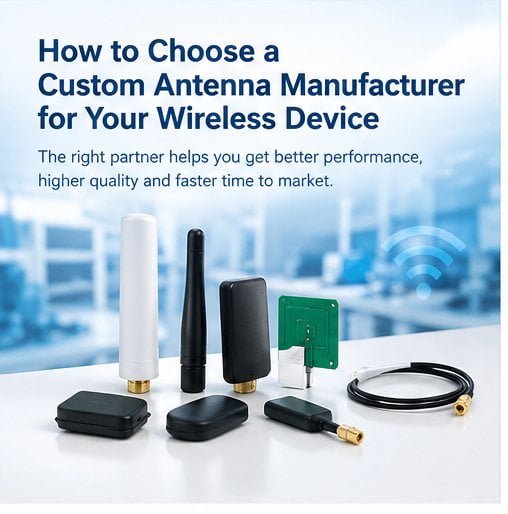
Finding a manufacturing partner for your unique antenna needs requires a thorough evaluation process. I want to share insights on how to identify the ideal custom antenna manufacturer that can help bring your wireless device to market successfully.
How to Choose the Right Custom Antenna Manufacturer for Your Wireless Device?
Many businesses face the dilemma of integrating a suitable antenna into their wireless product, often struggling with off-the-shelf solutions that don't perfectly fit their needs. The problem intensifies when the device has unique space constraints or performance demands. This situation can delay product launches and compromise device functionality.
To choose the right custom antenna manufacturer, assess their technical expertise in RF design, their ability to produce samples quickly, their commitment to quality assurance, and their capacity for flexible manufacturing. A capable manufacturer should offer a comprehensive service that covers the entire development cycle, from concept to mass production.
Dive Deeper: The Foundation of Technical Expertise and Service
When I consider a custom antenna manufacturer, their technical proficiency is always the first criterion. An antenna might seem like a simple component, but its design involves complex electromagnetic principles, material science, and manufacturing precision. Without this core expertise, even the most advanced wireless device can underperform.
Understanding RF Design and Engineering Acumen
A leading custom antenna manufacturer should possess a robust R&D team with deep knowledge of radio frequency (RF) engineering. This includes understanding various frequency bands (e.g., 3G/4G/LTE/5G, LoRa, WiFi, GPS/GNSS), antenna types (e.g., dipole, patch, PCB, FPC, fiberglass), and propagation characteristics. My company, based in Shenzhen, has over 17 years of experience and a mature engineering team dedicated to this. We've seen firsthand how crucial it is to get the design right from the start.
Key aspects of their engineering acumen include:
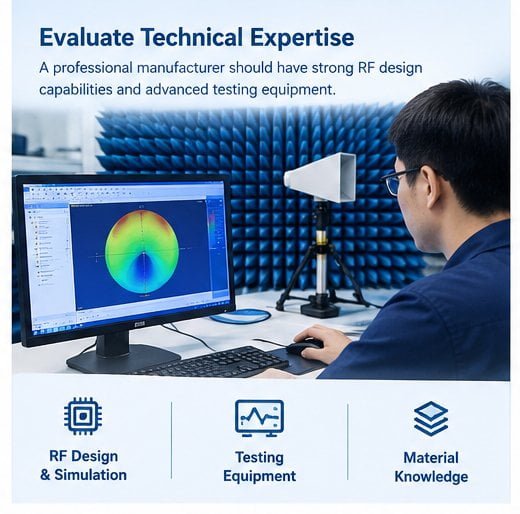
- Simulation Capabilities: Can they use advanced electromagnetic simulation software (e.g., Ansys HFSS, CST Studio Suite) to model antenna performance before physical prototyping? This significantly reduces development time and costs.
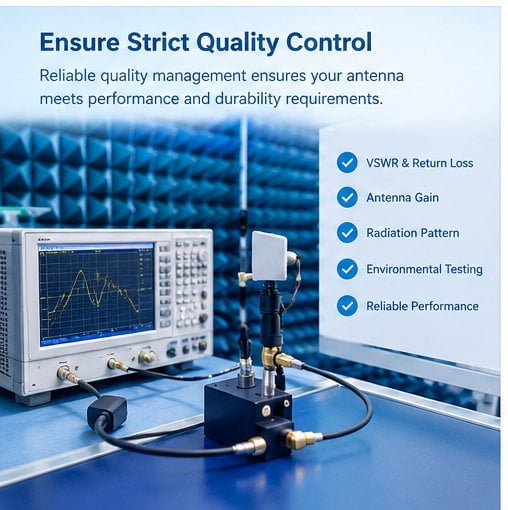
- Measurement and Testing Equipment: Do they have an anechoic chamber, network analyzers, and spectrum analyzers to accurately characterize antenna patterns, gain, VSWR (Voltage Standing Wave Ratio), and efficiency? Reliable testing ensures the antenna meets specified parameters.
- Material Science Knowledge: Antennas require specific materials for substrates, radiating elements, and enclosures. A good manufacturer understands how material properties affect performance and durability in various environments.
Comprehensive Solution Design and Prototyping
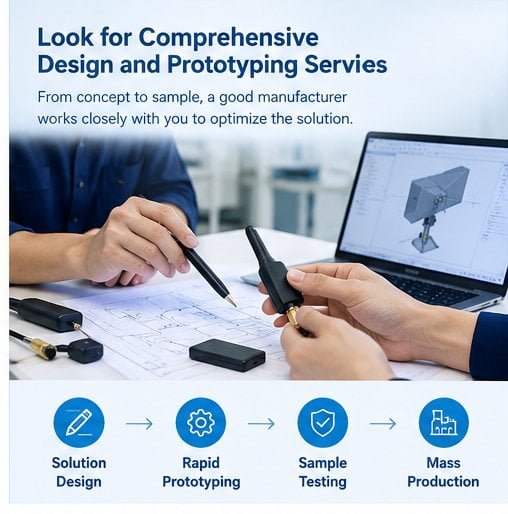
Beyond just manufacturing, the right partner offers integrated solution design. This means they don't just build to spec; they help refine the specifications.
- Collaborative Design Process: They should work with your engineering team to understand the wireless device's form factor, operating environment, and performance goals. For instance, if you're developing an IoT device, the antenna might need to be discreetly integrated within a small enclosure, requiring a highly customized PCB or FPC antenna design.
- Rapid Prototyping: The ability to quickly produce initial samples (prototypes) is vital. This allows for early testing and iteration. A manufacturer with in-house prototyping capabilities can turn around samples in days or weeks, not months. My company emphasizes this with our "design, prototyping, and testing to mass production" one-stop service.
- Integration with RF Cable Assemblies: Often, the antenna needs a specific RF coaxial cable assembly to connect to the device's main board. A manufacturer who can also design and produce these matching cables ensures optimal impedance matching and signal integrity, avoiding performance degradation from mismatched components. This is a common pitfall we help our clients avoid.
Certifications and Intellectual Property
Look for manufacturers who demonstrate a commitment to quality and innovation.
- ISO 9001 Certification: This indicates a robust quality management system, essential for consistent production. My company is ISO 9001 certified, which is critical for our overseas clients.
- Patents and R&D Investment: A company with numerous patents (like our 40+ patents) shows an ongoing commitment to innovation and demonstrates their unique technical capabilities. This can provide a competitive edge in product development.
- Compliance with International Standards: For global distribution, products often need to meet standards like CE, RoHS, FCC, etc. A manufacturer experienced in meeting these requirements simplifies your product's journey to market. We proactively design our products to comply with these standards for exports to over 100 countries.
What to Look for in a Custom Antenna Manufacturer for Wireless Devices?
Many companies underestimate the importance of manufacturing capability and quality control when selecting an antenna supplier. They might focus solely on initial cost, only to discover later that inconsistent product quality or supply chain issues lead to higher long-term expenses and reputational damage. This oversight can cripple a product's success in the market.
When evaluating a custom antenna manufacturer, prioritize their proven track record in manufacturing quality, their stringent quality control processes, and their ability to consistently meet production demands. Essential aspects include clear documentation, reliability testing, and adherence to international quality standards for consistent performance.
Dive Deeper: Ensuring Quality, Reliability, and Production Scalability
Beyond initial design, the true test of a custom antenna manufacturer lies in their ability to consistently produce high-quality antennas at scale. This involves a robust manufacturing process, rigorous quality control, and a flexible supply chain.
Manufacturing Process and Quality Control
A reliable manufacturer will have well-defined manufacturing processes and stringent quality control (QC) procedures at every stage.
- Automated vs. Manual Production: Understand their production methods. While some customization requires manual intervention, automation for repetitive tasks ensures consistency and efficiency.
- In-line QC and Final Inspection: Ask about their QC checkpoints. Do they perform checks at various stages of production (e.g., component incoming inspection, in-process measurement, final performance testing)? Our production lines incorporate multiple inspection points to catch potential issues early.
- Reliability Testing: Antennas, especially for outdoor or industrial applications, must withstand various environmental conditions. Does the manufacturer conduct reliability tests such as:
- Temperature Cycling: Ensuring performance stability across extreme temperatures.
- Humidity Testing: Assessing resilience in high-moisture environments.
- Vibration and Shock Testing: Verifying structural integrity for mobile or rugged applications.
- Salt Spray Testing: For resistance to corrosion in marine or harsh industrial settings.
- These tests are critical for products used in vehicular systems or outdoor base stations, for example.
Supply Chain Management and Flexibility
The ability of a custom antenna manufacturer to adapt to your production schedule and order volume is crucial, especially for dynamic markets like IoT.
- Component Sourcing: A mature manufacturer has established relationships with component suppliers, ensuring stable access to quality raw materials. They should also have strategies for managing potential supply chain disruptions.
- Flexible MOQ (Minimum Order Quantity): For startups or niche applications, a high MOQ can be a barrier. We understand this need, offering flexible MOQ options to support everything from initial pilot runs to large-scale production. This is particularly valuable for new product introductions or smaller batches for specialized equipment.
- Fast Delivery Capabilities: Time-to-market is often critical. Assess their lead times for both prototypes and mass production. Our focus on efficient production and robust logistics allows us to offer quick delivery, which is a major advantage for customers in fast-moving industries. For example, if a client needs 5G antennas for a new router model, delays can be costly, so our ability to rapidly scale production is key.
- Inventory Management: For long-term projects, can they manage buffer stock to ensure continuous supply?
After-Sales Support and Long-Term Partnership
A good supplier doesn't disappear after shipment.
- Technical Support: Do they offer ongoing technical support for integration or troubleshooting?
- Warranty and Returns Policy: What are their policies if issues arise post-delivery?
- Product Lifecycle Management: For long-life products, can they provide ongoing support for design revisions or component obsolescence? A reliable custom antenna manufacturer aims to be a long-term partner, not just a one-off vendor.
How to Select a Reliable Custom Antenna Manufacturer for Your Project?
Many project managers overlook the crucial aspects of a manufacturer's operational transparency and export experience, leading to unforeseen logistical hurdles and compliance issues. This oversight can result in shipment delays, customs problems, and unexpected costs, especially for international projects, directly impacting project timelines and budgets.
To select a reliable custom antenna manufacturer, scrutinize their operational transparency, communication practices, and international export experience. Prioritize manufacturers who openly share production updates, have a clear understanding of international logistics and certifications, and demonstrate a consistent track record of successful global deliveries.
Dive Deeper: Transparency, Communication, and Global Reach
A truly reliable custom antenna manufacturer isn't just about technical skill and quality; it's about being a dependable partner throughout the entire project lifecycle, especially when dealing with international procurement.
Operational Transparency and Communication
Effective communication and transparency are hallmarks of a reliable manufacturing partner. Misunderstandings can be costly and time-consuming, particularly in a global supply chain.
- Clear Communication Channels: Can you easily communicate with their engineering, sales, and production teams? Language barriers can sometimes be an issue, so look for a team proficient in English, as is standard in international business.
- Regular Progress Updates: Do they provide regular updates on your order status? A reliable manufacturer will proactively inform you about potential delays or issues, rather than you having to chase them for information. We believe in keeping our clients fully informed every step of the way.
- Documentation and Reporting: They should provide clear documentation, including design specifications, test reports (e.g., VSWR plots, radiation patterns), and quality inspection certificates for each batch. This level of detail helps you verify performance and compliance.
- Responsiveness: How quickly do they respond to inquiries and resolve issues? Prompt communication indicates professionalism and a commitment to customer service.
Export Experience and International Compliance
For overseas customers, a manufacturer's export capabilities are non-negotiable. Ignorance of international trade laws, customs procedures, or regional product standards can cause significant delays and added expenses.
- Proven Track Record of International Shipments: Has the manufacturer successfully exported to your region or other international markets? My company has extensive experience exporting to over 100 countries in Europe, America, Southeast Asia, and the Middle East, giving us deep insights into diverse market requirements.
- Understanding of Customs and Logistics: Do they have dedicated staff or partners who handle international shipping, customs declarations, and necessary export documentation? This expertise streamlines the process for you.
- Adherence to International Standards (CE, RoHS, FCC): As mentioned earlier, this is crucial. A reliable custom antenna manufacturer will be familiar with the certifications required for your target market and will ensure their products comply. This reduces your burden for product certification. For example, if you are selling IoT devices in Europe, CE marking is mandatory, and our products are designed with this in mind.
- Packaging for International Transit: They should understand the need for robust packaging to protect sensitive RF components during long-distance shipping, preventing damage from shock, vibration, and moisture.
Customer References and Case Studies
Don't just take their word for it.
- Request References: Ask for contact information for other international clients, especially those with similar project requirements or in similar industries.
- Review Case Studies: Examine their portfolio of past custom antenna projects. This provides tangible evidence of their capabilities and problem-solving skills. Look for examples of how they've helped other companies overcome specific antenna design or integration challenges.
- Market Reputation: What is their reputation within the industry? Online reviews, industry forums, and trade associations can offer insights into their reliability and service quality.
By carefully evaluating these aspects of reliability, you can forge a strong, long-term partnership with a custom antenna manufacturer that supports your project's success globally.
Custom Antenna Design and Manufacturing: How to Choose the Right Partner?
Many businesses, especially those in niche or emerging markets like IoT, face the challenge of securing a manufacturing partner who is not just a supplier but a true collaborator in antenna design. They need someone who understands their unique application, can offer innovative design solutions, and is flexible enough to adapt to evolving product needs. Failing to find such a partner can stifle innovation and delay market entry.
To choose the right custom antenna manufacturer as a design and manufacturing partner, seek one that actively participates in the R&D process, offers value-added engineering insights, and can provide bespoke design solutions tailored to your specific application. A strong partner will integrate seamlessly with your product development cycle, from initial concept to final production, ensuring optimal performance for your wireless device.

Dive Deeper: Collaborative Design and Innovation Partnership
A true partner in custom antenna manufacturing offers more than just fabrication; they bring their expertise to the table during the design phase, becoming an extension of your R&D team. This is particularly vital for cutting-edge wireless devices where standard antenna solutions simply won't suffice.
Collaborative R&D and Co-creation
The best partners don't wait for fully defined specifications; they engage early.
- Early Engagement in Product Development: A proactive manufacturer will want to be involved from the conceptual stage. This allows them to suggest design optimizations for manufacturing efficiency (Design for Manufacturability, DFM) or performance enhancements based on their extensive experience. For example, if a client is designing a smart city sensor, we might suggest an integrated PCB antenna solution that saves space and cost while meeting range requirements.
- Value-Added Engineering Suggestions: They should not just execute your design but offer insights. "Have you considered this material for better outdoor resilience?" or "This form factor might improve radiation efficiency." Such suggestions come from years of practical experience and can significantly improve your product.
- Adaptability to Evolving Requirements: In fast-paced markets like IoT, specifications can change rapidly. A flexible partner will be able to adapt their design and manufacturing processes to accommodate these shifts without major disruptions. Our OEM/ODM capabilities mean we are built for this type of collaborative, evolving partnership.
Specialization and Application-Specific Expertise
Different wireless applications demand different antenna characteristics. A generic approach rarely yields optimal results.
- Industry-Specific Knowledge: Does the custom antenna manufacturer have experience in your specific application area?
- IoT Devices: Often require compact, low-power, wide-frequency-range antennas (e.g., LoRa, NB-IoT, Cat-M1).
- Router/Gateway Antennas: Need high gain, directional or omnidirectional patterns for WiFi/LTE/5G.
- Automotive Systems: Demand rugged, GPS/GNSS, cellular, and V2X antennas that withstand harsh environments.
- Base Station Antennas: High-power, multi-band, often fiberglass or panel antennas. My company's product range spans these diverse applications, ensuring we can match our expertise to your specific needs.
- Understanding of Regulatory Landscape for Specific Applications: For medical devices, automotive, or aerospace, specific certifications are often required. A partner with experience in these fields can navigate these complexities.
Intellectual Property Protection
When co-creating or sharing proprietary designs, IP protection is paramount.
- Confidentiality Agreements (NDAs): Ensure a robust NDA is in place before sharing sensitive information.
- Clear Ownership of Custom Designs: Discuss and document who owns the intellectual property of the custom antenna design developed jointly. This clarity prevents future disputes.
- Secure Data Handling: Inquire about their data security protocols for managing your design files and project information.
By seeking a custom antenna manufacturer who is a true partner in design and innovation, you can unlock greater potential for your wireless product, leveraging their specialized knowledge to create truly differentiated solutions. This goes beyond mere order fulfillment; it's about mutual growth and shared success.
How to Choose a Professional Custom Antenna Supplier for IoT and Wireless Devices?
The sheer volume of suppliers in the market makes it difficult for businesses to discern true professionals from those who merely claim expertise. For niche yet critical components like custom antennas for IoT and wireless devices, selecting an unprofessional supplier can lead to disastrous product failures, missed market opportunities, and significant financial losses dueating from subpar performance or inconsistent quality.
To choose a professional custom antenna supplier for IoT and wireless devices, prioritize those with demonstrable expertise in relevant wireless protocols, a portfolio of successful projects for similar applications, and a strong commitment to project management. A professional supplier provides tailored advice, adheres to project timelines, and maintains clear communication throughout the design and manufacturing lifecycle, ensuring the final antenna perfectly aligns with the device's operational environment and performance goals.

Dive Deeper: Professionalism, Specialization, and Long-Term Partnership
Professionalism in a custom antenna manufacturer for IoT and wireless devices goes beyond technical capabilities. It encompasses a disciplined approach to project management, a deep understanding of niche market needs, and a commitment to being a long-term, strategic supplier.
Specialization in IoT and Wireless Technologies
IoT devices often have unique antenna requirements that differ significantly from traditional communication systems. A professional supplier will understand these nuances.
- Understanding of Low-Power Wide-Area Networks (LPWAN): For IoT, protocols like LoRa, NB-IoT, and LTE-M are common. Antennas for these applications need to be highly efficient at low power levels and often require specific frequency band coverage.
- Small Form Factor Integration: IoT devices are often compact. A professional supplier can design and integrate tiny FPC, PCB, or ceramic antennas that fit into limited space without compromising performance.
- Multi-Connectivity Expertise: Many IoT devices combine several wireless technologies (e.g., GPS, WiFi, Bluetooth, cellular). A professional supplier can design multi-band or multi-function antennas that handle these diverse signals effectively, often from a single physical element. We've developed numerous antennas for such integrated solutions.
- Embedded Antenna Solutions: Expertise in embedding antennas directly into device enclosures or PCBs is crucial for compact IoT products. This requires a deep understanding of enclosure materials and their dielectric properties.
Project Management and Account Support
A professional custom antenna manufacturer ensures smooth project execution through diligent project management.
- Dedicated Account Manager: Having a single point of contact simplifies communication and ensures consistency. This individual should understand your project's specific needs and be able to coordinate across their internal teams.
- Structured Project Phases: They should have a clear, documented process for custom projects, from initial inquiry and feasibility study to design, prototyping, testing, production, and delivery. This transparency helps you track progress.
- Risk Management: A professional supplier identifies potential risks early (e.g., component shortages, design challenges) and proposes mitigation strategies.
- Post-Sales Support and Evolution: As IoT ecosystems evolve, devices may need antenna upgrades or modifications. A professional partner will be able to support these changes and provide ongoing technical assistance for the product's entire lifecycle.
Cost-Effectiveness and Value Proposition
While not solely about the lowest price, a professional supplier offers true value.
- Transparent Pricing: Clear breakdowns of design, tooling, unit costs, and any non-recurring engineering (NRE) charges.
- Optimized for Cost and Performance: They strike a balance between cost-effectiveness and meeting performance targets, often through clever design or material selection. They don't over-engineer or under-deliver.
- Long-Term Total Cost of Ownership (TCO): Consider not just the unit cost but also the costs associated with quality issues, delays, and poor performance. A reliable, professional custom antenna manufacturer reduces TCO by preventing these hidden costs. Our focus on stable product quality and quick delivery aims to provide this long-term value.
By meticulously evaluating these aspects of professionalism and specialization, you can secure a custom antenna manufacturer that truly understands the unique demands of IoT and wireless devices, becoming an invaluable asset to your product development and market success.
Frequently Asked Questions
What should I prioritize when choosing a custom antenna manufacturer?
Prioritize technical expertise in RF design, manufacturing quality control, and the ability to offer tailored solutions that precisely match your device's frequency, performance, and environmental requirements. Also, consider their experience with international certifications and flexible production capabilities.
How important is a manufacturer's R&D capability for custom antennas?
A manufacturer's R&D capability is crucial as it ensures they can develop innovative and optimized antenna designs for your unique wireless device. Strong R&D, including simulation and testing facilities, leads to better performance, faster prototyping, and effective problem-solving for complex integration challenges.
Can a custom antenna manufacturer also provide RF cable assemblies?
Yes, many professional custom antenna manufacturers, like my company, offer complementary RF coaxial cable assemblies. This integrated service ensures optimal impedance matching between the antenna and your device, simplifying procurement and guaranteeing better overall system performance and signal integrity.
What are the benefits of choosing a manufacturer with flexible MOQ?
Choosing a manufacturer with flexible MOQ (Minimum Order Quantity) is beneficial for startups, niche products, or initial pilot runs. It allows you to order smaller quantities for testing or specialized projects without incurring excessive costs, providing greater financial flexibility and reducing inventory risk.
Why is ISO 9001 certification important for an antenna supplier?
ISO 9001 certification signifies that the custom antenna manufacturer adheres to international standards for quality management systems. This ensures consistent product quality, reliable processes, and a commitment to continuous improvement, which are critical for the long-term performance and reliability of your custom antennas.
Conclusion
Selecting the right custom antenna manufacturer is a pivotal decision that directly impacts the performance, reliability, and market success of your wireless device. It extends beyond simply comparing prices; it requires a deep dive into their technical prowess, manufacturing quality, operational transparency, and dedication to being a true design and production partner. By carefully evaluating their R&D capabilities, quality control processes, flexibility, and export experience, you can ensure your project benefits from a high-performance, tailor-made antenna solution. My company in Shenzhen, with over 17 years of experience in communication antennas and RF solutions, is committed to providing stable product quality, flexible OEM/ODM services, and quick delivery to clients worldwide. We invite you to contact us to discuss how our expertise can help bring your next wireless innovation to life.