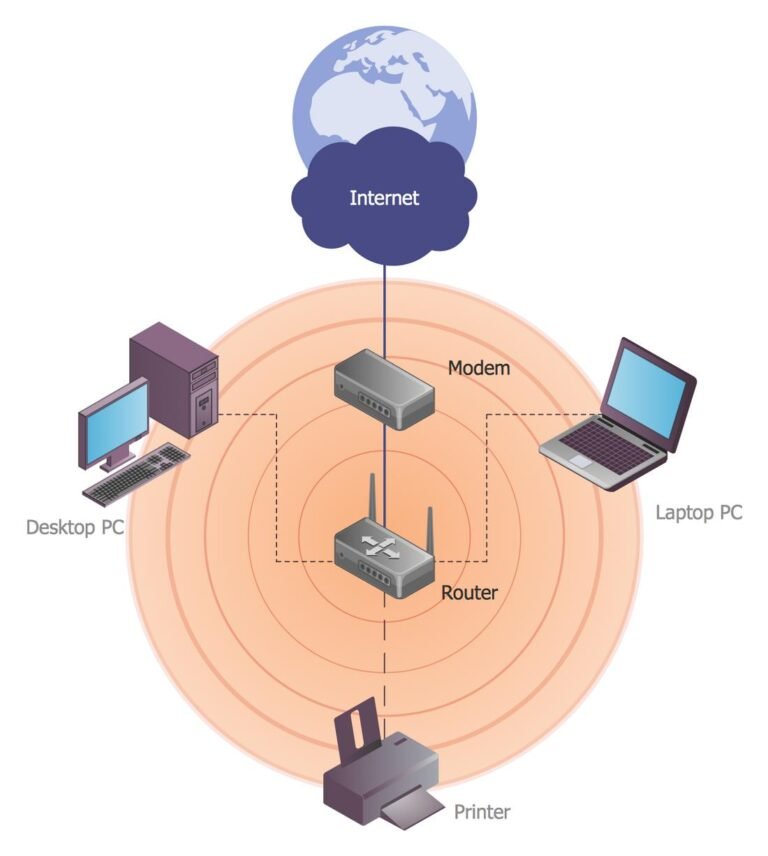
Finding the right antenna for industrial IoT applications can be challenging. If the wrong antenna is selected, it could compromise wireless connectivity, lower system performance, and ultimately impact operational efficiency. The solution lies in matching the antenna’s technical specifications to the demands of your industrial IoT devices and networks.
The right antenna for industrial IoT applications ensures stable connectivity, optimal performance, and compatibility with your devices. Key factors to consider include frequency range, gain, installation environment, and communication distance. By evaluating these criteria carefully, you can achieve reliable and efficient IoT operations.

To help you make an informed decision, this guide breaks down everything you need to know about selecting antennas for industrial IoT systems, from technical parameters to environmental considerations. Let’s take a closer look.
How to Select the Best Antenna for Industrial IoT Wireless Communication?
Wireless communication is the backbone of industrial IoT, but selecting the wrong antenna can cause disruptions or inefficiencies.
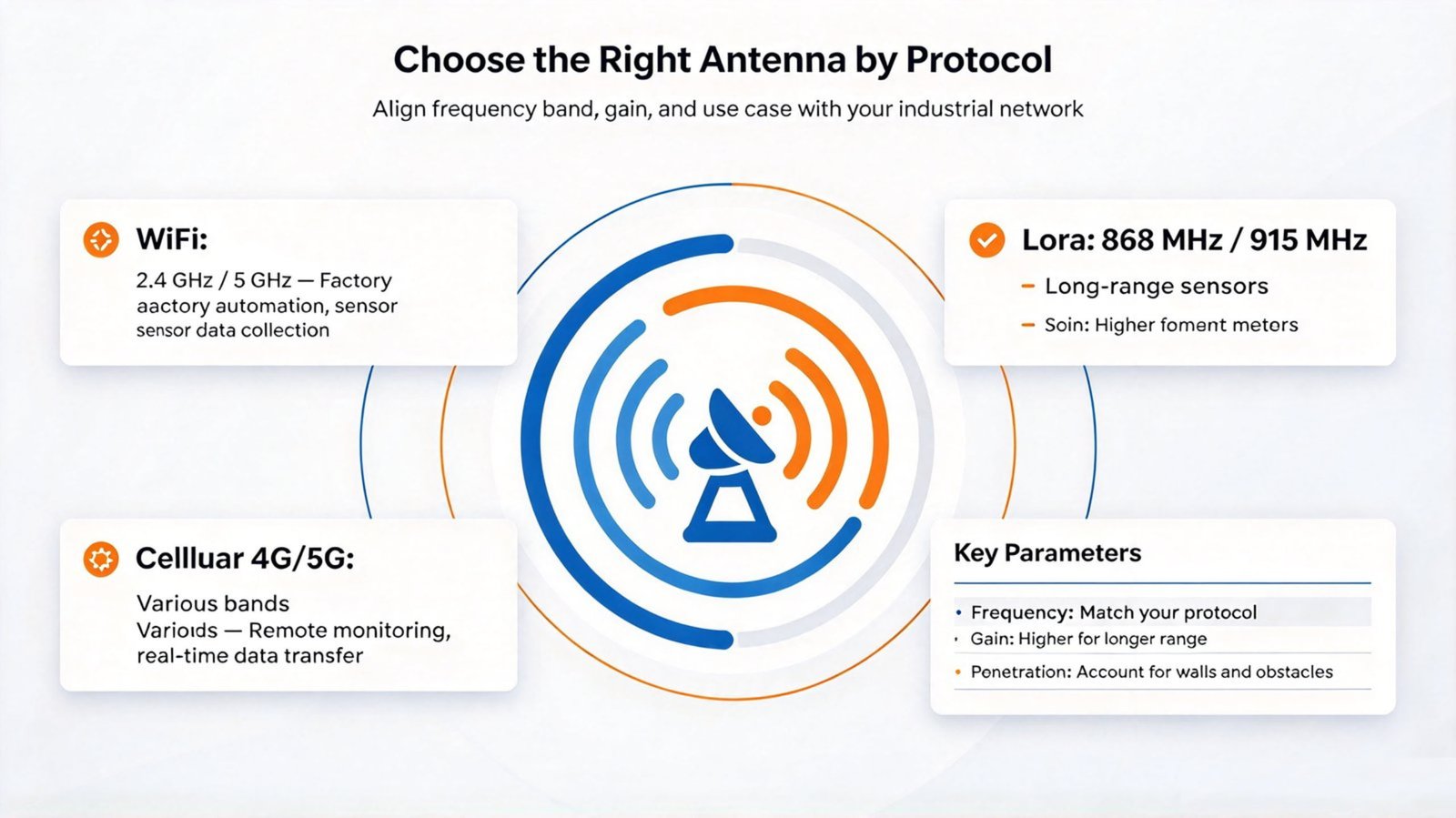
For optimal wireless communication in industrial IoT, choose antennas with frequencies tailored to your network (e.g., 2.4 GHz for WiFi, 868 MHz for LoRa), appropriate gain to match the deployment environment, and verified performance for your use case.

When selecting antennas for industrial IoT wireless communication, these are the key steps:
Key Selection Criteria:
- Frequency Range: Ensure the antenna supports the necessary bandwidth. For instance, WiFi antennas operate around 2.4 GHz and 5 GHz, while LORA Antennas often use sub-GHz frequencies like 868 MHz or 915 MHz.
- Gain: Higher gain antennas focus the signal in a specific direction, ideal for long-range applications; lower gain antennas provide better coverage in closer proximity.
- Signal Penetration: Consider materials and obstructions in the installation environment (e.g., concrete walls may require specialized antennas).
Wireless Protocol Examples
| Protocol | Frequency Band | Typical Applications |
|---|---|---|
| WiFi (802.11) | 2.4 GHz / 5 GHz | Factory automation, sensor data collection |
| LoRa | 868 MHz / 915 MHz | Long-range sensors, smart meters |
| Cellular (4G/5G) | Various bands | Remote monitoring, real-time data transfer |
Evaluate antennas based on these specifications to enhance your wireless systems’ reliability.
Choosing the Right Industrial Antenna for Reliable IoT Connectivity?
Industrial IoT environments demand reliable connectivity, often in harsh conditions that challenge signal strength and stability.
Choose antennas built for industrial-grade durability, resistance to interference, and optimized for your specific IoT connectivity needs. Match them with the proper network type, frequency bands, and environmental installations for consistent performance.

Environmental Factors Impacting IoT Connectivity:
- Temperature Extremes: Select antennas with wide operating ranges (e.g., -40°C to +80°C).
- Moisture Resistance: Use waterproof designs, particularly for outdoor installations like base stations.
- Interference: Test antennas in scenarios where electromagnetic noise is prevalent, such as heavy machinery.
Signal-quality degradation is common in industrial settings. The choice of rugged, interference-resistant antennas (with robust connectors such as SMA or N-type) makes a significant difference.
How to Choose an Antenna for Industrial IoT Devices and Applications?
Every industrial IoT device or application has unique requirements. Choosing an antenna tailored to these needs ensures compatibility and efficiency.
Identify application-specific parameters such as required frequency bands, communication range, mounting locations, and power constraints when selecting antennas for IoT devices. Custom antenna solutions may be required in complex setups.

Application-Specific Questions to Ask:
- What is the power budget of the IoT device? Are low-power antennas necessary?
- Is the antenna fixed or mobile? Should you opt for omnidirectional or directional antennas?
- What distances are covered? Short distances typically favor lower gain antennas; longer distances may need higher gain directional antennas.
For example:
- Smart meters: Low-power devices typically paired with sub-GHz omnidirectional antennas for consistent local signals.
- Industrial monitors: Higher gain antennas for facilities spanning multiple floors or acres.
With application-focused thinking, you’ll avoid costly mismatches.
Industrial IoT Antenna Selection Guide: Key Factors to Consider
Choosing the right industrial IoT antenna hinges on technical, environmental, and functional criteria.
Key factors include frequency compatibility, antenna gain, installation environment, and device-specific requirements. Perform thorough testing and analysis to ensure antennas meet the demands of your industrial IoT system.
A Checklist for Antenna Selection:
- Frequency Range: Verify alignment with your communication protocol.
- Gain Functionality: Assess signal strength demands for range and penetration in your deployment.
- Installation Needs: Wall, pole, or embedded? Ensure mounting options align with site conditions.
- Durability in Harsh Conditions: Look for industry-grade certification, IP ratings, and vibration resistance.
- Cable Length & Connector Types: Confirm compatibility with your IoT device or router.
Frequently Asked Questions
Why is antenna gain important for IoT systems?
Antenna gain affects signal coverage and strength. High-gain antennas are ideal for long-distance communication, while low-gain antennas provide broader, closer-range coverage.
Which frequency bands are ideal for industrial IoT antennas?
Ideal frequency bands depend on your protocol:
- 2.4 GHz / 5 GHz for WiFi.
- Sub-GHz (e.g., 868 MHz, 915 MHz) for LoRa.
- Cellular systems (4G/5G) vary by region.
Are custom antennas necessary for industrial IoT?
Custom antennas offer tailored solutions, especially for specialized installations or environments with unique requirements like space constraints or extreme weather.
Conclusion
Choosing the right antenna for industrial IoT applications is critical for maintaining reliable communication, efficient signal transmission, and seamless operations across your devices and systems. Factors like frequency range, gain, installation environment, and device compatibility should guide your selection process.
When in doubt, consult industry-certified antenna experts. Contact us today to explore our range of customizable antennas, from WiFi to LoRa, tailored to industrial IoT needs!