Struggling to pick the right network for your IoT project is confusing. The wrong choice can lead to high costs, poor performance, and a failed deployment. Let's simplify it.
The best network depends entirely on your IoT application's needs. Choose 5G for high-speed, low-latency tasks. Use specialized LTE (like Cat-M1 or NB-IoT) for low-power, wide-area devices. Standard 4G LTE offers a reliable and balanced solution for many general-purpose applications.
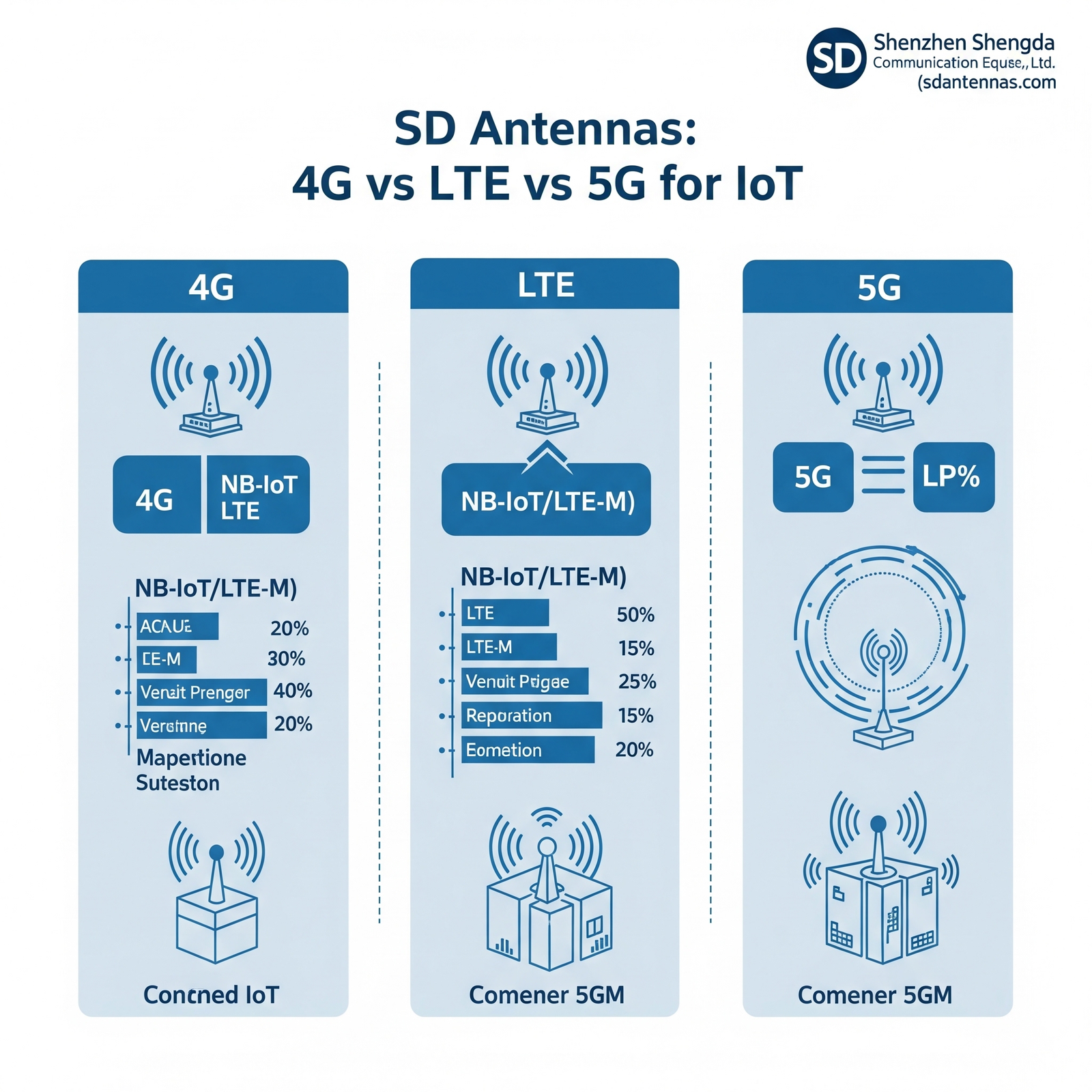
Choosing the right cellular technology is one of the most critical decisions you'll make for your IoT project. It impacts everything from device battery life to data transmission speed and overall cost. As an antenna manufacturer with over 17 years of experience, I've helped countless clients navigate this choice. Let's break down the options so you can select the perfect network for your specific needs and ensure your project is a success.
4G vs LTE vs 5G: Which Network Is Best for IoT Applications?
Are you having trouble picking a network for your project? Choosing the wrong one can mean wasted money and a project that doesn't work as planned. Let's find the best fit.
The "best" network is the one that matches your application's goals. For high-bandwidth data like video streaming, 5G is superior. For low-power, long-range devices that send small bits of data, LTE-M or NB-IoT is ideal. Standard 4G offers a reliable middle ground.
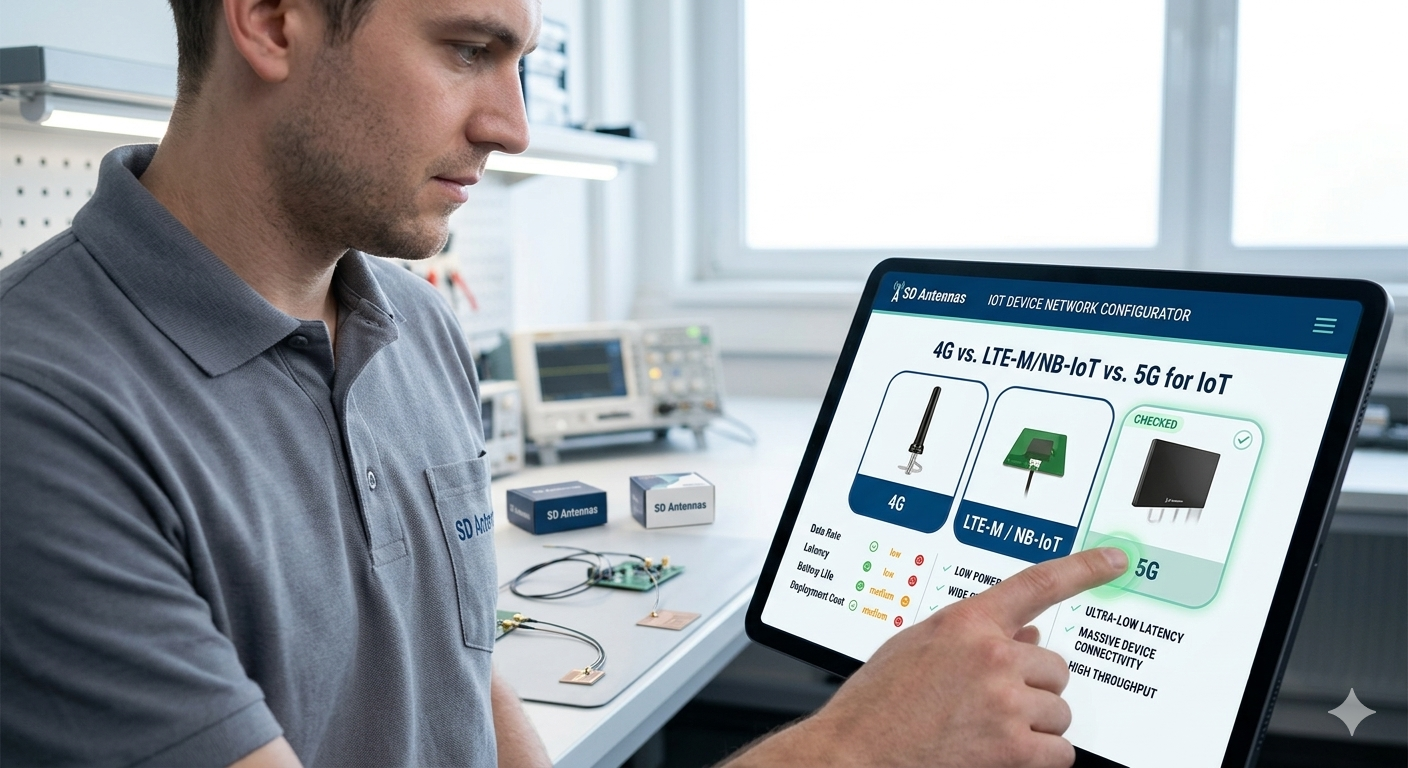
The key is to not think of it as a simple good, better, best scenario. Instead, think of these networks as different tools for different jobs. For over 17 years, we've seen technology evolve, but the core challenge for our clients remains the same: matching the right technology to the application to achieve reliability and cost-effectiveness.
Matching Network to Application
I remember a client from the Philippines who provides monitoring equipment for power companies. They needed to reliably transmit data from remote cabinets. For them, the extreme speed of 5G was unnecessary and not cost-effective. They chose our 4G waterproof cabinet antennas. The performance was stable, the cost was right, and the network coverage was excellent. This choice was so successful that they've continued working with us for years, proving that the "best" network is the one that solves your problem effectively.
Here is a simple breakdown to guide your choice:
| Network | Best For | Not Ideal For |
|---|---|---|
| 5G | Real-time video, autonomous vehicles, remote surgery | Simple sensors, battery-powered devices |
| 4G LTE | Asset tracking, digital signage, fleet management | Ultra-low latency applications |
| LTE-M/NB-IoT | Smart meters, agricultural sensors, smart city lighting | High-bandwidth data transfer |
From 4G to 5G: Choosing the Right Connectivity for IoT?
The jump from 4G to 5G seems huge and complicated. How do you choose the right path for your IoT device without getting overwhelmed? Let's make it simple.
Your choice involves balancing today's needs with tomorrow's goals. 4G and LTE offer a mature, widespread, and cost-effective solution for most IoT applications today. 5G provides future-proofing for projects that will require ultra-high speed and responsiveness, but its coverage is still growing.
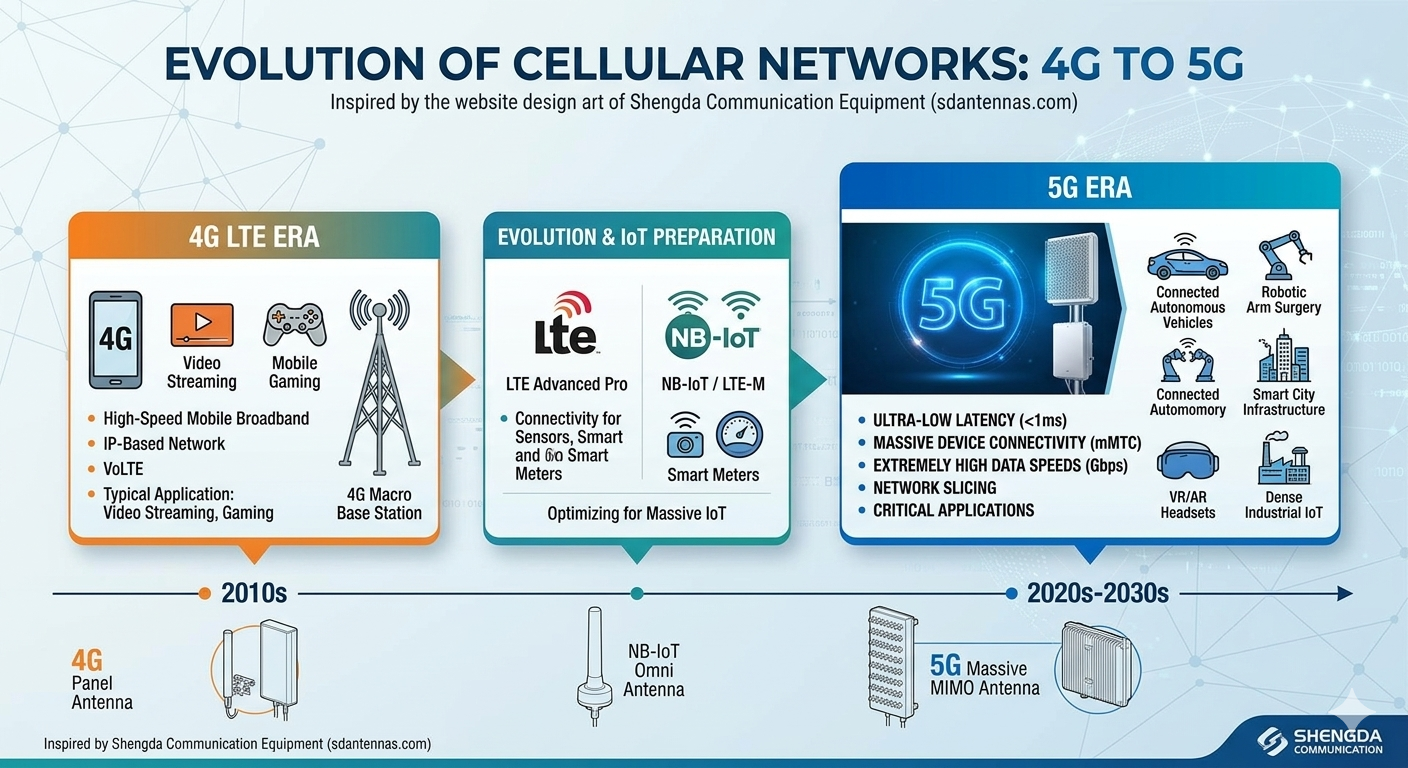
Thinking about the future is smart, but you also have to build for the present. The good news is that 4G LTE isn't going away anytime soon. It will continue to be a workhorse for the IoT industry for many years, coexisting with 5G. The key is to understand this evolution and plan accordingly.
The Path of Cellular Evolution
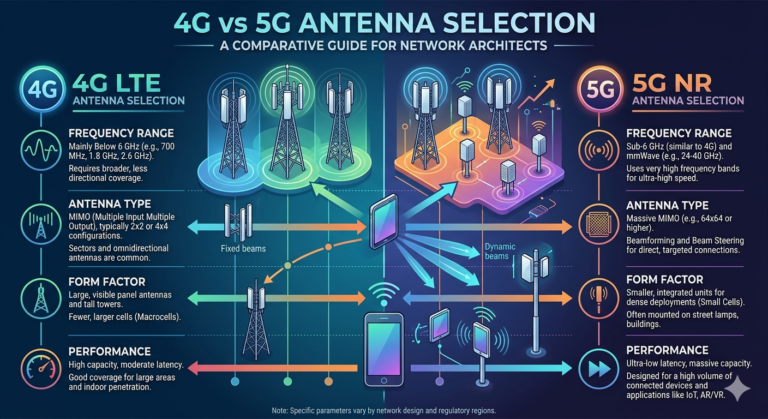
Cellular technology has always built upon the previous generation. 5G isn't just a replacement for 4G; it's an expansion of capabilities.
- 4G LTE (Long-Term Evolution): When 4G arrived, it was a massive leap for mobile broadband. For IoT, its most important legacy is the development of specific, low-power versions like LTE-M and NB-IoT. These carved out a space for devices that need to run on batteries for years.
- The 5G Expansion: 5G was designed from the ground up with three main IoT use cases in mind:
- eMBB (Enhanced Mobile Broadband): This is the "faster speeds" part you hear about, great for high-definition video feeds or massive data transfers.
- URLLC (Ultra-Reliable Low-Latency Communications): This is for critical applications where near-instantaneous response is vital, like autonomous cars or remote factory automation.
- mMTC (Massive Machine-Type Communications): This is designed to connect a huge number of devices (up to 1 million per square kilometer) in a small area, like in a smart city or a dense sensor network.
As a manufacturer, we design our antennas to help our clients manage this transition. Many of our new antennas are multi-band, meaning they can work reliably on existing 4G networks and are also ready for the 5G bands as they become available.
LTE or 5G? A Complete Guide to IoT Network Selection?
LTE is proven and reliable, but 5G is the future. Which one should you bet your IoT project on? Let's break down the decision to make it clear.
Choose LTE (specifically LTE-M or NB-IoT) for cost-effective, low-power applications where broad coverage is essential, like asset tracking or smart meters. Opt for 5G when your project demands real-time data processing, massive device density, or ultra-low latency, like in smart factories.
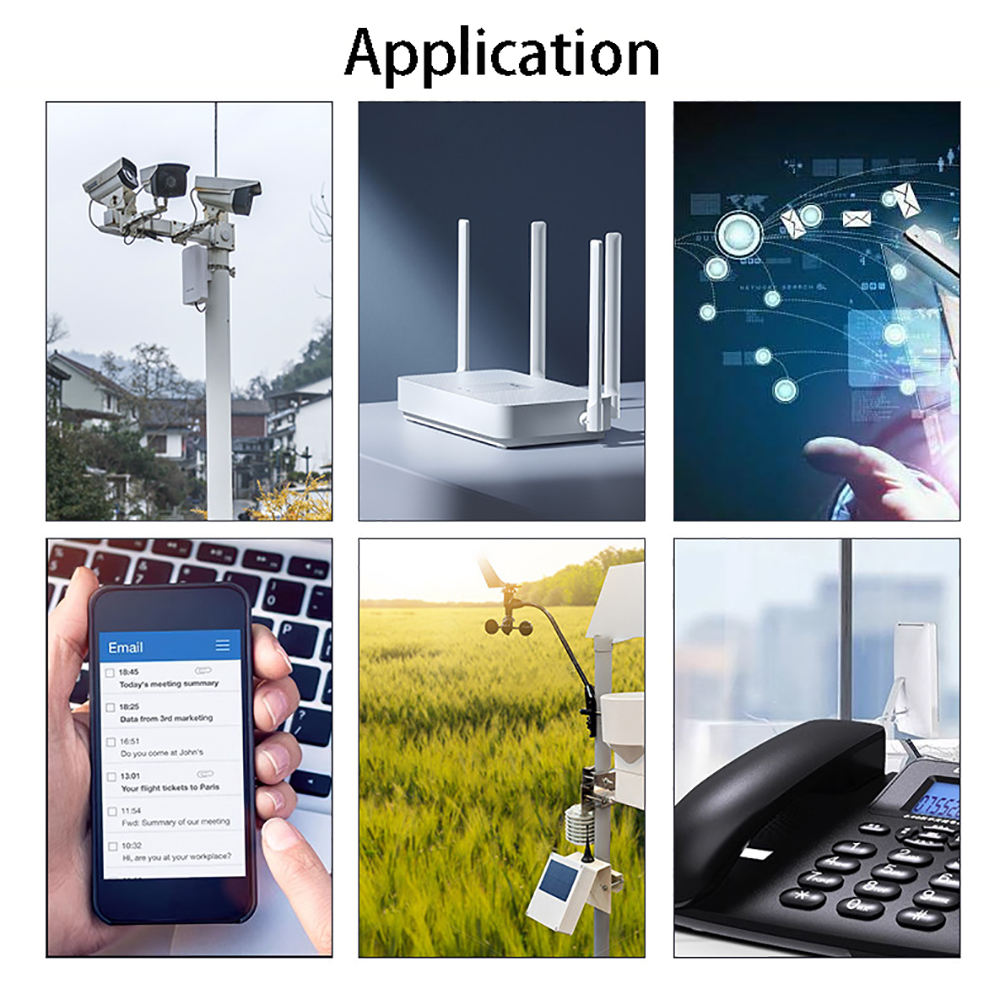
This is one of the most common questions our clients ask. The answer almost always comes down to the specific data requirements and power constraints of the device. You wouldn't use a race car to deliver a small package, and you wouldn't use a delivery truck in a race. The same logic applies here.
Comparing LTE and 5G for IoT
Let's look closer at the different flavors of LTE and 5G that are built for IoT.
-
Low-Power LTE (LPWAN): These technologies were game-changers for IoT.
-
LTE-M (or Cat-M1): This offers a good balance. It has lower power consumption than standard LTE, decent bandwidth (up to 1 Mbps), and supports voice, making it great for things like medical alert devices or asset trackers with two-way communication.
-
NB-IoT (Narrowband-IoT): This is the king of efficiency. It uses very little power, allowing devices to run for 10+ years on a single battery. The data rates are very low, perfect for sending tiny packets of information periodically, like a water meter reading or a soil moisture level.
-
5G for IoT: 5G addresses IoT needs more directly with its core design.
-
mMTC: This is the 5G equivalent of NB-IoT but on a massive scale, designed to handle millions of devices in a small area without network congestion.
-
URLLC: This provides the reliability and low latency that LTE could never achieve, opening doors for mission-critical applications.
Our job is to provide the physical connection—the antenna—that allows these networks to perform. Whether a client needs a tiny, embedded antenna for an NB-IoT sensor or a high-gain MIMO antenna array for a 5G gateway, we help them select a component that perfectly matches their network choice.
4G vs LTE vs 5G: Performance Comparison for IoT Use Cases?
Does your IoT device need speed, efficiency, or both? The network you choose makes all the difference in the world. Let's compare their performance head-to-head.
For raw performance, 5G wins with the highest speeds (Gbps) and lowest latency (<1ms). Standard 4G LTE provides solid, reliable performance (Mbps) with good latency. Specialized LTE (Cat-M1/NB-IoT) prioritizes power efficiency and deep building penetration over speed.
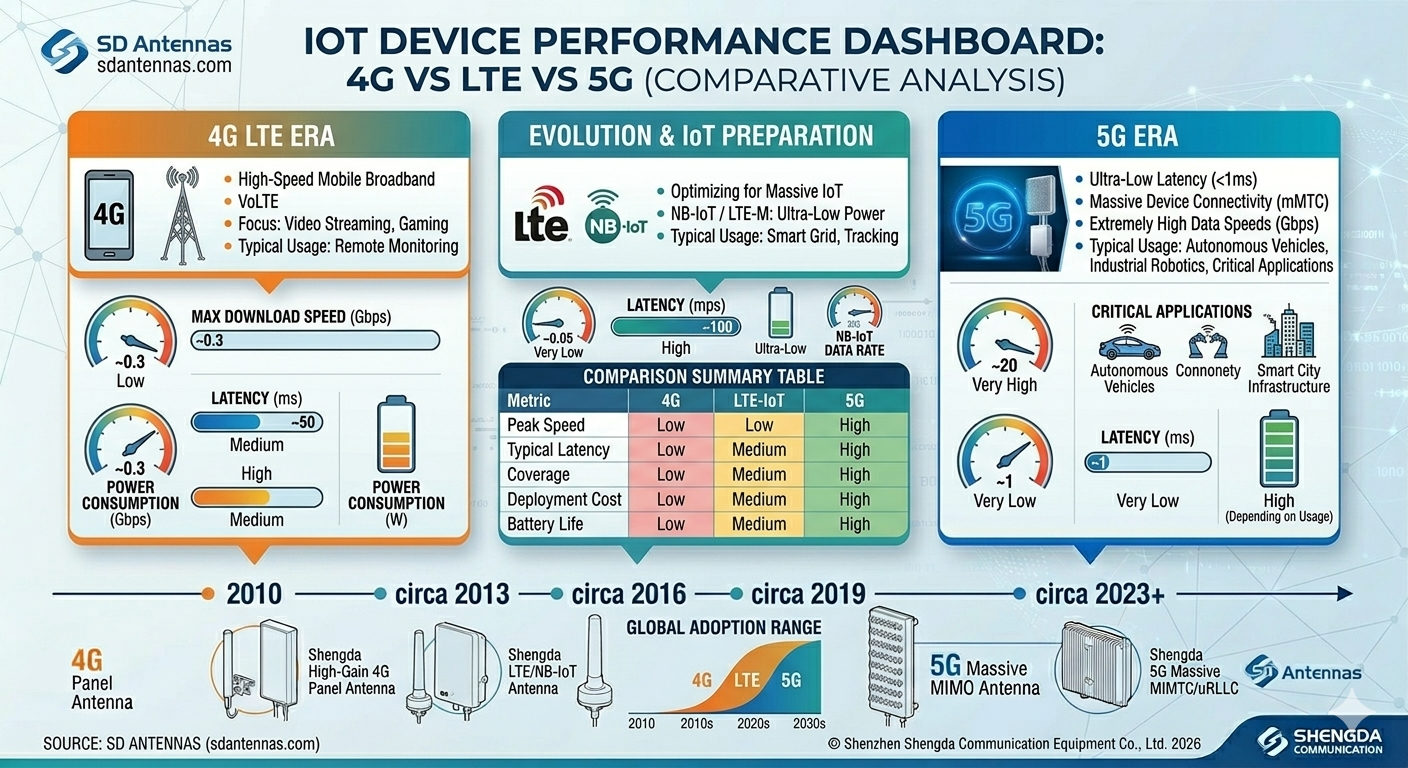
Performance isn't just about speed. For many IoT devices, "performance" means lasting for five years on a battery or successfully sending a signal from deep inside a building. Understanding what performance means for your specific use case is the key to making the right choice.
Performance Metrics That Matter
Let's compare the networks across the metrics that are most important for IoT deployments.
| Metric | 4G LTE | LTE-M | NB-IoT | 5G |
|---|---|---|---|---|
| Peak Speed | 100s of Mbps | ~1 Mbps | ~100s of Kbps | 1-10+ Gbps |
| Latency | 30-50 ms | 10s of ms | Seconds | <1-10 ms |
| Power Use | Moderate | Very Low | Extremely Low | High (for eMBB) |
| Coverage | Excellent | Excellent | Excellent | Growing |
What does this mean for real-world applications?
- Smart Grid Monitoring: A client of ours in the energy sector uses our 4G antennas on their monitoring devices. They need reliable, near-real-time data, but not Gbps speeds. 4G LTE offers the perfect balance of performance and cost, with wide coverage in the field.
- Smart Agriculture: A farmer deploying soil sensors only needs to send a small amount of data once or twice a day. For this, NB-IoT is the perfect choice. Its low power use means batteries last for years, and its excellent signal penetration ensures a connection even in remote fields.
- Automated Factory: A factory using robots that need to communicate with each other instantly to avoid collisions would require the ultra-low latency of 5G URLLC. Here, performance is measured in milliseconds, and 5G is the only option.
How to Choose the Best Network for IoT: 4G, LTE, or 5G?
Feeling lost in a sea of network options like 4G, LTE, and 5G? Choosing the wrong one can sink your IoT project before it even starts. Here's a clear guide.
To choose, first define your application's core requirements: how much data it sends, its power source, where it will be deployed, and your budget. Match these needs to the network's strengths. 4G/LTE is a versatile workhorse, while 5G is a specialist for high-demand tasks.
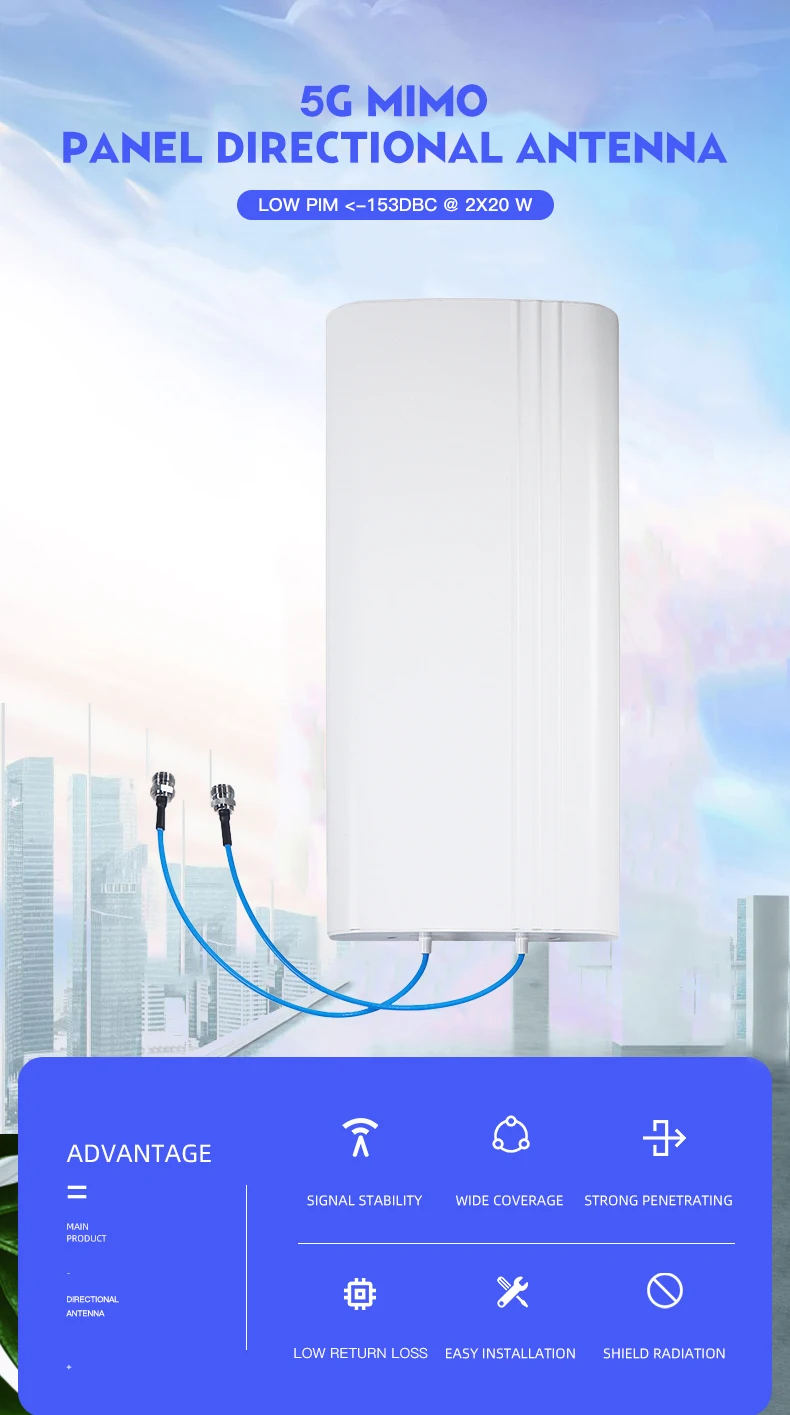
Over the years, I've seen that the most successful projects start with a clear understanding of their own needs, not with the latest technology buzzword. By asking a few simple questions, you can quickly narrow down the best network for you. Our engineering team uses this exact process to help our clients.
A Step-by-Step Guide to Selection
Follow these steps to make a confident decision.
Step 1: Define Your Data Needs
How much data does your device need to send, and how often?
- Low Data (KBs per day): Like a smart meter or a parking sensor. Best choice: NB-IoT.
- Medium Data (MBs per day): Like an asset tracker or a point-of-sale terminal. Best choice: LTE-M or standard 4G LTE.
- High Data (GBs per day): Like a high-resolution security camera. Best choice: 5G or high-speed 4G LTE.
Step 2: Assess Your Power Constraints
Will your device be plugged into a wall or run on a battery?
- Battery-Powered (needs to last months/years): Your only real options are NB-IoT or LTE-M.
- Mains-Powered: You can consider any network, including 4G LTE and 5G, as power consumption is not the primary concern.
Step 3: Consider Your Coverage Area
Where will the device be located?
- Urban and Suburban: 4G LTE and a growing 5G footprint are widely available.
- Rural or Deep Indoors: 4G LTE, LTE-M, and NB-IoT generally have better reach and building penetration than current 5G networks. Always check carrier coverage maps for your specific deployment region.
Step 4: Evaluate Your Budget
Cost is a major factor, covering the hardware (modules) and the data plan.
- Lowest Cost: NB-IoT and LTE-M modules and data plans are the most affordable.
- Moderate Cost: 4G LTE offers a great balance of cost and performance.
- Highest Cost: 5G modules and plans are currently the most expensive, reserved for applications where its unique performance justifies the investment.
Is 5G Always Better for IoT? Comparing 4G and LTE Options?
Everyone talks about 5G, but is it really the best choice for every IoT device? The marketing hype can be misleading and costly. Let's look at the facts.
No, 5G is not always better for IoT. For a huge number of applications, like simple sensors or asset trackers, 5G is overkill—it's too expensive, power-hungry, and its coverage isn't as widespread. Proven 4G and specialized LTE networks often provide a more practical solution.
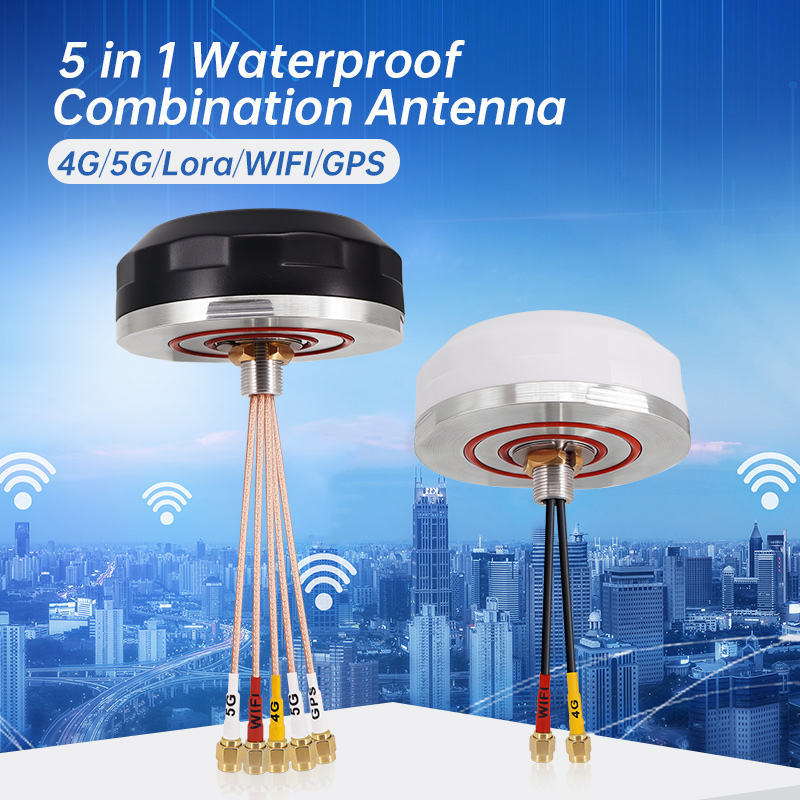
I've seen clients get caught up in the excitement for 5G, thinking they need it to be "future-proof." But often, a reliable 4G solution is the smarter business decision today and for years to come. It’s about using the right tool for the job.
The Case for 4G and LTE in the 5G Era
While 5G grabs headlines, 4G and its low-power variants are the unsung heroes of the IoT world. Here’s why they remain the top choice for most deployments:
- Maturity and Reliability: 4G networks have been optimized for over a decade. They are incredibly stable and predictable, which is exactly what you want for a commercial IoT deployment.
- Unmatched Coverage: 4G infrastructure is everywhere. You can deploy a device almost anywhere in the world and be confident it will find a 4G signal. 5G coverage, especially outside of dense urban centers, is still a work in progress.
- Cost-Effectiveness: 4G/LTE modules are significantly cheaper than their 5G counterparts. Data plans are also more competitive. For a project with thousands of devices, this cost difference is massive.
- Power Efficiency: For battery-powered devices, NB-IoT and LTE-M are still the undisputed champions. They were designed specifically for this purpose, a niche that 5G is only beginning to address with its mMTC standard.
My client in the Philippines is a perfect example. They provide critical monitoring for power grids. They needed reliability, not top speed. They chose our 4G cabinet antennas in 2022 and have been a loyal partner ever since. Their system works flawlessly, their costs are manageable, and their business is growing. They proved that choosing the right technology is far more valuable than choosing the newest one.
IoT Connectivity Showdown: 4G vs LTE vs 5G Explained?
4G, LTE, 5G... the terms can be confusing. How do they actually stack up against each other when it comes to connecting your IoT devices? Let's stage a showdown.
In this showdown, 5G wins the rounds for speed and low latency. Specialized LTE (Cat-M1/NB-IoT) wins on power efficiency and low cost. Standard 4G LTE wins for its balance of performance and widespread availability. The overall winner depends on which round matters most to you.
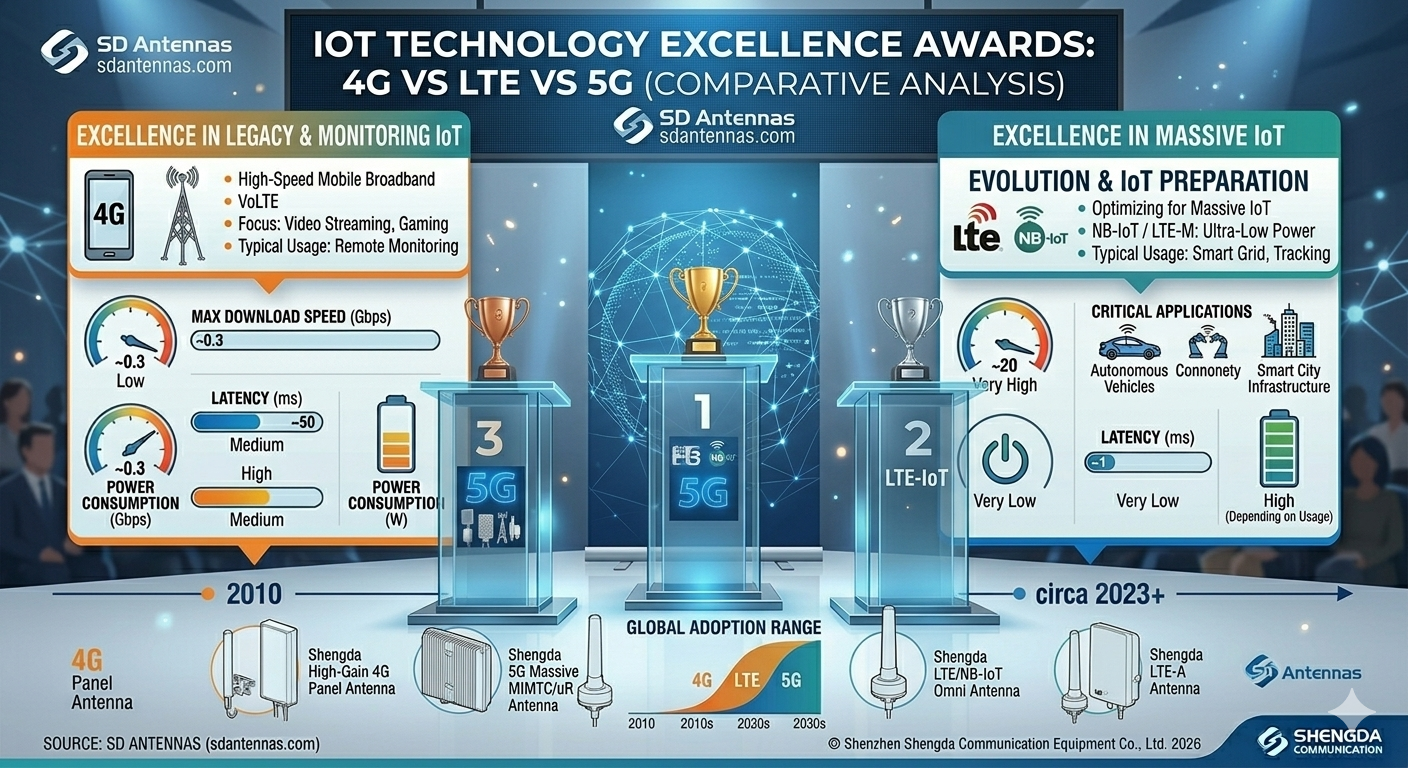
Think of this as a competition with multiple events. No single contestant will win everything. You need to pick the champion of the event that is most critical to your project's success. Let's break it down round by round.
Round 1: The Speed Race
This round is about how fast data can be downloaded and uploaded.
- Winner: 5G. With speeds in the gigabits-per-second, 5G is in a different league. It's built for transferring huge files, like 4K video streams from a security drone.
- Runner-up: 4G LTE. Offering speeds in the tens or hundreds of megabits-per-second, it's more than fast enough for most IoT tasks, including video streaming and large data logs.
- Honorable Mention: LTE-M/NB-IoT. They are not designed for speed and finish last here.
Round 2: The Latency Challenge
Latency is the delay before a data transfer begins. Lower is better.
- Winner: 5G. With latency potentially under 1 millisecond, 5G enables true real-time communication, essential for autonomous vehicles or remote robotics.
- Runner-up: 4G LTE. At around 30-50 milliseconds, it's responsive enough for most interactive applications.
- Last Place: NB-IoT. Latency can be in the seconds, which is perfectly fine for devices that report data on a schedule but not for real-time control.
Round 3: The Battery Marathon
This round is about power efficiency and who can last the longest.
- Winner: NB-IoT. Designed from the ground up for minimal power use, devices can last over a decade on a single battery.
- Runner-up: LTE-M. Also very power-efficient, offering a great multi-year battery life with slightly more functionality than NB-IoT.
- Last Place: 5G and 4G LTE. Their high-performance nature requires more power, making them unsuitable for long-term, battery-only deployments.
Round 4: The Cost and Coverage Championship
This is about accessibility and affordability.
- Winner: 4G LTE / LPWAN. These networks have vast, global coverage and the lowest cost for both hardware modules and data plans. This makes large-scale deployments financially viable.
- Runner-up: 5G. Coverage is still limited and hardware costs are high. It's a premium option for high-value use cases where cost is a secondary concern.
Speed vs Efficiency: 4G, LTE, and 5G in IoT Applications?
It's the classic trade-off in engineering: do you want speed or efficiency? Which is more important for your IoT device? The network you pick determines the winner.
If your IoT application needs to transfer large volumes of data in real-time, like live video, you must prioritize the speed of 5G or high-speed 4G. If your device runs on a battery for years and only sends small data packets, you must prioritize the efficiency of LTE-M or NB-IoT.
This is a fundamental choice you have to make at the beginning of your design process. You can't have it all. A network that delivers blazing-fast speeds will consume more power, and a network that sips power will not be fast. Understanding where your application falls on this spectrum is critical.
Mapping Applications to the Spectrum
We can place most IoT applications on a line between pure speed and pure efficiency.
Applications Prioritizing Speed (Performance-Driven)
These applications are often mains-powered and need to process data quickly. The goal is to get rich data, and get it now.
- Use Cases: High-resolution video surveillance, vehicle telematics with video, industrial automation, fixed wireless access (using cellular as home internet).
- Best Networks: 5G, 4G LTE (Cat 4 and above).
- Antenna Considerations: For these applications, we often recommend higher-gain or MIMO (Multiple-Input, Multiple-Output) antennas. These help maximize signal strength and data throughput, ensuring the device gets the best possible performance from the network.
Applications Prioritizing Efficiency (Battery-Driven)
These applications need to be "fit and forget." You deploy them and expect them to work for years without maintenance.
- Use Cases: Smart water/gas meters, agricultural sensors (soil, weather), smart city infrastructure (waste bins, lighting), simple asset tracking.
- Best Networks: NB-IoT, LTE-M.
- Antenna Considerations: Here, antenna size and efficiency are key. The antenna needs to be small enough to fit in a compact device and efficient enough to transmit a signal successfully with minimal power from the battery. We design compact, highly efficient antennas specifically for these use cases.
There is no "better" side of this spectrum. The world needs both high-speed security cameras and ultra-efficient smart meters. Your job is to know which one you are building.
Future-Proofing IoT: Evaluating 4G, LTE, and 5G Networks?
Are you worried that the technology you choose today will be obsolete in a few years? Choosing the right network is a key part of future-proofing your IoT deployment.
For ultimate, long-term future-proofing, 5G is the forward-looking choice. However, 4G LTE will coexist with 5G for at least another decade, making it a very safe bet. The smartest strategy is to use multi-band antennas that support both 4G and the most common 5G bands.
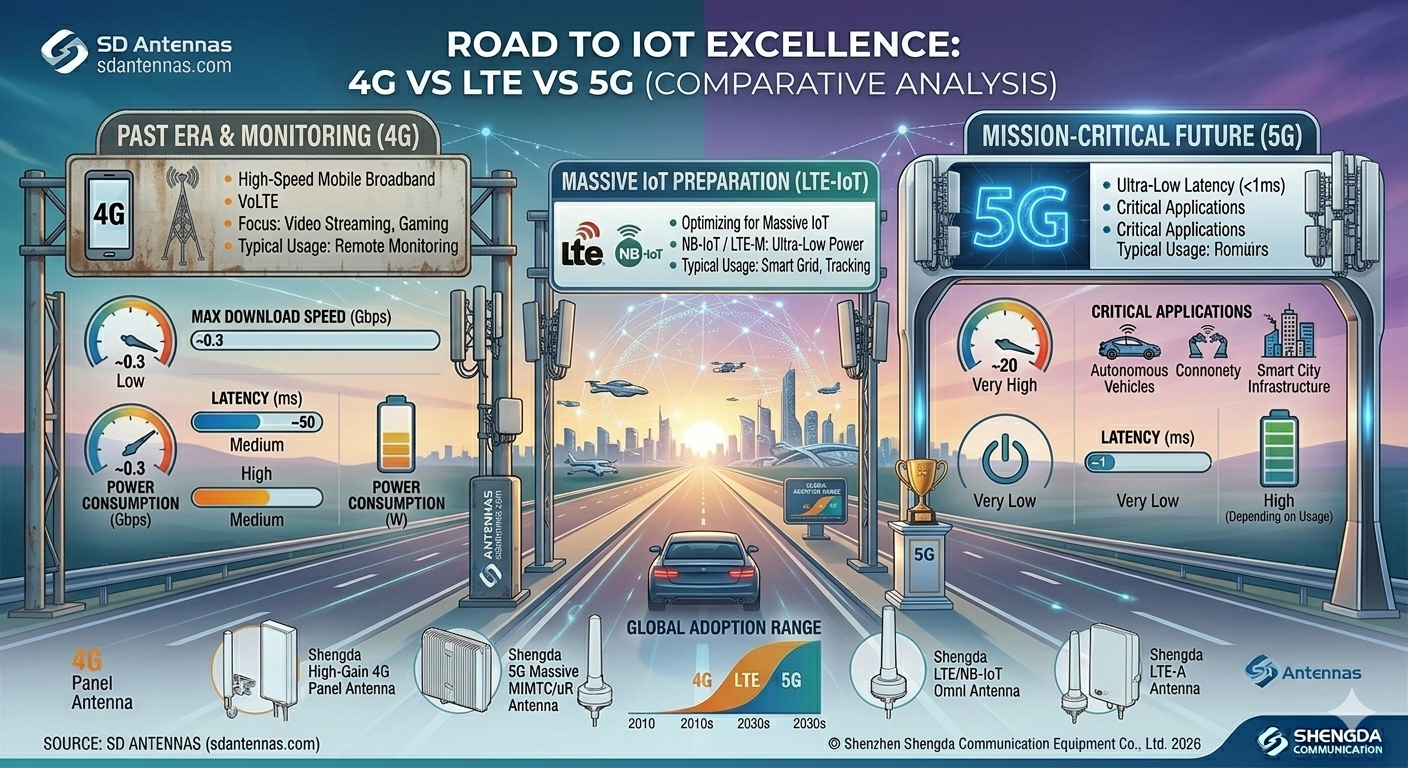
"Future-proofing" doesn't have to mean jumping on the newest, most expensive technology. It means making a strategic choice that maximizes the lifespan of your deployment and provides a smooth transition path for the future. As an antenna provider, this is a conversation I have with clients every day.
Strategies for a Long-Lived Deployment
Here’s how to think about future-proofing your IoT project:
The Long Life of 4G LTE
Mobile network operators have invested billions in their 4G infrastructure. They will not be turning it off anytime soon. In fact, 4G LTE is projected to be the dominant IoT connectivity technology through at least the end of this decade. For most IoT applications that don't need the specialized capabilities of 5G, a 4G solution is a very safe, reliable, and long-term choice.
The 5G Roadmap
5G is the future, but its rollout is happening in phases. The initial focus is on high-speed mobile broadband in cities. The massive IoT (mMTC) and ultra-reliable (URLLC) features that are so exciting for the industry are still being deployed. Choosing 5G today means you are an early adopter, which is great for cutting-edge projects, but it's not a requirement for most.
The Smartest Strategy: Multi-Band Solutions
This is where hardware choices become critical. The best way to future-proof is to build devices that can adapt. I remember when our R&D team was developing a new cabinet antenna. We knew our clients, like the one in the Philippines, were happy with 4G. But we also knew 5G was coming. So, we designed the antenna to have excellent performance on all the key 4G bands, but also to be compatible with the lower-frequency 5G bands that would be rolled out first.
When our Filipino client tested this new antenna, they were thrilled. It worked perfectly with their current 4G systems, and they knew it would be ready for 5G when they needed it. They placed a large order for their projects planned for 2026, securing their investment for years to come. This is true future-proofing: building for today with an eye on tomorrow.
Cost vs Performance: 4G, LTE, and 5G for IoT Deployment?
You have a budget to stick to, but you also need your devices to perform. How do you balance cost and capability when choosing an IoT network? Let's analyze the numbers.
For the lowest total cost (hardware and data), NB-IoT and LTE-M are unmatched. 4G LTE offers a moderate cost for very good performance. 5G currently has the highest costs but delivers premium performance for applications where the return on investment is clear.
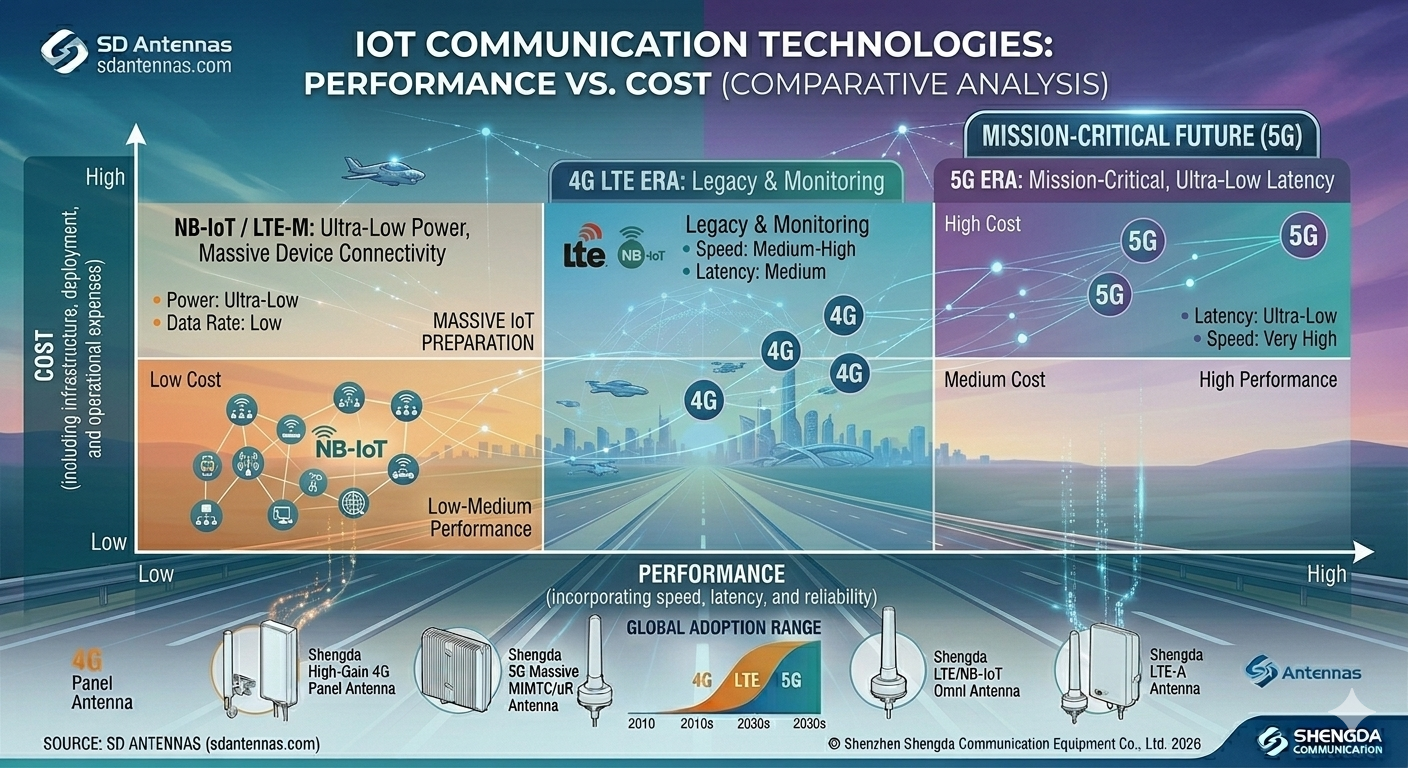
The total cost of ownership (TCO) is one of the most important factors in any large-scale IoT deployment. It goes beyond just the price of the cellular module. You have to consider the cost of data, device maintenance (battery changes), and network longevity.
Analyzing the Total Cost of Ownership (TCO)
Let's break down the costs associated with each network type.
| Network | Module Cost | Data Plan Cost | Key Advantage |
|---|---|---|---|
| NB-IoT | Lowest | Lowest | Ideal for massive, low-touch deployments |
| LTE-M | Low | Low | Cost-effective with more features than NB-IoT |
| 4G LTE | Moderate | Moderate | The "sweet spot" for performance and cost |
| 5G | Highest | High | For high-value applications where performance is critical |
When High Performance Justifies High Cost
Sometimes, the extra cost of 5G is easily justified. A hospital using 5G for remote patient monitoring or a port using it to automate cranes can see a massive return on investment through improved efficiency and new capabilities. In these cases, the performance of 5G is directly tied to business value.
Finding the Cost-Effective Sweet Spot
For the vast majority of IoT projects I've encountered in my 17+ years, the sweet spot is 4G LTE or its low-power variants. The technology is mature, the hardware is affordable, and the networks are robust. This is why we, as a manufacturer, focus so heavily on providing a wide range of high-quality, cost-effective 4G antennas. We also support our clients with flexible MOQs (Minimum Order Quantities), allowing them to start with smaller test orders before scaling up to mass production. This helps them manage costs and risk as they deploy their solutions. Ultimately, our goal is to help you find that perfect balance where your device performs exactly as needed, and your business case makes perfect sense.
Conclusion
Choosing the right network—4G, LTE, or 5G—is not about picking the newest technology. It's about matching the right tool to your specific IoT application's needs and budget.