Industrial environments demand robust and reliable connectivity, yet selecting the optimal WiFi antenna for industrial wireless networks often presents significant challenges. Incorrect choices can lead to intermittent connections, data loss, and costly downtime in critical operations. Understanding the specific needs of your industrial application is paramount to ensuring seamless and efficient wireless communication.
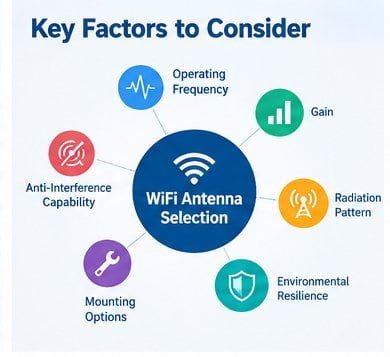
Choosing the best WiFi antenna for industrial wireless networks involves a comprehensive evaluation of factors such as operating frequency, gain, radiation pattern, environmental resilience, mounting options, and anti-interference capabilities. These elements must align with the specific demands of the industrial environment to guarantee stable, long-range, and low-packet-loss communication for critical operations.

The vast array of options available can be daunting, but by breaking down the selection process into key considerations, you can confidently identify the right solution. Let's delve deeper into each aspect to equip you with the knowledge needed to make an informed decision for your industrial wireless infrastructure.
How to Choose the Right WiFi Antenna for Industrial Applications?
The unique challenges of industrial settings—from extreme temperatures to heavy machinery—require a specialized approach when selecting a WiFi antenna for industrial applications. Standard consumer-grade antennas simply cannot withstand these harsh conditions or deliver the consistent performance required.
For industrial applications, selecting the right WiFi antenna for industrial applications means prioritizing ruggedness, stability, and consistent performance across a range of challenging conditions. Key considerations include the antenna's physical durability, its ability to maintain signal integrity amidst interference, and its compliance with industry-specific operational standards to ensure reliable connectivity.
When we discuss WiFi antennas for industrial applications, we are talking about devices engineered for environments far more demanding than typical office or home settings. From our over 17 years of experience manufacturing communication antennas, we have seen firsthand how critical robust design and consistent performance are for our B2B clients, who range from equipment manufacturers to system integrators.
Understanding Industrial Environmental Factors
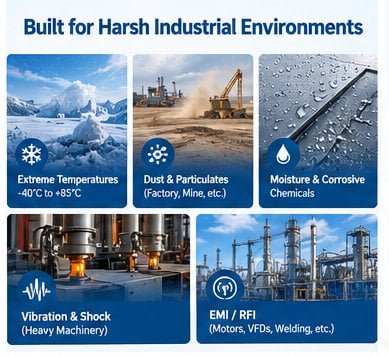
Industrial environments are notoriously harsh. They often feature:
- Extreme Temperatures: From freezing cold in unheated warehouses to intense heat near machinery or furnaces. Antennas must operate reliably across a wide temperature range, typically -40°C to +85°C.
- Dust and Particulates: Factories, mines, and processing plants are often filled with dust, metal shavings, or chemical residues that can degrade antenna performance or lead to mechanical failure.
- Moisture and Corrosive Chemicals: High humidity, splashes, washdowns, or exposure to corrosive gases demand sealed enclosures and corrosion-resistant materials.
- Vibration and Shock: Heavy machinery, vehicle movement, and dynamic operations can subject antennas to constant vibration and occasional impacts. This necessitates secure mounting and internal component robustness.
- Electromagnetic Interference (EMI) / Radio Frequency Interference (RFI): Motors, variable frequency drives (VFDs), welding equipment, and high-voltage lines can all generate significant noise that degrades WiFi signals.
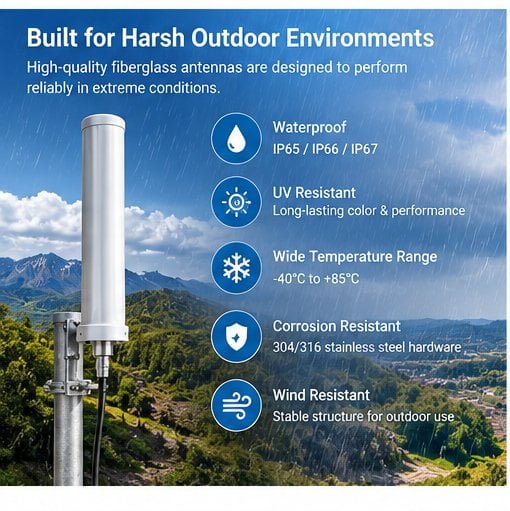
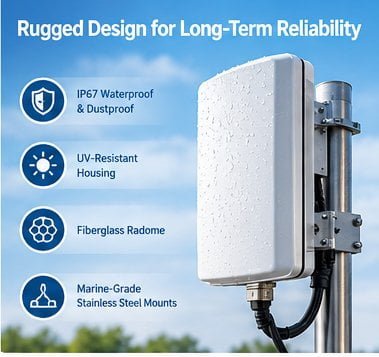
To address these, industrial antennas typically boast high Ingress Protection (IP) ratings (e.g., IP67 for dust and water immersion), UV-resistant housings, and sturdy mounting hardware. For example, a quality outdoor industrial antenna will often use fiberglass radomes and marine-grade stainless steel mounts to ensure longevity.
Performance Metrics for Industrial Antennas
Beyond physical resilience, the electrical performance of an industrial WiFi antenna is crucial. Buyers evaluate:
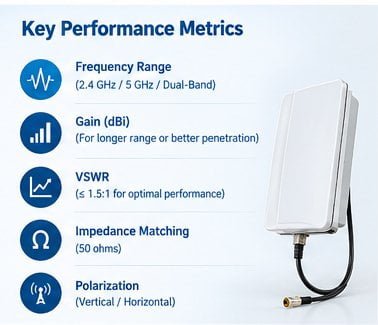
- Frequency Range: Ensuring the antenna covers the desired WiFi bands (2.4 GHz, 5 GHz, or dual-band).
- Gain (dBi): A measure of an antenna's efficiency in converting input power into radio waves in a specific direction. Higher gain means longer range or better penetration but often at the cost of a narrower beam.
- VSWR (Voltage Standing Wave Ratio): Indicates how well the antenna is matched to the transmission line. A low VSWR (ideally close to 1:1) minimizes signal reflection and maximizes power transfer. For industrial applications, a VSWR below 1.5:1 is generally desired for optimal performance.
- Impedance Matching: Most WiFi systems operate at 50 ohms. The antenna, cable, and radio must all be impedance-matched to avoid signal loss.
- Polarization: Ensuring the antenna's polarization (e.g., vertical, horizontal, circular) matches that of the transmitting device for optimal signal reception.
The Role of Customization and Supplier Selection
Many industrial applications have unique requirements that off-the-shelf antennas cannot fully meet. This is where the ability of a manufacturer to provide OEM/ODM services becomes a significant advantage. From our perspective as a manufacturer with extensive R&D capabilities, we frequently work with clients to:
- Tailor Frequency Bands: Optimize for specific channels or regional regulations.
- Adjust Gain and Beamwidth: Design antennas for very specific coverage areas or long-distance links.
- Specify Connector Types and Cable Lengths: Integrate seamlessly with existing or custom hardware.
- Develop Custom Mounting Solutions: Address unique installation challenges.
- Design for Specific Form Factors: Fit into confined spaces or integrate aesthetically.
When evaluating suppliers for WiFi antennas for industrial applications, beyond product specifications, consider their:
- Manufacturing Quality Control: Look for certifications like ISO9001, which signifies a commitment to consistent quality.
- Engineering Support: Can they assist with complex deployments or custom designs?
- Testing Capabilities: Do they perform rigorous environmental and performance testing?
- Lead Times and MOQ Flexibility: Important for both prototyping and mass production.
- Export Experience: Crucial for overseas clients dealing with logistics, certifications (CE, RoHS), and international trade.
Choosing the right partner is as important as choosing the right antenna.
How to Choose a WiFi Antenna for Industrial Routers and IoT Devices?
Industrial routers and IoT devices are the backbone of modern smart factories and automated systems, and their performance heavily relies on effective wireless communication. But how do you select the ideal WiFi antenna for industrial routers and IoT devices given their unique constraints and diverse applications?
To choose a WiFi antenna for industrial routers and IoT devices, you must balance physical constraints like size and connector type with performance needs like gain and frequency. Crucially, consider whether an internal antenna meets integration requirements or if an external, more robust, or higher-gain antenna is necessary for optimal signal coverage in the device's specific deployment environment.
The selection of a WiFi antenna for industrial routers and IoT devices is often driven by a careful balance between size, performance, and integration requirements. These devices, whether they are small sensors or embedded industrial computers, usually have limited space and specific connectivity needs.
Form Factor and Integration
Unlike large access points, industrial routers and IoT devices often demand compact and discreet antenna solutions.
- Internal Antennas: Many IoT devices utilize internal PCB (Printed Circuit Board) or FPC (Flexible Printed Circuit) antennas. These are ideal for space-constrained applications, offering a clean, integrated look. However, their performance can be limited by the device's housing and proximity to other components. Careful design is needed to avoid signal degradation due to internal metal parts or interference.
- External Stub/Dipole Antennas: These are common for industrial routers. They screw directly onto a connector (e.g., SMA, RP-SMA) on the device. They offer better performance than many internal antennas and can be angled for optimal signal. Their size is still relatively small, making them a good compromise.
- Panel/Patch Antennas: For devices requiring a more directional signal, or for mounting flush on a surface, compact panel antennas can be a good fit. They offer higher gain in a specific direction.
Connector Types and Cable Considerations
The interface between the antenna and the industrial router or IoT device is critical for signal integrity.
- SMA (SubMiniature A) / RP-SMA (Reverse Polarity SMA): These are the most common coaxial connectors for external WiFi antennas, known for their robust screw-on connection. Ensure you select the correct polarity (standard SMA vs. RP-SMA) to match your device.
- U.FL / IPEX / MHF series: These tiny connectors are typical for internal antennas or pigtail cables connecting internal antennas to a device's mainboard. They are very small but less durable for frequent disconnections.
- N-Type: More common for larger, higher-power outdoor industrial antennas and base stations, providing a very robust, weather-sealed connection.
When considering cable length for external antennas, remember that every foot of coaxial cable introduces signal loss (attenuation). For IoT devices that might be remotely deployed, minimizing cable length or using low-loss cable types (e.g., LMR-series) is essential, especially at higher frequencies like 5 GHz. Our engineering team often advises clients on the optimal cable type and length to minimize loss and ensure the desired performance for their specific device.
Power Efficiency for IoT
Many IoT devices are battery-powered or rely on low-power sources. While the antenna itself is a passive component and doesn't consume power, an efficiently designed antenna system ensures that the radio transmits and receives with maximum effectiveness, minimizing the power drain on the device. An antenna with a good VSWR and optimal gain reduces the radio's need to "work harder" to send and receive signals, thereby extending battery life.
Consider the example of smart environmental sensors in a remote industrial plant. They need small, reliable antennas that can transmit data consistently without quickly depleting their power source. Often, this involves a finely tuned internal FPC antenna or a small external stub antenna paired with an efficient radio module, all designed to operate within strict power budgets. Our customization services are frequently sought for such integrated solutions, where we optimize antenna design to complement the overall device's power profile and connectivity goals.
How to Choose the Best WiFi Antenna for Long-Range Industrial Communication?
Achieving reliable long-range communication in industrial environments is often a critical requirement, whether connecting distant sensors or bridging networks across expansive factory floors. But what truly defines the best WiFi antenna for long-range industrial communication?
To choose the best WiFi antenna for long-range industrial communication, prioritize high-gain directional antennas to focus signal strength, paired with minimal cable loss. Evaluate the environment for line-of-sight obstructions and potential interference, and consider integrating mesh or repeater technologies. Robust environmental resistance and precise installation are also essential for sustained long-distance performance.
When aiming for extended reach with a WiFi antenna for long-range industrial communication, the primary goal is to concentrate the radio frequency (RF) energy in a specific direction. This is where understanding antenna gain and radiation patterns becomes paramount.
The Role of Gain and Radiation Patterns
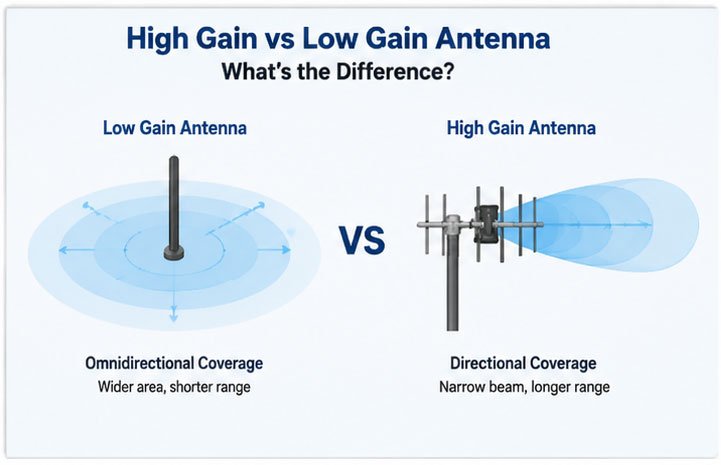
- High-Gain Antennas: These are essential for long-range links. Gain is measured in dBi (decibels isotropic) and quantifies how effectively an antenna focuses RF power. A higher dBi means the antenna can "hear" weaker signals from farther away and "shout" louder in a specific direction.
- Directional Antennas (e.g., Yagi, Panel, Dish): These antennas focus the RF energy into a narrow beam, making them ideal for point-to-point (PtP) or point-to-multipoint (PtMP) links. While they offer excellent range and interference rejection in the desired direction, they require precise alignment.
- Omnidirectional Antennas: These radiate signal in a 360-degree pattern horizontally. While generally not ideal for extreme long-range PtP, high-gain omnidirectional antennas (e.g., often 8-15 dBi) can be used for long-range coverage in a circular area or for PtMP scenarios where clients are distributed around a central access point over a large radius. However, higher gain omni antennas achieve this by flattening the vertical beamwidth, meaning coverage directly above or below the antenna becomes very weak.
Mitigating Signal Loss Over Distance
Signal strength naturally degrades with distance (free space path loss). For long-range links, every component in the RF chain must be optimized.
- Low-Loss Coaxial Cable: The longer the cable run from the radio to the antenna, the more signal loss occurs. Using thicker, high-quality, low-loss coaxial cables (like LMR-400 or higher) is crucial. Avoid standard RG-58 for anything more than a few feet, especially at 5 GHz, where losses are significantly higher.
- Line-of-Sight (LOS): For optimal long-range performance, a clear, unobstructed line of sight between antennas is usually essential. Any physical obstructions (buildings, hills, dense foliage, even large metal structures in a factory) can severely attenuate or block the signal. The Fresnel zone, an elliptical area around the line of sight, also needs to be clear of obstructions.
- Power Output: While higher transmit power can increase range, it is limited by regulatory bodies (e.g., FCC, CE). Combining high-gain antennas with maximum permissible power output achieves the best results.
Beyond a Single Link: Network Design
For very large industrial areas, a single long-range link might not be sufficient. Consider these approaches:
- Mesh Networks: A self-configuring, self-healing network where access points collaborate to extend coverage and provide redundancy. Each node can act as a repeater, extending the range iteratively.
- Wireless Repeaters/Extenders: Devices that receive a signal and re-transmit it, boosting coverage in specific areas.
- Distributed Antenna Systems (DAS): For complex indoor environments, a DAS can distribute cellular or WiFi signals throughout a large facility using a network of smaller antennas connected via fiber or coaxial cable.
When our clients approach us for long-range solutions, particularly for applications like remote oil and gas monitoring or extensive logistics centers, we collaborate to define not just the antenna type but the entire RF architecture. This includes recommending suitable cable, connectors, and often advising on optimal antenna placement and alignment. For instance, a directional Yagi antenna providing a 15 dBi gain might be perfect for a 2-mile point-to-point link between two industrial buildings, provided there's a clear line of sight and proper aiming.
How to Choose a High-Gain WiFi Antenna for Industrial Wireless Networks?
High-gain antennas are frequently sought after for extending coverage or penetrating challenging environments in industrial settings. However, simply opting for the highest dBi number isn't always the best strategy. So, how exactly do you choose a high-gain WiFi antenna for industrial wireless networks effectively?
To choose a high-gain WiFi antenna for industrial wireless networks, prioritize antennas with appropriate gain (dBi) based on your specific range or penetration requirements. Understand that higher gain often means a narrower beamwidth, necessitating precise aiming. Match the antenna's radiation pattern (directional vs. omni) to your coverage needs and ensure it is environmentally robust for industrial deployment.
The term "high-gain" can sometimes be misleading if not understood in the context of antenna theory. When you choose a high-gain WiFi antenna for industrial wireless networks, you are selecting an antenna that more efficiently focuses its radio energy, rather than broadcasting it equally in all directions. This concentration of power leads to increased range and signal strength in the desired direction.
Understanding Gain (dBi) and Beamwidth
Antenna gain is measured in decibels relative to an isotropic radiator (dBi), a theoretical antenna that radiates power equally in all directions.
- Higher Gain, Narrower Beam: The fundamental principle is that an antenna cannot create power; it can only redistribute it. Therefore, a high-gain antenna achieves its increased range by compressing the RF energy into a narrower beam.
- An omnidirectional antenna with 3 dBi might have a broad, donut-shaped radiation pattern.
- A 12 dBi omnidirectional antenna will have a much flatter, pancake-like pattern, covering a wider area horizontally but with a very narrow vertical beam. This means devices directly above or below it might have poor signal.
- A 15 dBi directional panel antenna will have a very focused, cone-like beam, providing excellent range in that specific direction but minimal coverage elsewhere.
When to Use High-Gain Antennas
High-gain antennas are particularly beneficial for:
- Point-to-Point (PtP) Links: Connecting two specific locations over a long distance, such as two factory buildings or remote sites. Directional antennas like Yagis or panel antennas are ideal here.
- Point-to-Multipoint (PtMP) Links: A central access point serving multiple distant client devices. High-gain omnidirectional or sector antennas can be used depending on the client distribution.
- Penetrating Obstacles: While not a magic bullet, focusing power can help push a signal through some moderate obstructions, though clear line-of-sight is always preferred.
- Reducing Interference: Directional high-gain antennas can be aimed to minimize picking up noise from unwanted directions, improving signal-to-noise ratio (SNR).
Practical Considerations for High-Gain Antennas
- Precision Alignment: High-gain directional antennas require very accurate aiming. Even a few degrees off can significantly degrade performance. Professional installation and alignment tools are often necessary.
- Installation Height: Elevating high-gain antennas can improve line-of-sight and reduce ground interference. However, consider the impact of lightning protection for outdoor installations.
- Regulatory Limits: Be aware of local regulations on Effective Isotropic Radiated Power (EIRP), which is the product of the transmitter's power and the antenna's gain. Exceeding these limits is illegal and can cause interference.
- Coexistence with Other Wireless Systems: In busy industrial settings, multiple wireless technologies (WiFi, Bluetooth, LoRa, cellular, proprietary RF) might coexist. Proper frequency planning and directional antenna use can help mitigate interference.
From our experience with industrial clients, specifying a high-gain antenna always starts with defining the exact coverage area and distance. For example, if a client needs to connect a production line's control panel to a server in a separate building 500 meters away, a pair of 14 dBi directional panel antennas would be a suitable recommendation. If they need to cover a large outdoor storage yard with omnidirectional coverage, a 9 dBi omnidirectional fiberglass antenna might be chosen, with careful consideration of its vertical beamwidth to ensure adequate ground-level coverage. Our comprehensive testing ensures that the advertised gain translates into real-world performance.
How to Choose the Right WiFi Antenna for Factory and Smart Manufacturing?
Modern factories and smart manufacturing facilities are increasingly reliant on wireless communication for automation, monitoring, and real-time data exchange. But the unique operational dynamics of these environments pose specific challenges. So, how do you choose the right WiFi antenna for factory and smart manufacturing?
To choose the right WiFi antenna for factory and smart manufacturing, prioritize antennas that can withstand physical vibration, extreme temperatures, and electromagnetic interference. Select robust, high-performance models capable of maintaining stable, low-latency connections for critical real-time data, often requiring advanced features like MIMO support and specific radiation patterns to navigate metal obstructions effectively.
Selecting the right WiFi antenna for factory and smart manufacturing environments demands a focus on robustness, reliability, and resilience against interference. These facilities are often characterized by dense metal structures, moving machinery, and high levels of electromagnetic noise, all of which can severely impact wireless signal integrity.
Navigating Physical Obstacles and Interference
- Metal Obstructions: Large machinery, metal racks, and structural beams create Faraday cage effects and signal reflections (multipath interference).
- Solution: Consider multiple antennas, mesh networks, or highly directional antennas to "beam" signals around or through known weak points. Utilizing the 5 GHz band can offer better performance in environments with a lot of reflective surfaces due to its shorter wavelength, though its range is shorter than 2.4 GHz.
- Moving Machinery: Robots, automated guided vehicles (AGVs), and production line components can temporarily block signals or cause dynamic interference.
- Solution: Strategic placement of access points and antennas to create redundant paths, or using antennas with broader horizontal beamwidths.
- EMI/RFI: Motors, welders, induction heaters, and power cables are significant sources of electromagnetic noise.
- Solution: Antennas with good shielding and high signal-to-noise ratio (SNR) capabilities are essential. Some industrial antennas are designed to be more resistant to specific interference types. Proper grounding of antenna systems and equipment can also reduce noise.
Real-time Data and Low Latency Requirements
Smart manufacturing relies heavily on real-time data for control systems, predictive maintenance, and quality assurance. This means:
- High Throughput: Antennas supporting technologies like 802.11ac or 802.11ax (WiFi 5/6) and MIMO (Multiple-Input Multiple-Output) can provide the necessary bandwidth for data-intensive applications.
- Low Latency: Critical control applications, such as robotic arms or AGV navigation, cannot tolerate significant communication delays. Antenna design and network architecture must prioritize minimal latency. Good VSWR and proper impedance matching contribute to this by ensuring efficient signal transmission without retransmissions.
Mechanical Robustness and Mounting
Antennas in factory settings are susceptible to physical damage.
- Vibration Resistance: Antennas and their mounts must withstand constant vibration from machinery without loosening or failing.
- Impact Resistance: Accidental bumps from forklifts or other equipment require sturdy enclosures.
- Secure Mounting: Industrial-grade mounting brackets (e.g., heavy-duty stainless steel) are crucial. Some antennas can be flush-mounted to walls or ceilings to protect them from impact.
We work closely with factory automation integrators to design custom antenna solutions. For instance, for AGVs in a large manufacturing plant, we might recommend compact, robust, low-profile antennas integrated directly into the vehicle's chassis, paired with strategically placed high-gain panel antennas on walls or ceilings to ensure continuous coverage throughout the AGV's operational path. Our ISO9001 certification ensures that these critical components are manufactured to consistent, high-quality standards suitable for such demanding applications.
How to Choose an Outdoor WiFi Antenna for Industrial Wireless Applications?
Deploying WiFi outdoors in industrial settings, whether for remote sites, surveillance, or campus-wide connectivity, introduces a unique set of environmental challenges. So, what considerations are paramount when you need to choose an outdoor WiFi antenna for industrial wireless applications?
When choosing an outdoor WiFi antenna for industrial wireless applications, prioritize robust environmental protection with a high IP rating (e.g., IP67) against dust, water, and extreme temperatures. Essential features also include UV resistance, lightning protection, and durable mounting hardware to withstand wind load. Select an antenna with a radiation pattern and gain optimized for the specific outdoor range and coverage required.
Choosing an outdoor WiFi antenna for industrial wireless applications extends beyond electrical performance to encompass extreme durability and weatherproofing. These antennas must survive direct exposure to the elements while maintaining consistent connectivity.
Environmental Resistance and IP Ratings
The most crucial factor for outdoor industrial antennas is their ability to withstand nature's fury.
- Ingress Protection (IP) Rating: This two-digit code indicates the level of protection against solids and liquids.
- The first digit (0-6) relates to solid particle protection (e.g., dust). For industrial outdoor use, a '6' (dust tight) is ideal.
- The second digit (0-8) relates to liquid ingress protection (e.g., water). For exposed outdoor antennas, '7' (protection against immersion up to 1m for 30 minutes) or '8' (protection against continuous immersion) is highly recommended. An IP67-rated antenna can withstand heavy rain, snow, and even temporary submersion.
- Temperature Range: Outdoor industrial antennas must operate reliably across a vast temperature spectrum, often from -40°C to +85°C. The materials used (radome, internal components) must not degrade or crack under thermal stress.
- UV Resistance: Prolonged exposure to sunlight can degrade plastics, leading to brittleness and failure. Antennas should feature UV-stabilized materials like ASA or fiberglass radomes.
- Corrosion Resistance: Salt spray, industrial pollutants, and humidity can accelerate corrosion of metal parts. Marine-grade stainless steel or aluminum alloys are preferred for mounting hardware and connectors.
Wind Load and Mounting
High winds are a significant concern for outdoor antennas, especially those with larger surface areas or mounted at height.
- Wind Load Rating: Manufacturers should provide a wind load specification, indicating the maximum wind speed the antenna can withstand without damage.
- Robust Mounting Hardware: Heavy-duty, adjustable mounting brackets made from galvanized steel or stainless steel are essential. They must be securely affixed to poles or walls to prevent loosening or antenna misalignment under strong winds.
- Vibration: Wind-induced vibration can cause fatigue failure over time. Some industrial designs incorporate features to mitigate vibration.
Lightning Protection and Grounding
Outdoor antennas are prime targets for lightning strikes, which can devastate an entire network if not properly protected.
- Lightning Arrestors: Install in-line lightning arrestors between the antenna and the radio/device. These shunt dangerous surges to ground while allowing RF signals to pass.
- Proper Grounding: The antenna mast, mounting hardware, and lightning arrestors must be correctly bonded to a low-impedance ground system. This provides a safe path for lightning energy.
- Surge Protection: Ensure power supplies and Ethernet cables running to outdoor equipment also have surge protection.
From our 17+ years of experience supplying antennas to global markets, including regions with extreme weather, we rigorously test our outdoor industrial WiFi antennas for IP ratings, UV exposure, and temperature cycling. We guide our clients on selecting appropriate lightning protection solutions and robust mounting options. For instance, a fiberglass omnidirectional antenna often preferred for outdoor base stations comes with an N-Female connector, which is inherently weather-resistant, and robust U-bolt mounting hardware, all designed to ensure long-term reliable operation in the harshest outdoor industrial environments.
How to Choose the Best WiFi Antenna for Industrial IoT Connectivity?
Industrial IoT (IIoT) devices are transforming industries by enabling data collection and automation at an unprecedented scale. However, establishing reliable IIoT connectivity hinges on selecting the optimal antenna. So, what defines the best WiFi antenna for industrial IoT connectivity in this rapidly evolving landscape?
To choose the best WiFi antenna for industrial IoT connectivity, prioritize compact, low-power designs that offer reliable performance in harsh environments. Evaluate factors such as small form factor, flexible mounting, and compatibility with diverse IoT protocols and modules. Focus on antennas that ensure stable, long-term operation with minimal maintenance, supporting efficient data transmission for mission-critical IIoT applications.
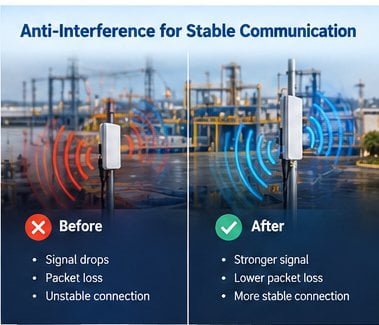
The best WiFi antenna for industrial IoT connectivity is one that not only ensures robust communication but also integrates seamlessly into the unique constraints of IIoT devices. These devices are often small, battery-powered, and deployed in challenging locations, making antenna selection a delicate balance.
Small Form Factor and Integration
IIoT devices are typically compact, meaning their antennas must be equally discreet.
- Internal Antennas (PCB, FPC): For devices where space is at an absolute premium or aesthetics are important, internal antennas are often the go-to choice. They can be integrated directly onto the device's circuit board or as flexible adhesive components.
- Pros: Space-saving, protected from environment, sleek design.
- Cons: Performance highly dependent on enclosure material, proximity to other components (batteries, metal parts), and potentially lower gain. Requires careful RF design by device manufacturer.
- Micro-Antennas: Some specialized external antennas are designed to be extremely small, often screwing into an M.2 or similar connector, or directly soldering onto a module.
- Low Profile Patch/Panel Antennas: For devices that mount flush against a surface, compact patch antennas can offer a directional signal in a discreet package.
When utilizing internal antennas, the choice of enclosure material is paramount. Plastics, especially those with low dielectric constants, are generally preferred over metal, which can block signals. Even a slight change in the internal layout can detune an internal antenna, highlighting the importance of working with experienced antenna designers.
Power Efficiency
Many IIoT devices are battery-powered and operate for extended periods without human intervention. An efficiently designed antenna system minimizes power consumption by ensuring that the radio doesn't have to work harder to transmit or receive data.
- Optimal VSWR: An antenna with a VSWR close to 1:1 ensures maximum power transfer from the radio to the antenna, reducing wasted energy.
- Correct Impedance Matching: Ensuring all components in the RF path (radio, cable, antenna) are 50-ohm matched prevents signal reflection and power loss.
- Effective Gain: An antenna with appropriate gain for the desired range allows the radio to operate at lower power levels while still achieving reliable communication.
Compatibility and Standards
While we're focusing on WiFi, IIoT often involves a mix of connectivity technologies. Ensure the WiFi antenna is compatible with the specific WiFi module and standards (e.g., 802.11n, 802.11ac, 802.11ax) used in your device.
- MIMO Support: For higher throughput and link reliability, many industrial IoT gateways and more advanced devices utilize MIMO. Antennas designed to support MIMO often involve multiple radiating elements, either spatially separated or with specific polarization diversity.
- Frequency Bands: Confirm the antenna supports the necessary frequency bands (2.4 GHz, 5 GHz, or dual-band) for your IIoT deployment strategy.
Our OEM/ODM capabilities are particularly valuable for IIoT clients. We can collaborate from the early design stages of an IIoT device to develop custom internal or external antennas that meet precise performance requirements while fitting within tight space and power budgets. We validate these designs through rigorous testing, ensuring that the antenna solution performs optimally in the challenging industrial environments where IIoT devices are deployed. For instance, we might design a specialized FPC antenna for a smart asset tracking device that needs to operate reliably inside metal containers, optimizing its radiation pattern to maximize signal penetration in such unique scenarios.
How to Choose a Dual-Band WiFi Antenna for Industrial Networks?
Many modern industrial applications leverage both the 2.4 GHz and 5 GHz WiFi bands to optimize performance. But effectively utilizing these distinct frequencies requires careful antenna selection. So, how do you choose a dual-band WiFi antenna for industrial networks to maximize your connectivity?
To choose a dual-band WiFi antenna for industrial networks, select one that efficiently supports both 2.4 GHz and 5 GHz frequencies simultaneously. Evaluate its performance characteristics, such as gain and VSWR, across both bands, ensuring it meets the specific range and throughput requirements for your industrial environment. Prioritize antennas that offer robust construction and stable performance to manage interference and diverse device connectivity.

Choosing a dual-band WiFi antenna for industrial networks is a strategic decision that allows network designers to leverage the advantages of both the 2.4 GHz and 5 GHz frequency bands. This flexibility is crucial for industrial environments that often host a mix of legacy and modern devices, or where both range and high throughput are simultaneously required.
Understanding the Two Bands
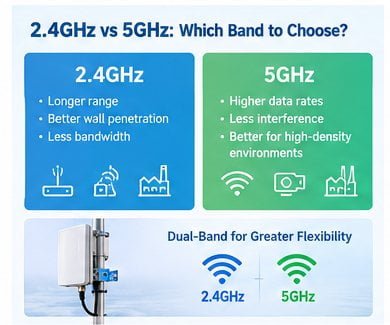
- 2.4 GHz Band:
- Pros: Greater range, better penetration through obstacles (walls, machinery), more widely supported by older devices.
- Cons: Highly susceptible to interference from other 2.4 GHz devices (Bluetooth, microwaves, cordless phones, older industrial equipment), limited bandwidth.
- 5 GHz Band:
- Pros: Higher bandwidth, faster speeds, less interference (more available channels), better for high-density deployments.
- Cons: Shorter range, poorer penetration through obstacles, more line-of-sight dependent.
Why Dual-Band?
A dual-band antenna allows a single access point or client device to operate on both frequency bands, providing greater flexibility. In an industrial setting, this means:
- Balancing Range and Throughput: Mission-critical devices requiring high throughput and low latency (e.g., real-time control systems, HD video streams) can connect to the 5 GHz band, while older or more distant devices (e.g., legacy sensors, simple monitoring) can utilize the 2.4 GHz band.
- Interference Mitigation: If one band becomes congested or experiences significant interference, devices can potentially switch to the other, improving overall network resilience.
- Future-Proofing: As more industrial devices adopt 5 GHz capabilities, a dual-band infrastructure allows for seamless integration without needing to replace existing 2.4 GHz equipment immediately.
- Simplified Deployment: One antenna covers two bands, reducing installation complexity and physical footprint compared to deploying two separate single-band antennas.
Dual-Band Antenna Characteristics
A good dual-band antenna is designed to resonate efficiently at both 2.4 GHz (e.g., 2400-2500 MHz) and 5 GHz (e.g., 5150-5850 MHz) frequencies.
- VSWR Across Both Bands: It's important to verify that the VSWR is acceptable (typically <1.5:1) for both the 2.4 GHz and 5 GHz ranges. An antenna might perform well on one band but poorly on the other if not designed correctly.
- Gain Consistency: While gain might vary slightly between bands, a well-designed dual-band antenna will offer balanced performance. For instance, a 5 dBi gain on 2.4 GHz and a 7 dBi gain on 5 GHz for an omnidirectional antenna.
- Radiation Pattern: The radiation pattern should be consistent and optimized for the intended coverage across both bands.
When our clients inquire about dual-band WiFi antennas for industrial networks, we always discuss their specific device mix and operational needs. For example, a system integrator might be deploying a new fleet of high-bandwidth AGVs that need 5 GHz for speed, but also managing existing 2.4 GHz environmental sensors that operate at lower data rates. A robust dual-band omnidirectional antenna on industrial access points, combined with appropriate client-side antennas, provides this versatility. Our R&D team continuously refines dual-band antenna designs to ensure optimal performance, low VSWR, and durability for demanding industrial applications.
How to Choose a WiFi Antenna for Reliable Industrial Wireless Communication?
Reliability is the cornerstone of any industrial operation, and this extends directly to wireless communication. Downtime due to connectivity issues can lead to significant financial losses and safety hazards. So, how do you choose a WiFi antenna for reliable industrial wireless communication?
To choose a WiFi antenna for reliable industrial wireless communication, prioritize robust construction, consistent electrical performance (low VSWR, stable gain), and strong anti-interference capabilities. Select antennas from manufacturers with proven quality control (e.g., ISO9001) and extensive testing, ensuring that materials, design, and manufacturing processes guarantee long-term stability, minimal packet loss, and continuous operation in harsh industrial settings.

When selecting a WiFi antenna for reliable industrial wireless communication, the focus must transcend mere peak performance; it's about sustained, consistent operation under real-world industrial stresses. This means evaluating not just the antenna itself, but also the manufacturing processes and quality assurance behind it.
Material Quality and Manufacturing Consistency
The foundation of reliability lies in the quality of materials and the precision of manufacturing.
- High-Grade Materials: For industrial antennas, this translates to durable plastics (e.g., UV-stabilized ASA, polycarbonate) for radomes, high-conductivity metals (e.g., copper, brass) for radiating elements, and corrosion-resistant alloys (e.g., stainless steel) for mounting hardware. These materials must maintain their physical and electrical properties across extreme temperatures and environmental exposure.
- Precision Engineering: Antenna performance is highly sensitive to dimensional accuracy. Slight variations during manufacturing can detune an antenna, leading to higher VSWR and reduced efficiency. Our ISO9001 quality management system ensures stringent controls over every stage, from material sourcing to final assembly, guaranteeing consistent product quality.
- Robust Construction: The antenna should be designed to resist vibration, shock, and ingress of dust and moisture. Sealed enclosures, potted internal components, and secure connections are hallmarks of a reliable industrial antenna.
Electrical Performance Stability
An antenna's reliability is directly linked to the stability of its electrical performance over time and under varying conditions.
- Consistent VSWR: A low VSWR (typically below 1.5:1) is critical for efficient power transfer. Reliable antennas maintain this low VSWR across their specified frequency range and throughout their operational lifespan, even after environmental stresses like temperature cycling.
- Stable Gain: The antenna's gain should remain consistent, ensuring predictable signal strength and range.
- Interference Rejection: While not explicitly a "performance" metric, an antenna's design can influence its ability to reject out-of-band noise, contributing to a cleaner, more reliable signal. Directional antennas inherently offer better interference rejection from unwanted directions.
- Low PIM (Passive Intermodulation): In complex multi-carrier environments, PIM can generate unwanted signals that degrade network performance. For very sensitive or high-density industrial deployments, antennas with low PIM ratings might be necessary.
Comprehensive Testing and Certifications
A manufacturer's commitment to reliability is often demonstrated through their testing protocols and certifications.
- Environmental Testing: This includes temperature cycling, humidity testing, salt spray, UV exposure, and vibration/shock tests to simulate real-world industrial conditions.
- RF Performance Testing: Each antenna should undergo individual RF testing (e.g., VSWR, gain measurement in an anechoic chamber) to confirm it meets specifications before shipping.
- Certifications: Beyond product-specific certifications like CE and RoHS, look for quality management certifications like ISO9001. This indicates a systematic approach to quality that underpins reliability. Our company, for example, holds numerous patents and complies with international standards, which is a testament to our focus on robust, reliable antenna solutions.
When advising clients on a WiFi antenna for reliable industrial wireless communication, we emphasize the importance of product consistency. A batch of 100 antennas must perform identically, ensuring scalability and predictability for large-scale deployments. This is where our deep experience in R&D, coupled with a stable production system and stringent quality control, proves invaluable to our customers, who rely on our products for their critical communication infrastructures.
Industrial WiFi Antenna Selection Guide: How to Choose the Right Antenna?
Navigating the multitude of options for industrial wireless connectivity can be challenging. This guide distills the essential steps to empower you to make an informed decision. So, how do you comprehensively approach the Industrial WiFi Antenna Selection Guide: How to Choose the Right Antenna for your specific needs?
This Industrial WiFi Antenna Selection Guide emphasizes a systematic approach: start by defining your industrial environment and connectivity goals (range, data rate, device type). Then, evaluate antennas based on frequency, gain, radiation pattern, environmental resilience, and mechanical robustness. Finally, consider the supplier's quality, customization capabilities, and support to ensure a high-performance, reliable, and scalable WiFi antenna for industrial wireless networks.
The Industrial WiFi Antenna Selection Guide is designed to provide a structured approach to ensure you select the optimal WiFi antenna for industrial wireless networks. By following these steps, you can confidently address the complexities of industrial environments and achieve robust, reliable connectivity.
Step 1: Define Your Industrial Environment and Connectivity Goals
This is the foundational step. Every subsequent decision hinges on a clear understanding of your operational context.
- Physical Environment:
- Indoor/Outdoor? (Determines IP rating, UV resistance, wind load needs)
- Temperature Extremes? (Determine operating temp range)
- Presence of Dust, Moisture, Chemicals, Vibration? (Determines enclosure material, construction robustness)
- Obstacles? (Metal machinery, walls, buildings – influences radiation pattern, frequency choice)
- EMI/RFI Sources? (Motors, welders – influences antenna shielding, directional preference)
- Connectivity Requirements:
- What is the desired range? (Influences gain, directional vs. omni)
- What data rates/throughput are needed? (Influences WiFi standard, MIMO support, 5 GHz vs. 2.4 GHz)
- What types of devices are connecting? (Industrial routers, IoT sensors, AGVs – influences form factor, connector type)
- Is low latency critical? (Influences antenna quality, network design)
- What is the desired coverage pattern? (Point-to-point, omnidirectional area, sector)
- Are there existing network components? (Compatibility)
Step 2: Evaluate Key Antenna Specifications
Based on your defined requirements, filter potential antennas by their technical specifications.
- Frequency Band: 2.4 GHz (longer range, more interference), 5 GHz (faster, less interference, shorter range), or Dual-Band.
- Gain (dBi): Higher for longer range or penetration, but be mindful of beamwidth.
- Radiation Pattern:
- Omnidirectional: For broad, circular coverage around an access point.
- Directional (Panel, Yagi, Sector): For focused links, point-to-point, or specific area coverage.
- VSWR: Aim for <1.5:1 for optimal power transfer.
- Polarization: Match the polarization of the radio/other antennas (e.g., vertical, horizontal, circular).
- Connector Type: SMA, RP-SMA, N-Type, U.FL/IPEX – ensure compatibility with your device.
- Cable Type and Length: Minimize loss by using high-quality, low-loss cable, keeping runs as short as possible.
Step 3: Assess Physical and Mechanical Attributes
Ensure the antenna can survive and integrate into your industrial environment.
- IP Rating: Crucial for outdoor or dusty/wet indoor locations (e.g., IP67 for outdoor).
- Operating Temperature Range: Must match your facility's extremes.
- Construction Materials: UV-resistant, corrosion-resistant, robust plastics/metals.
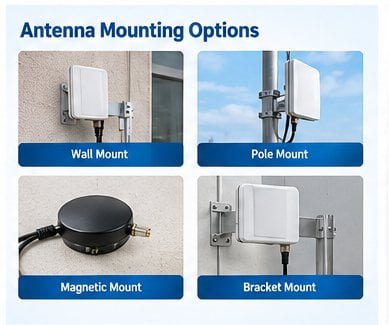
- Mounting Type: Wall mount, pole mount, magnetic, embedded – ensure it fits your installation plan and can withstand environmental forces (wind load, vibration).
- Size and Form Factor: Especially for embedded or space-constrained IoT devices.
Step 4: Consider Supplier Capabilities and Support
The manufacturer you choose is as critical as the antenna itself.
- Quality Certifications: Look for ISO9001 to ensure consistent product quality.
- R&D and Customization (OEM/ODM): For unique industrial requirements, a manufacturer's ability to design custom solutions is invaluable. We pride ourselves on offering bespoke antenna designs to meet specific client needs.
- Testing and Validation: Does the manufacturer perform rigorous environmental and RF performance testing?
- Technical Support: Can they assist with complex installations, troubleshooting, or RF planning?
- Export Experience: For international buyers, understanding logistics, certifications (CE, RoHS), and trade requirements is crucial.
- Flexible MOQ and Fast Delivery: Important for project timelines and budget management.
By systematically working through this Industrial WiFi Antenna Selection Guide, you can move beyond guesswork and confidently choose a WiFi antenna for industrial wireless networks that delivers robust, reliable performance for your critical operations. We are always ready to consult and apply our 17+ years of expertise to your specific industrial communication challenges.
Frequently Asked Questions
What is the difference between an omnidirectional and a directional industrial WiFi antenna?
An omnidirectional antenna radiates signal in a 360-degree horizontal pattern, suitable for general area coverage around an access point. A directional antenna, conversely, focuses its signal into a narrower beam, ideal for long-distance point-to-point links or precise area coverage, offering higher gain and better interference rejection in its focused direction.
How does antenna gain (dBi) affect industrial WiFi range?
Antenna gain (dBi) directly influences industrial WiFi range by concentrating radio frequency energy. Higher gain means the antenna can send and receive signals over longer distances or with better penetration through obstacles, but it typically achieves this by narrowing the signal's beamwidth, requiring more precise aiming.
Can I use a standard home WiFi antenna for an industrial application?
No, generally you should not use a standard home WiFi antenna for industrial applications. Home antennas lack the robust construction, IP ratings, and temperature resilience required to withstand harsh industrial environments, leading to premature failure and unreliable communication in critical operational settings.
What IP rating should an outdoor industrial WiFi antenna have?
An outdoor industrial WiFi antenna should typically have an IP rating of at least IP67. This signifies it is completely dust-tight (6) and protected against temporary immersion in water up to 1 meter (7), making it suitable for exposure to heavy rain, dust, and varying weather conditions found in industrial outdoor environments.
How important is VSWR for industrial WiFi antenna performance?
VSWR (Voltage Standing Wave Ratio) is highly important for industrial WiFi antenna performance. A low VSWR (ideally below 1.5:1) indicates efficient power transfer from the radio to the antenna, minimizing signal reflection and loss. This ensures maximum signal strength, range, and reliability, which are critical for stable industrial wireless communication.
Conclusion
Choosing the optimal WiFi antenna for industrial wireless networks is a critical decision that directly impacts the efficiency, safety, and profitability of your operations. We have explored how factors like environmental robustness, electrical performance, frequency band selection, gain, and radiation pattern all play a vital role in ensuring reliable connectivity. From our 17+ years of experience, we understand that a successful deployment hinges not just on the antenna's specifications, but also on the quality of its manufacturing and the expertise of its supplier.
We are a Shenzhen-based manufacturer specializing in communication antennas, equipped with ISO9001 certification, numerous patents, and a track record of exporting to over 100 countries. Our strength lies in providing high-performance, customizable (OEM/ODM), and robust antenna solutions with flexible MOQs and fast delivery. If your industrial wireless project demands reliable, high-quality, and tailored WiFi antenna for industrial wireless networks solutions, contact us to discuss your specific requirements. Let our engineering team help you design the perfect connectivity solution for your industrial challenges.