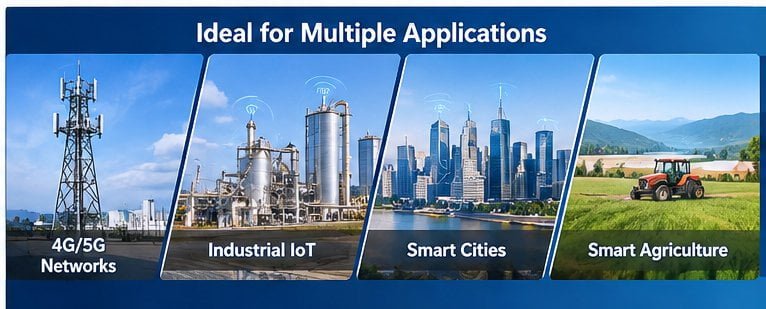
Selecting a high-gain outdoor antenna can seem challenging, especially when you need to optimize gain, coverage, and reliability for wireless communication. Too much emphasis on gain alone could lead to narrow beamwidth or unstable connections. Understanding the balance between distance, coverage, and durability is the key to strong and reliable connectivity.
High-gain outdoor antennas balance enhanced signal strength with optimized coverage by carefully managing beamwidth and directionality. Proper selection ensures reliable performance even in demanding applications like 4G, 5G, IoT, and industrial networks. Factors like structural design, weather resistance, and lightning protection also play a critical role.
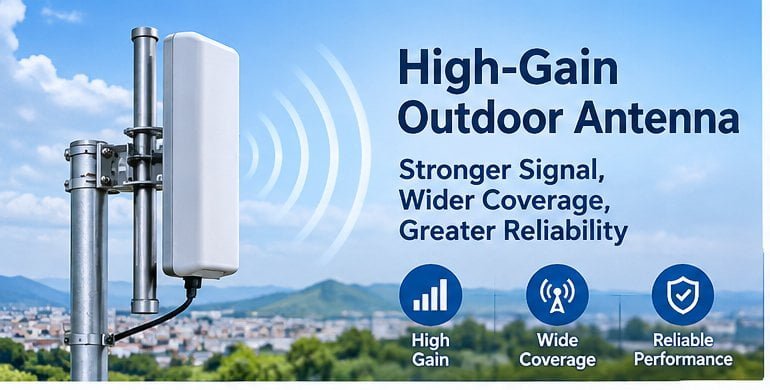
Choosing the right antenna isn't just about boosting signal strength — it's about ensuring that wider coverage and long-range communication align seamlessly. Let’s break down how to strike the ideal balance.
How to Choose a High-Gain Outdoor Antenna for Reliable Wireless Communication?
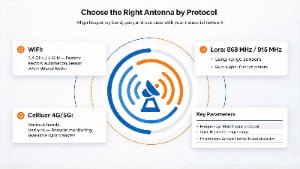
Selecting a high-gain antenna starts with identifying your wireless communication priorities: distance, signal quality, or coverage breadth.
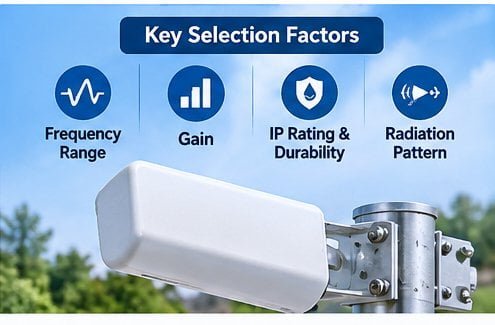
Reliable outdoor wireless communication depends on antennas with the right combination of signal gain, frequency, design durability, and radiation patterns to meet coverage requirements. High-gain antennas enhance signal strength but should feature weatherproof housings and precise directional performance.

High-gain antennas generally concentrate signal energy into narrower beams, extending their range. When reliability is key, look for antennas designed with waterproof casings, anti-corrosion materials, and reinforced structures to endure harsh outdoor conditions. Besides technical specifications, durability factors such as lightning protection become vital.
Key Specifications for Reliable Antennas:
- Frequency Range: Matches your communication band (e.g., 4G LTE, 5G, WiFi).
- Gain: Optimal levels (e.g., 9dBi–15dBi for outdoor systems).
- Radiation Pattern: Directional or omnidirectional based on coverage needs.
- Structural Integrity: IP-rated waterproofing, corrosion-resistant build material.
Proper selection depends on operational goals. For IoT or industrial setups, prioritizing stability and environmental resistance could outweigh extending range.
High-Gain Outdoor A antennas: Balancing Signal Strength, Coverage, and Performance
Maximizing signal strength shouldn't come at the expense of coverage or usability.
High-gain antennas deliver stronger signals by focusing energy into narrow beams, making them ideal for long-range connections but requiring thoughtful placement and configuration to avoid compromising coverage or reliability.
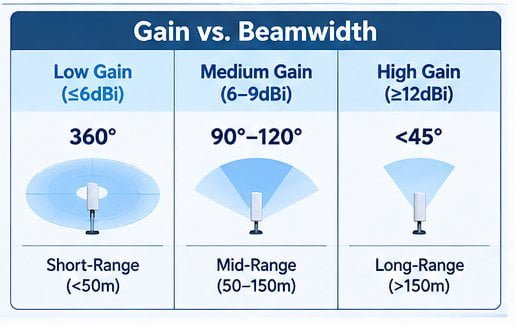
Here’s how to achieve balance:
- Beamwidth vs. Range: Higher gain results in narrow beamwidth. Ensure the antenna direction aligns with your target area.
- Frequency Adjustments: Specific frequency bands work better for penetration versus propagation — choose accordingly.
- Installation Integrity: Outdoor antennas should have secure mounting brackets and UV-resistant casings.
Balancing physical and technical performance results in optimal system efficiency. For applications spanning vast outdoor spaces, omnidirectional antennas might suit coverage better than highly focused directionals.
How Does Antenna Gain Affect Outdoor Wireless Coverage and Signal Quality?
Antenna gain directly impacts range and signal consistency, but there are trade-offs.
Increasing an antenna’s gain improves wireless coverage by concentrating signal energy toward a specific path. However, the trade-offs include narrower beamwidth and potential gaps in coverage outside the focus. Selecting optimal gain ensures effective signal delivery without overshooting target areas.

Gain vs. Beamwidth Breakdown:
| Gain Level | Beamwidth | Coverage Distance | Ideal Use Case |
|---|---|---|---|
| Low (≤6dBi) | Wide (360°) | Short-range (<50m) | Local IoT, WiFi Zones |
| Medium (6–9dBi) | Moderate (90°–120°) | Mid-range (50–150m) | General Outdoor Usage |
| High (≥12dBi) | Narrow (<45°) | Long-range (>150m) | Point-to-point Links |
Precision matters. Industrial outdoor environments may require narrow-beam antennas for targeted communication, while broader applications like open fields benefit from wide beamwidth coverage.
Choosing the Right Outdoor Antenna: Gain, Range, and Reliability Explained
Gain, range, and reliability should complement each other rather than compete.
Reliable outdoor antennas harmonize gain, range, and other critical factors like material durability, mounting flexibility, and environmental protection. Ensuring balance avoids unnecessary performance degradation under real-world conditions.
Before committing to any antenna solution:
- Establish priority metrics (e.g., range or stability).
- Analyze site conditions (e.g., obstacles like trees/walls).
- Test coverage flexibility, especially against seasonal weather.
Directional antennas operate under finer performance tolerances than omnidirectional ones—critical for outdoor industrial use cases spanning kilometers.
How to Improve Outdoor Signal Coverage with a High-Gain Antenna?
Boosting signal coverage begins by optimizing location and gain settings.
High-gain antennas enhance signal coverage by focusing energy into precise paths, making them ideal for long-range communication across large outdoor spaces. Proper antenna alignment and height adjustments further amplify signal strength.
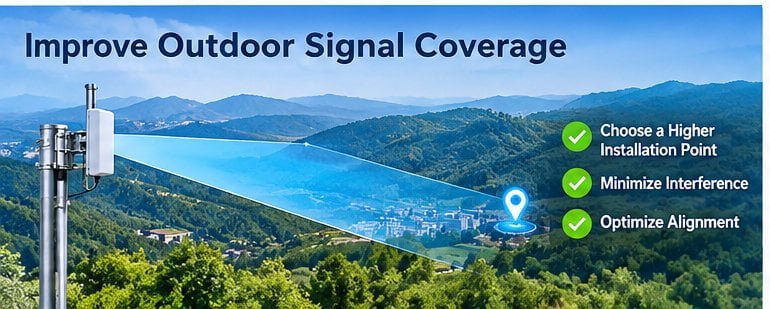
Steps to Improve Signal Coverage:
- Choose Appropriate Height: Install antennas either above obstructions or closer where terrain provides amplification (e.g., rooftops).
- Minimize Interference: Avoid nearby electronic devices causing noise.
- Test Site Configurations: Simulate outdoor field scenarios evaluating end-user connectivity bottlenecks.
Improving outdoor coverage takes iterative fine-tuning combined with robust structural selection targeted at mitigating localized interference effects.
FAQ
What factors affect outdoor antenna reliability?
Several factors, including weather resistance, lightning protection, and structural stability, impact reliability. Adding anti-corrosion materials ensures longer operational life, especially under intense rain or heat.
Can high-gain antennas work for omnidirectional coverage?
High-gain antennas are generally directional to focus signal energy into tighter beams. However, specialized high-gain omnidirectional antennas can provide enhanced coverage in a uniform 360° radius.
Does higher gain guarantee better signal quality?
Not always. While higher gain improves range, it can also narrow beamwidth or amplify interference depending on the environment. Optimal placement and alignment help avoid these pitfalls.
Conclusion
Balancing gain, coverage, and reliability is crucial for high-gain outdoor antenna selection. It's not just about stronger signals — effective installation involves optimizing beamwidth, preventing environmental degradation, and matching performance to use-case demands. High-gain outdoor antennas designed for stable long-range connectivity are the cornerstone of dependable networks, especially for IoT, 4G, 5G, and industrial systems.
Explore our full range of customizable high-gain outdoor antennas to find solutions tailored to your wireless communication needs. Contact us anytime for expert recommendations!