The performance of your industrial wireless networks hinges on selecting the right 4G LTE antenna. Without proper consideration of parameters like gain, frequency, or installation environment, your connectivity might suffer. Choosing the right 4G LTE antenna ensures reliable communication and optimal coverage for your mission-critical industrial applications.
To choose the right 4G LTE antenna for industrial applications, focus on matching frequency bands, environmental conditions, gain requirements, connector specifications, power compatibility, and signal obstruction challenges. This ensures reliable and consistent network performance.
From IoT deployments to M2M communication, each industrial use case has specific requirements. Below, I’ll cover key selection criteria ranging from environmental suitability to technical compatibility.
How to Select the Best 4G LTE Antenna for Industrial IoT Deployments?
Industrial IoT systems rely heavily on uninterrupted connectivity, making the antenna choice central to effectiveness.
The best antenna for industrial IoT deployments minimizes signal interference, supports machine-to-machine communication, and aligns with IoT frequency bands like LTE Cat-M or NB-IoT.
Dive deeper:
When selecting a 4G LTE antenna for IoT, ensure compatibility with global LTE bands (700–2600 MHz). Look for omnidirectional antennas for broad coverage or directional antennas for targeted signal optimization. If your IoT devices operate in remote areas, prioritize high-gain antennas with a durable build designed for external installations.
Industrial IoT environments often introduce challenges like RF interference from machinery or signal loss due to densely built areas. Choose antennas with superior shielding and VSWR ratings below 2.0 for minimal reflection loss.
Consider these additional factors:
- Size and form factor: Compact antennas fit well for connected sensor nodes.
- Weatherproofing: IP67/68-rated enclosures withstand environmental stress.
- Mounting flexibility: Magnetic bases or pole mount options adapt to diverse setups.
An optimal IoT antenna ensures edge devices like sensors and gateways maintain uninterrupted communication with cloud platforms.
A Guide to Choosing the Right Antenna for Industrial Wireless Connectivity
Reliable connectivity is essential in industries like manufacturing or logistics, where downtime can disrupt operations.
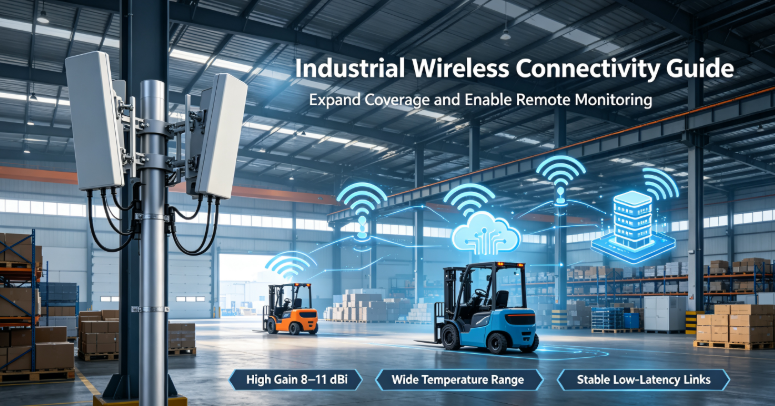
Choose your antenna based on your enterprise wireless connectivity goals—whether that’s expanding coverage within facilities or enabling remote monitoring through LTE.

Dive deeper:
Begin with a frequency compatibility check. Industrial-grade LTE antennas must cover specific bands your ecosystem utilizes. For manufacturing floors or sprawling warehouses, use high-gain antennas rated between 8–11 dBi for extended coverage.
Stability under extreme conditions is also critical:
- Temperature range: Select antennas rated for -40°C to 85°C for harsh environments.
- Corrosion resistance: Anodized aluminum or UV-resistant materials are ideal for external use.
For low latency applications like automated guided vehicles (AGVs), antennaswith minimal VSWR provide stable links, reducing signal mismatch.
Antennas for wireless connectivity are pivotal in data transmission between servers, routers, or cloud hubs, so analyzing impedance matching or cable length specifications is also imperative.
5 Key Factors When Choosing a 4G LTE Antenna for Industrial Use
Choosing the wrong antenna could lead to poor signal strength, limited range, or higher maintenance issues.
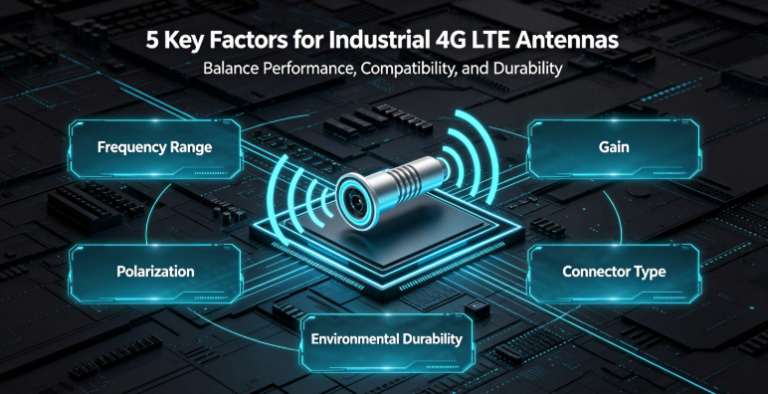
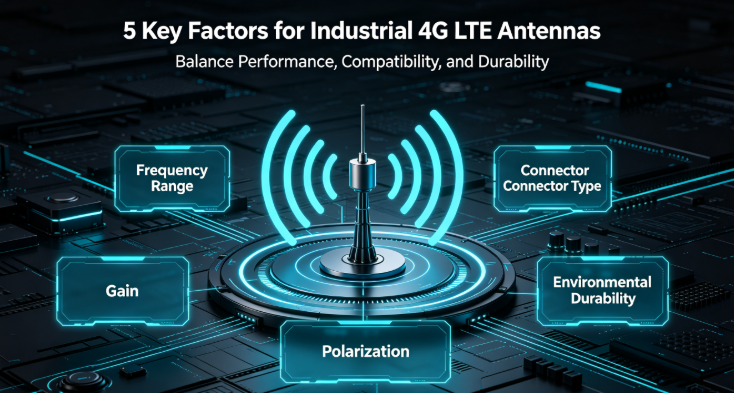
Evaluate your industrial antenna options based on these five key factors: frequency range, gain, polarization, connector type, and environmental durability.

Five key considerations:
- Frequency range compatibility: Matches network bands (e.g., 4G LTE Band 28).
- Gain: Prioritize high-gain antennas for areas with weak signals.
- Polarization: Cross-polarized antennas minimize interference.
- Connector type: Ensure it fits your modem/router interface (e.g., SMA or N-Type).
- Durability: Industrial-grade robustness ensures long-term performance.
Balancing these factors leads to reliable LTE performance in complex environments.
How to Pick the Ideal LTE Antenna for Harsh Industrial Environments?
Many industrial facilities operate in harsh conditions, ranging from extreme temperatures to heavy electromagnetic interference.
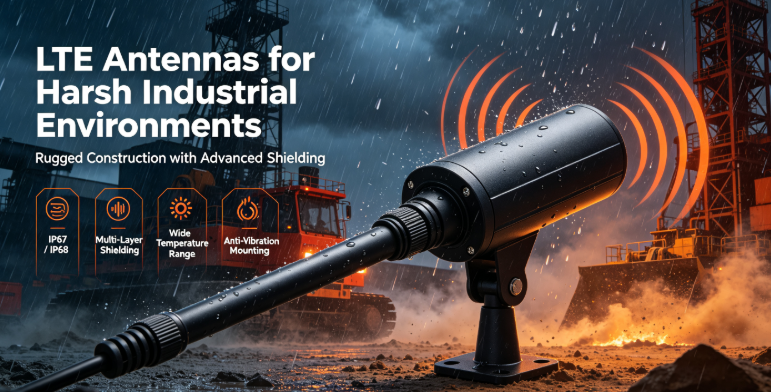
The ideal LTE antenna combines rugged construction with advanced shielding, ensuring stability in challenging environments.
Dive deeper:
When putting antennas into extreme operating settings:
- Opt for IP-rated designs: IP67 or IP68 antennas resist dust, water, and humidity exposure.
- Shielding against interference: Multi-layer designs block electromagnetic disruptions from nearby machinery.
- Wide temperature tolerance: Look for industrial antennas rated for -40°C and beyond.
- Anti-vibration mounting: Prevent loosening in environments prone to motion or vibrations.
Field-proven antennas built for durability ensure output consistency across complex setups.
Frequently Asked Questions
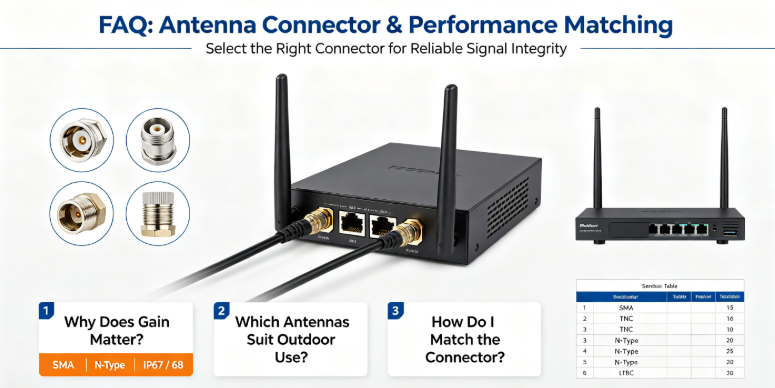
Why is gain important in LTE antennas?
Gain amplifies received and transmitted signals. In industrial setups, higher-gain antennas extend connectivity, ensuring signals penetrate building obstructions or reach remote areas effectively.
What types of LTE antennas suit outdoor industrial applications?
Outdoor environments demand weatherproof antennas. Look for fiberglass, rubberized, or metal designs with IP67/68 ratings and UV-resistant materials for long-lasting durability.
How do I match the antenna connector to my equipment?
Check your router, modem, or IoT device specifications for the connector type (e.g., SMA, TNC, or N-Type). Select antennas with compatible connectors to ensure signal integrity.
Conclusion
Choosing the right 4G LTE antenna for industrial applications involves balancing frequency compatibility, environmental factors, gain, and device specifications. A well-matched antenna improves connectivity, extends coverage, and reduces downtime. Whether you're navigating IoT deployments or harsh factory conditions, selecting a robust and compatible LTE antenna ensures reliable communication.
Need expert advice on LTE antennas? Reach out to explore OEM/ODM possibilities for custom antennas tailored to your industrial needs.